 Montevideo City Guide
 from $25
Half-day Regular City Tour at Montevideo
A short, affordable group city tour of Montevideo with pickup included and cruise passengers welcome, plus a private upgrade option.
Check AvailabilityWalk the old port town of Ciudad Vieja to a grill under the Mercado del Puerto roof, ride the Rambla along the Río de la Plata, or cross to Punta del Este and Colonia del Sacramento for a day. This Montevideo, Uruguay guide settles where to go first, how card payments cut the VAT on meals, and which tours are worth booking from $8.
Montevideo, Uruguay's capital of 1,287,452 people (2023 census), faces the Río de la Plata, and its sights sit between the old port town and a Rambla of almost 30 km. One day covers Ciudad Vieja and the Rambla. Two to three add Pocitos and a day trip out of town. Pay by card: restaurants and car rental cost 9 VAT points less until 30 April 2027.
Key takeaways
A first look at the city costs little: a half-day tour or the hop-on hop-off bus for $25, a walk through the old town for $20, the Museo Andes 1972 ticket for $8. Card prices are the booking platforms' own listed US-dollar figures.
from $25
A short, affordable group city tour of Montevideo with pickup included and cruise passengers welcome, plus a private upgrade option.
Check Availability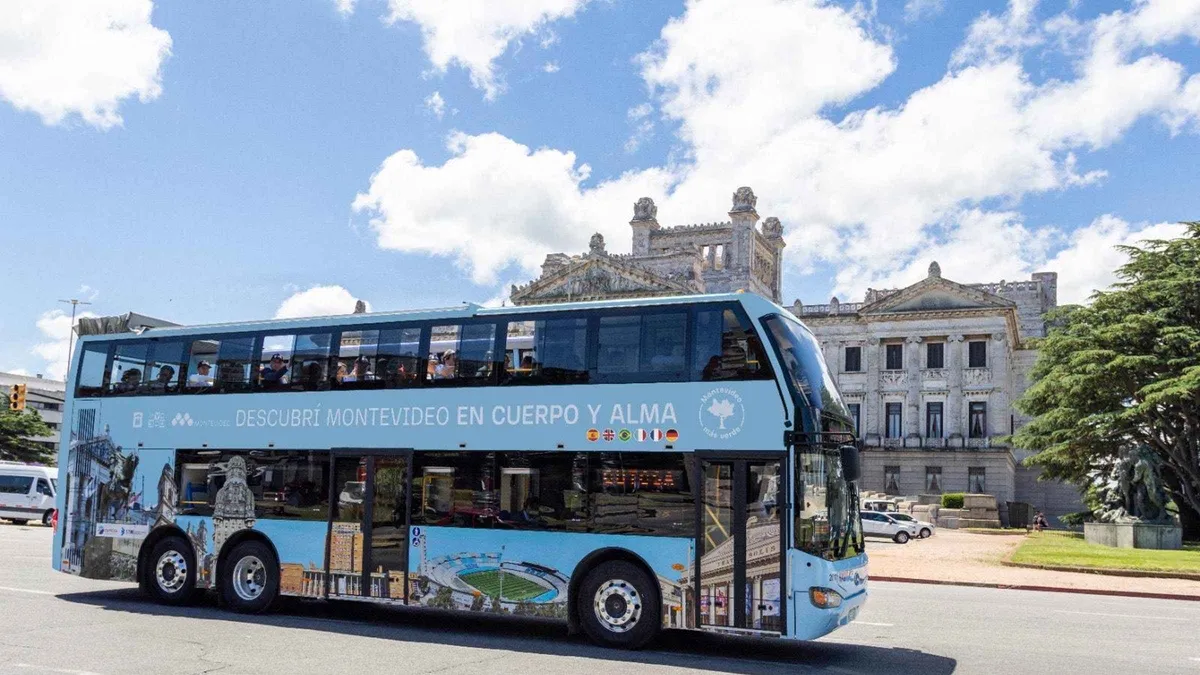 from $25
The cheapest city overview in Montevideo, a two-circuit 24-hour hop-on hop-off pass with audio guide for $25.
Check Availability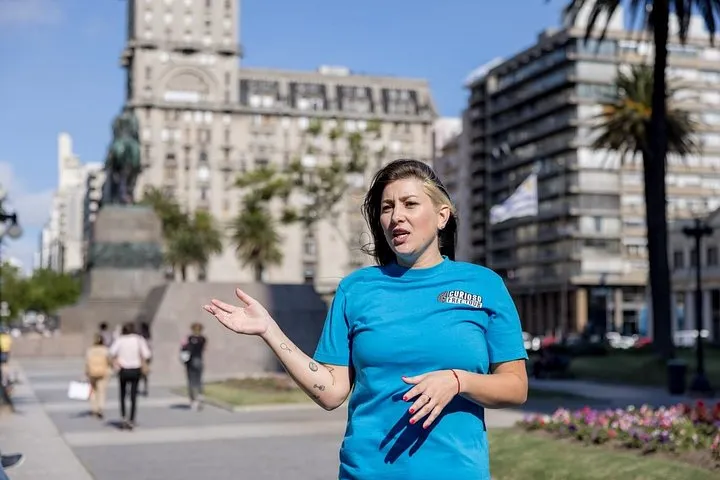 from $20
A 2.5 hour guided walking tour of Montevideo's Old City with entry to three sights included for $20.
Check Availability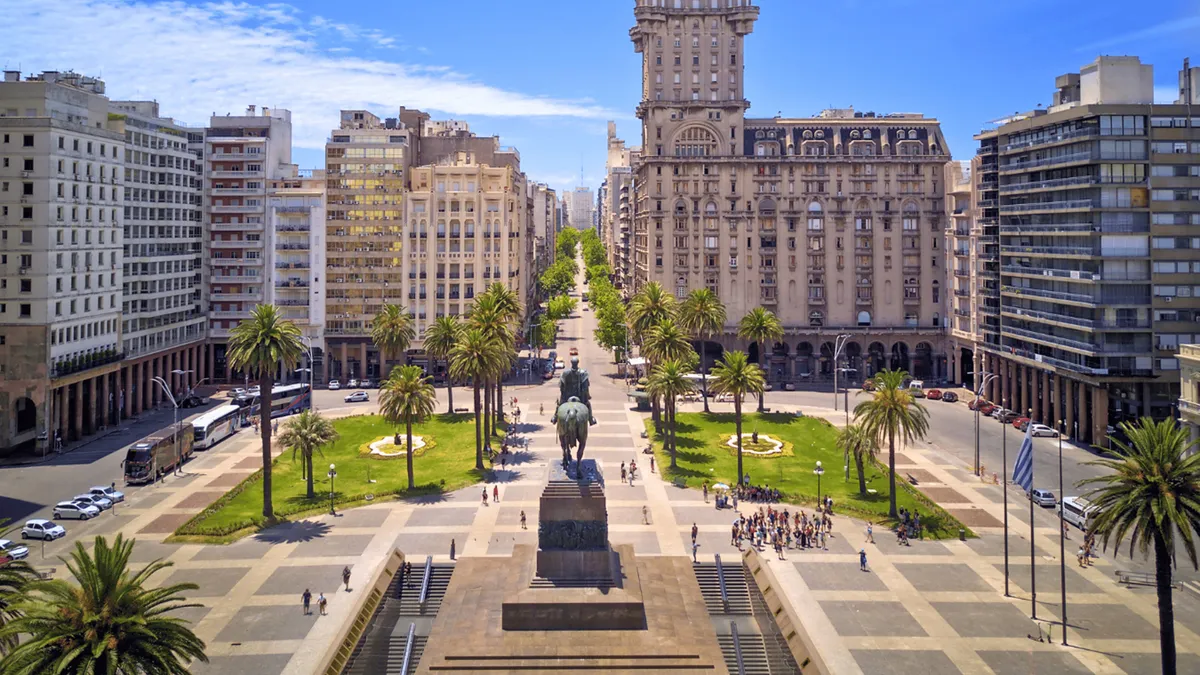 from $44
A 3.5-hour port-based city loop for cruise passengers at $44, covering Ciudad Vieja, Estadio Centenario and the Rambla with wheelchair access.
Check Availability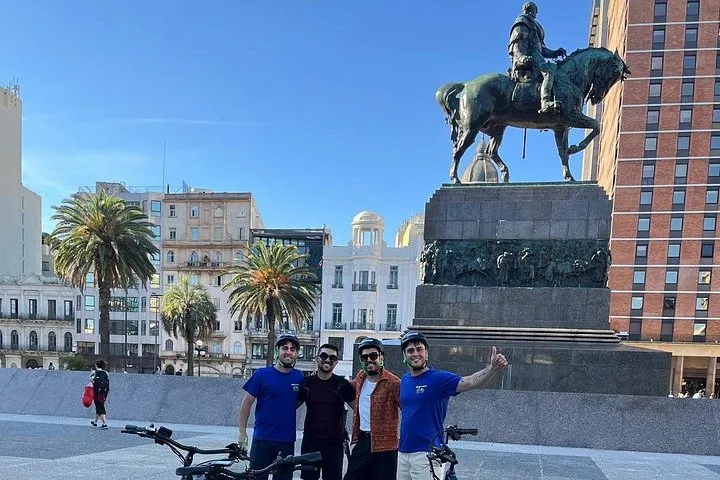 from $69
A private 3-hour e-bike ride with Beetour covering Montevideo's landmarks, rated 5 from 213 reviews, at $69 per person.
Check Availability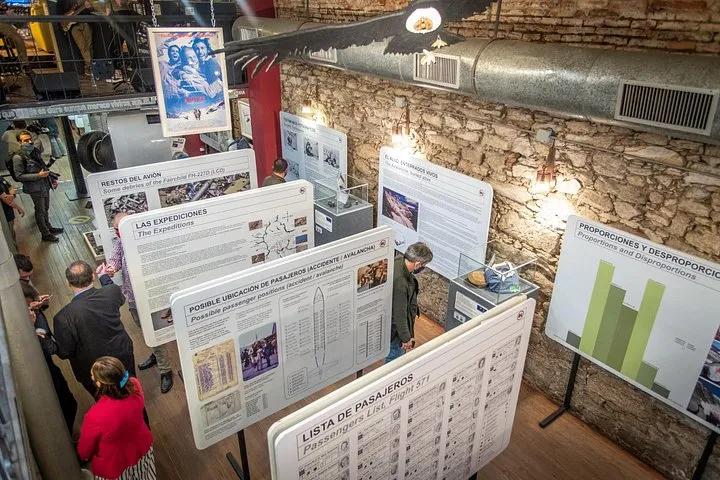 from $8
A low-cost $8 museum ticket honoring the 1972 Andes crash victims and survivors, not a guided excursion.
Check AvailabilityCard prices are the platforms' own listed US-dollar figures, and each platform bills in your account's currency. Every city, cruise, walking and bike tour is on Montevideo tours. Figures current {checked}.
Prices, ratings and details are the platform's own. Dollar figures are the listed prices. The platform bills in your account's currency.
Six choices shape a first visit to the Uruguayan capital, and each one has its own page.
The old port peninsula holds most of the first-day sights, and the Rambla joins the rest. Start in Ciudad Vieja and walk east.
Non-residents who show a foreign ID pay 0% VAT on the room all year. The bill arrives without VAT, so there is no refund to claim.
Three doors into the city: the ferry from Buenos Aires, the cruise port beside the old town, or Carrasco airport about 25 km east.
A first look costs little: the half-day city tour is $25 and the hop-on hop-off bus pass is $25 for a day. Day trips run about $45 to $60.
Beef over coals is the city's signature, and the port market is where most visitors try it first. Bring a card, the bill drops 9 VAT points.
Two coastal day trips dominate: Punta del Este to the east and Colonia del Sacramento to the west, both doable on small-group tours from the city.
The city runs east from the old port peninsula along the river, one neighbourhood after another. Each stretch has its own day.
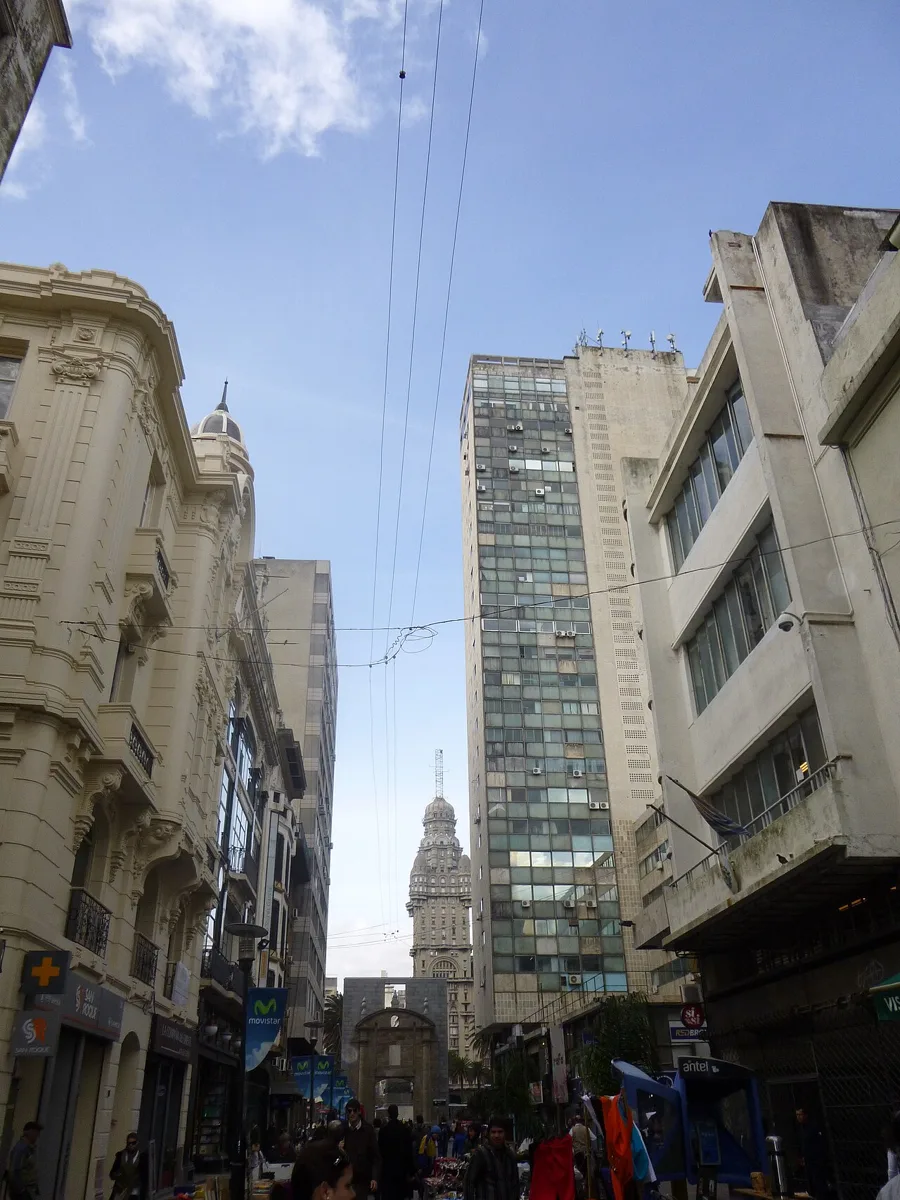
Peatonal Sarandí in Ciudad Vieja, with the gate and Palacio Salvo at the far end. Photo: Andrés Franchi Ugart…, CC BY-SA 3.0, via Wikimedia Commons
The peninsula where Montevideo's walled colonial town stood. The working port sits at its edge, and the Mercado del Puerto closes off the seaward corner with grills under one roof. Cruise passengers walk in from the port, so this is where most first days start.
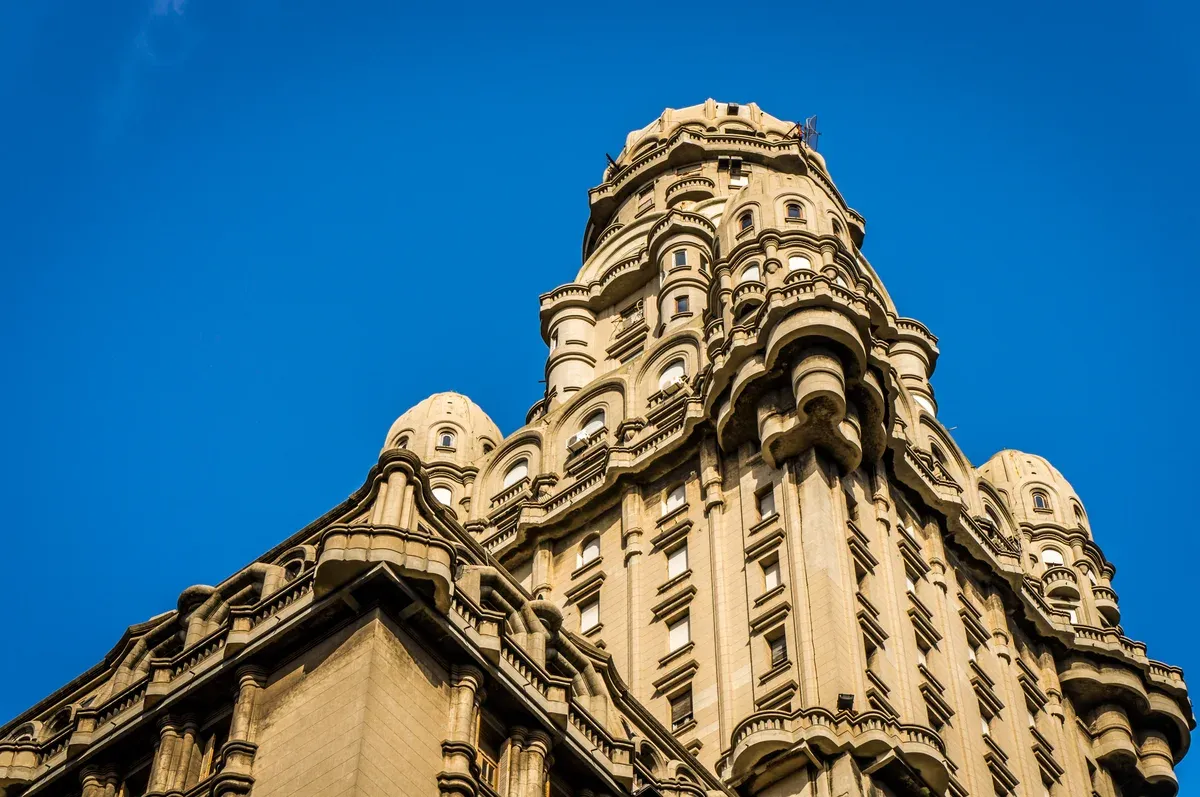
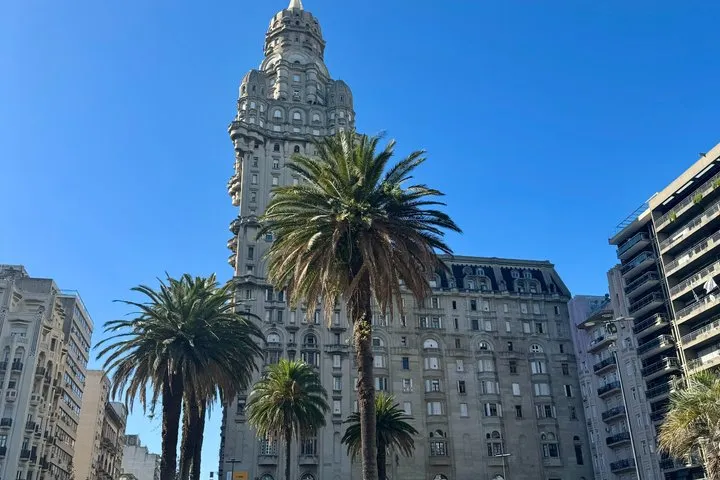
Palacio Salvo on Plaza Independencia. Photo: GameOfLight, CC BY-SA 3.0, via Wikimedia Commons
The square marks the line where the walled city once ended and the modern grid begins. Palacio Salvo rises on one side, Teatro Solís stands nearby, and Avenida 18 de Julio runs inland from here as the city's main eastward axis.
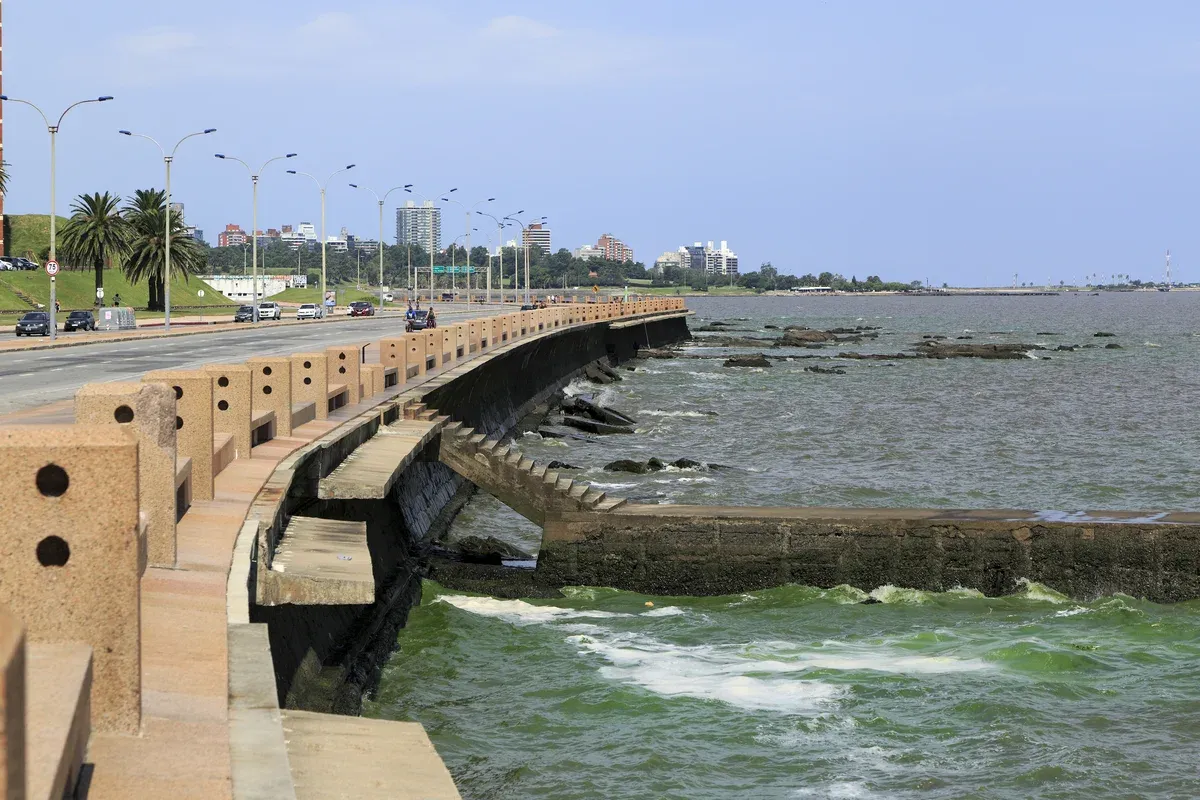
Rambla República Argentina looking east. Photo: Falk2, CC BY-SA 3.0 de, via Wikimedia Commons
The Rambla runs for almost 30 km along the Río de la Plata, by the city tourism office's count, and is proposed for UNESCO World Heritage listing. Parque Rodó breaks the walk with parkland and the national fine arts museum. Locals use it as a promenade, and visitors should too.
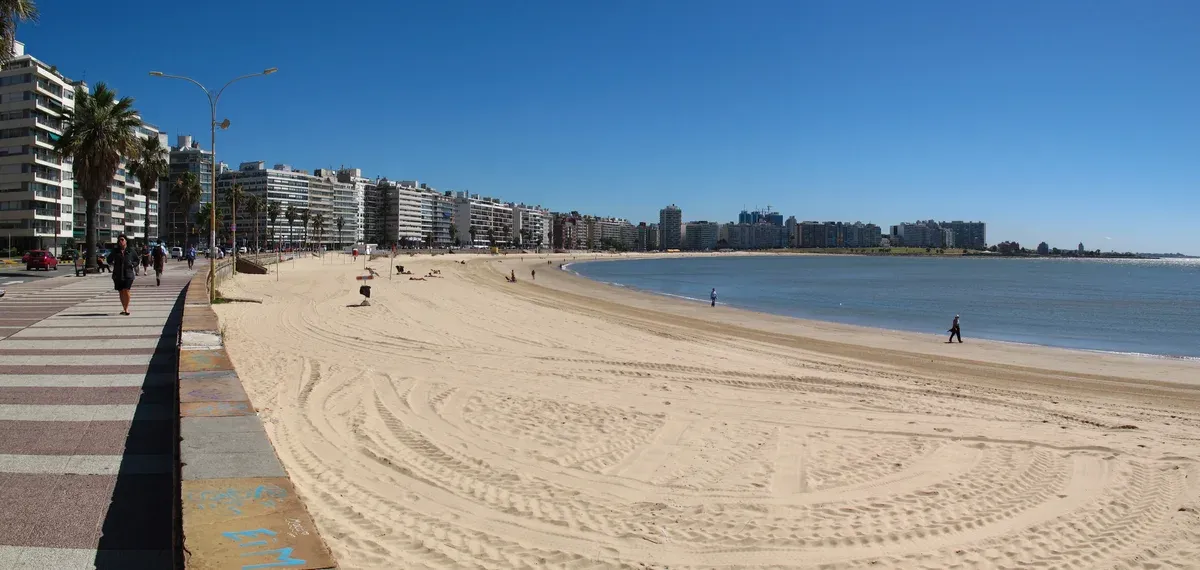
Pocitos beach and the Rambla. Photo: Andrés Franchi Ugart…, CC BY-SA 3.0, via Wikimedia Commons
East of Parque Rodó the Rambla passes Punta Carretas and then Pocitos, where the beach lies entirely within its own barrio. This is the residential stretch where the city goes to the water.
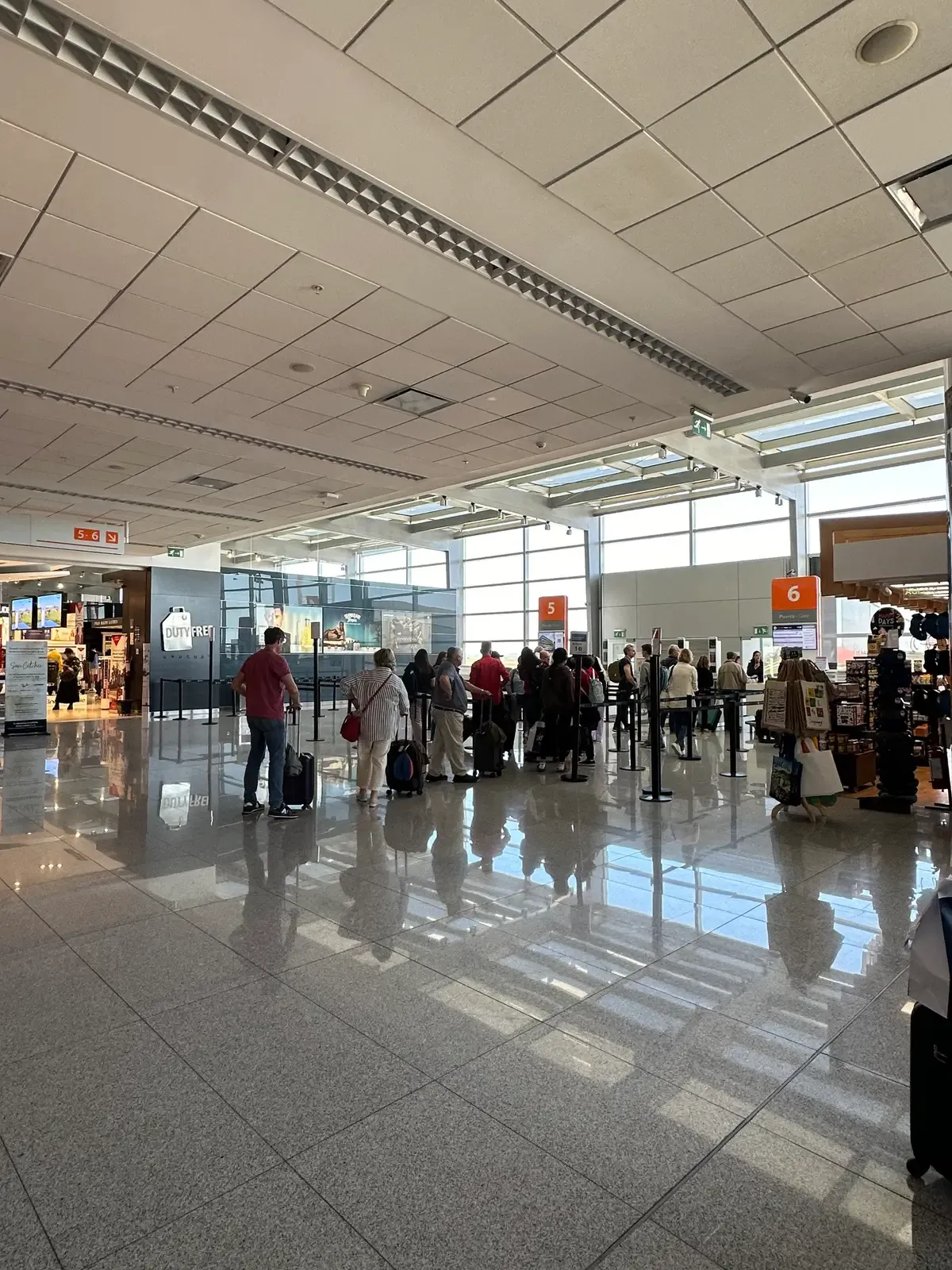
Inside the Carrasco terminal. Photo: Darafsh, CC BY-SA 4.0, via Wikimedia Commons
The furthest eastern stretch holds Carrasco airport, about 25 km from the centre and 20-30 minutes by road. Four bus companies work from outside the terminal, official taxis and shared shuttles wait inside, and private transfers meet you with a name sign.
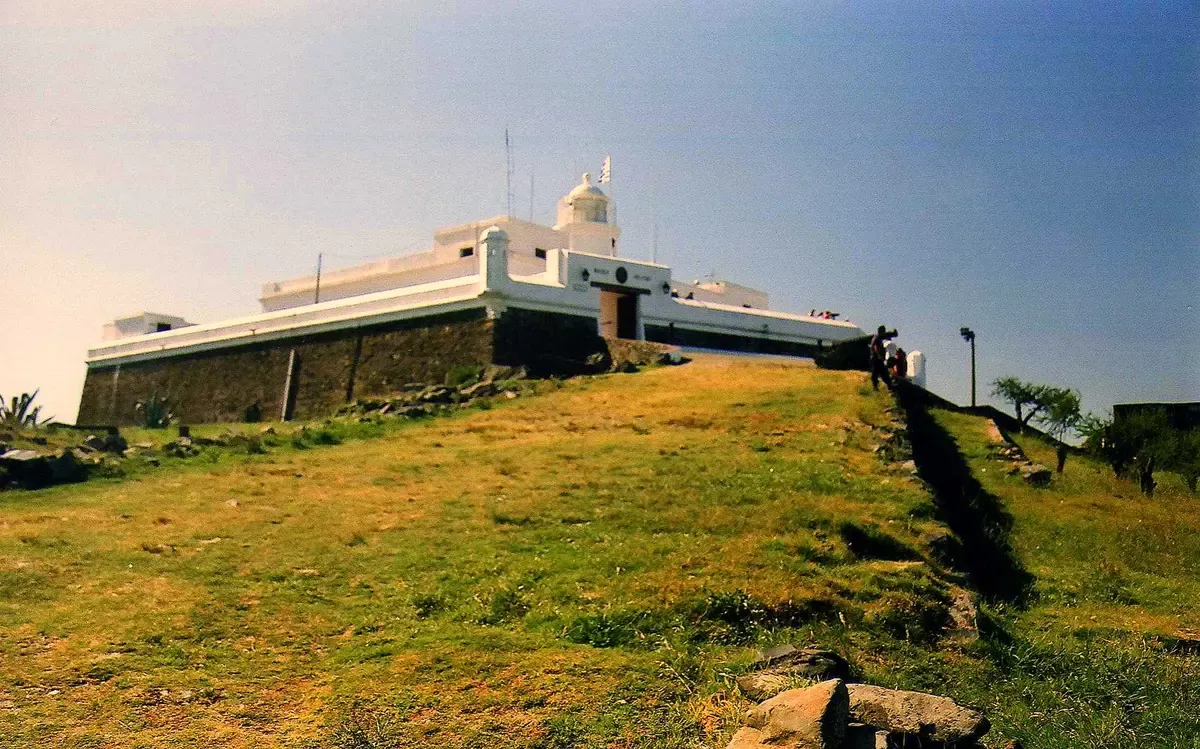
The walls of the Fortaleza General Artigas on the Cerro. Photo: rodoluca, CC BY-SA 3.0, via Wikimedia Commons
Across the bay from the port rises the Cerro, the hill topped by the Fortaleza del Cerro. It gives the view the flat waterfront cannot: the harbour, the old town and the Rambla laid out across the water.
Uruguay rewards paying by card, and few visitors know it. A traveller who understands three rules pays less than one who carries cash.
Decreto 235/026 keeps the 9-point VAT reduction in force until 30 April 2027 for final consumers who pay by credit card, debit card or e-money, as long as the payment is not processed by hand. It covers restaurants, bars, cafés and similar food services, including hotel food service outside the room price. It also covers catering and event services, guided visits and tastings at wineries registered with the Tourism Ministry, car rental without driver, and agency commissions on holiday rentals.
The discount comes off the bill at the till, so there is no paperwork and no refund office. The consequence for the trip is simple: carry a card that works abroad and lean on it for every meal and every rental. Keep pesos in cash only for buses and markets.
The full rules sit on Uruguay currency.
Non-residents who show a foreign-issued ID are invoiced the room with 0% VAT, all year. There is no refund to claim, because the stay simply never carries the tax. Show the passport at check-in and check the invoice before you pay.
Separately, Tax Free shopping works all year at participating shops: keep the paperwork from the purchase and claim the refund at marked booths when leaving the country through listed exits, which include Carrasco airport and Montevideo port. Both benefits apply automatically once you qualify as a non-resident, so the only task is remembering the passport. Areas and price levels for rooms are compared on Montevideo hotels.
Since 1 October 2025, under Junta Departamental decree 38989, lodging registered with the Tourism Ministry adds a tourist tax for foreign guests over 11 to the invoice. The city tax code sets it at US$1 a night per person over 11, at most US$5 per person per stay, charged as its own line on the invoice at check-in or checkout. Paying it earns a voucher at reception: 50% off the guided visit at Teatro Solís, 10% off Comedia Nacional shows and 5% off the Bus Turístico.
Guests register with a foreign identification document, which is the same document that unlocks the 0% VAT on the room. Practically, expect a small line item on checkout and ask for it to be shown if it is not itemised. Larger hotel costs and neighbourhood trade-offs are on Montevideo hotels.
Most years the Tourism Ministry announces a fuller VAT exemption for non-resident tourists for the summer season, on top of the standing 9-point reduction. The details change from season to season, so do not build a budget around it before you travel. Check the current season on Uruguay Natural before counting on the exemption, and treat whatever the season brings as a bonus on meals and car rental rather than a promise.
City buses run on STM fares set by the city from 5 January. The one-hour ticket costs $1.29 (UYU 52) with the STM card or $1.59 (UYU 64) in cash, and the two-hour ticket costs $1.94 (UYU 78) card or $2.41 (UYU 97) cash. The minimum top-up for the common card is $2.48 (UYU 100), and the first card is free.
Our sum: paying cash costs about 23% more per ride, so get the card at the first opportunity and use it every trip.
| Ticket | STM card | Cash |
|---|---|---|
| One hour | $1.29 (UYU 52) | $1.59 (UYU 64) |
| Two hours | $1.94 (UYU 78) | $2.41 (UYU 97) |
Source: Decreto 235/026, Decreto 537/005, Uruguay Natural, Montevideo tax code, art. 624.10, Descubrí Montevideo, tourist tax benefits, Intendencia de Montevideo, STM fares.
Montevideo rewards a simple route: start on the old port peninsula and walk east along the water. Each stop below earns its place on a first visit.
The peninsula where Montevideo's walled colonial town stood is still the city's historic core. The working commercial port fills its western edge, and the streets between hold Plaza Independencia, Teatro Solís, the Cabildo and the Museo Andes 1972. Cruise passengers walk straight in from the ship, because the port sits beside the old town, and a ferry arrival puts you within reach of the same streets.
Give the area one full morning at least, two if you enter the museums. The Ciudad Vieja Historical and Cultural Walking Tour covers it in 2.5 hours for $20 with entry to three sights included and starts at Independence Square in front of the Citadel Gate. The block-by-block detail is on Ciudad Vieja.
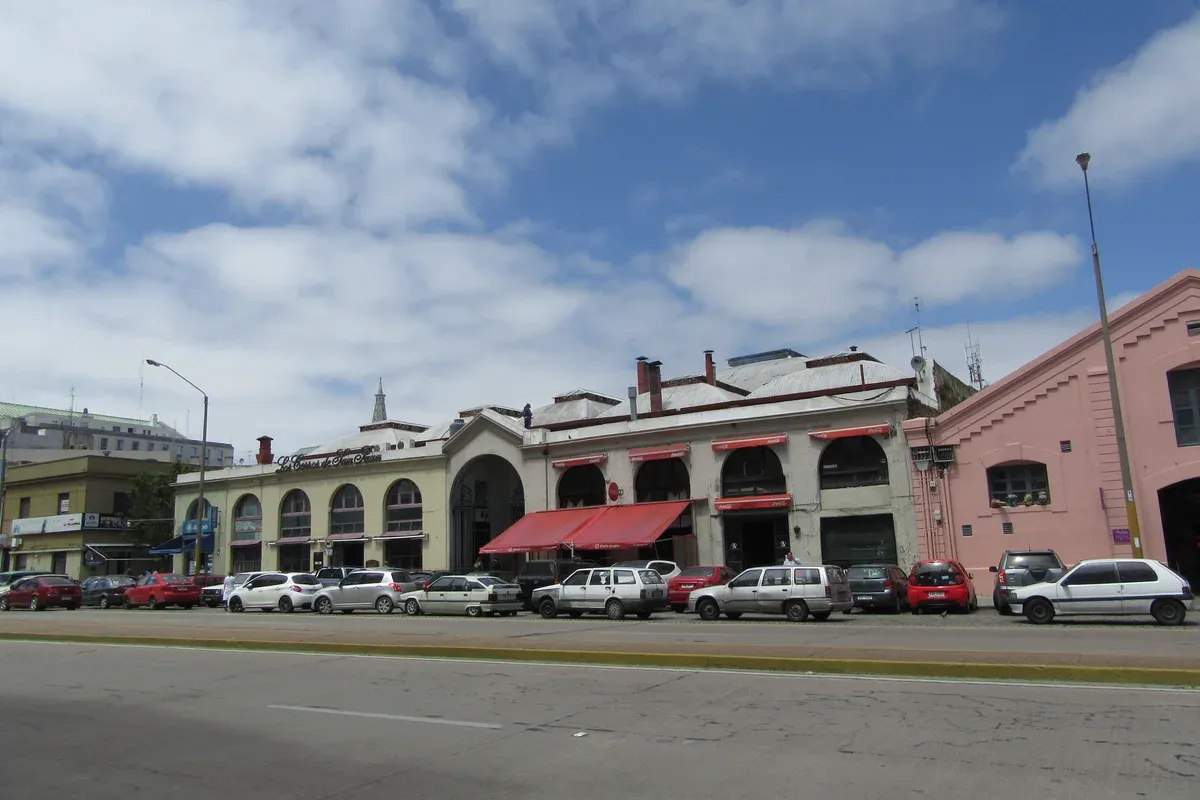
The Mercado del Puerto from the Rambla. Photo: Felipe Restrepo Acosta, CC BY-SA 4.0, via Wikimedia Commons
The port market at the edge of Ciudad Vieja is where the city's grill culture concentrates under one roof. Parrilla counters fire beef over coals, and the hall fills with the smoke and noise of a working lunch rather than a museum piece. No market-wide hours exist, each grill keeps its own schedule, so arrive around lunchtime and you will find the hall at its best.
It stands at the port edge of the old town, a short walk from where cruise passengers come ashore. Combine it with the old town on a single walk, eat first and sightsee after. The full rundown, including what to order, is on Mercado del Puerto, and the wider food scene is on Uruguayan food.
Plaza Independencia marks the line where the walled city once ended. On its west side stands the Ciudadela gate remnant, and the square opens east onto Avenida 18 de Julio, the city's main axis. Palacio Salvo, the tall tower at the square's east end, is the building every photo of the square turns on.
Its tours print no official price or hours online, so ask at the door if you want to go up. Teatro Solís, the capital's great theatre, stands just off the square, and its visit schedule is likewise not published online. The Artigas Mausoleum sits under the square itself and is visited on the Ciudad Vieja walking tour.
The square's own page is Plaza Independencia and the tower's is Palacio Salvo.
This small museum in Ciudad Vieja is a memorial to the 29 people who died in the 1972 Andes air crash, and to the survivors whose story travelled the world. The city's tourism site lists it among its museums. A visit runs 45 to 90 minutes, which makes it easy to fit between other old-town stops. The Museo Andes 1972 ticket costs $8, carries free cancellation up to 24 hours and is rated 4.9 from 424 reviews, an unusually strong score for a small city museum.
It is not a guided excursion, so read at your own pace. Hours and background are on Museo Andes 1972.
The Rambla runs for almost 30 km along the Río de la Plata, by the city tourism office's count, and it is proposed for UNESCO World Heritage listing. No single building explains it. The point is the walk, the river on one side and the city on the other, from the port all the way east.
Pocitos beach lies entirely within its own barrio, and Ramírez beach, a little closer to the centre, is described by the city's own site as ideal for families. Rent nothing and walk a stretch, or cover more ground on wheels: the Montevideo electric bike tour rides 3 hours 15 minutes past the city's landmarks for $69, rated 5 from 213 reviews. The route is mapped on the Rambla, the sand on Montevideo beaches and the barrio on Pocitos.
The Museo Nacional de Artes Visuales, MNAV, sits in Parque Rodó and holds the country's national art collection. Entry is free. It opens Tuesday to Sunday from 13:00 to 20:00, so it is the one to skip on a Monday.
The old-town museums run the other way: the Cabildo and the Museo Andes 1972 open on Monday and close on Sunday. The park around it makes a good Rambla break, with shade and benches a few steps from the water. Pair the museum with a walk along the Rambla and lunch nearby, and check Parque Rodó for what else the park holds before you go.
Source: Descubrí Montevideo, museums, MNAV, Descubrí Montevideo, beaches, Descubrí Montevideo, beaches and Rambla, UNESCO tentative list via Wikipedia, Descubrí Montevideo, Cabildo, Museo Andes 1972.
How you arrive sets the shape of your day. The port sits beside the old town, the airport is east along the Rambla, and Buenos Aires is a boat ride away.
Buquebus runs the direct Buenos Aires to Montevideo crossing daily, taking a little over two hours, and it carries cars as well as foot passengers. The alternative route goes through Colonia del Sacramento: a shorter ferry to Colonia, then a bus of about two hours to Montevideo. Neither operator prints fares or exact departure times online.
Fares change by day and by class, so check the operator before you book. The choice matters for your plans. The direct boat gives you a real day trip in Montevideo, with the whole city in reach from morning to evening.
The Colonia route suits a night in each town, and Colonia's barrio historico deserves half a day on its own. Read more in Buenos Aires to Montevideo and the Colonia del Sacramento guide.
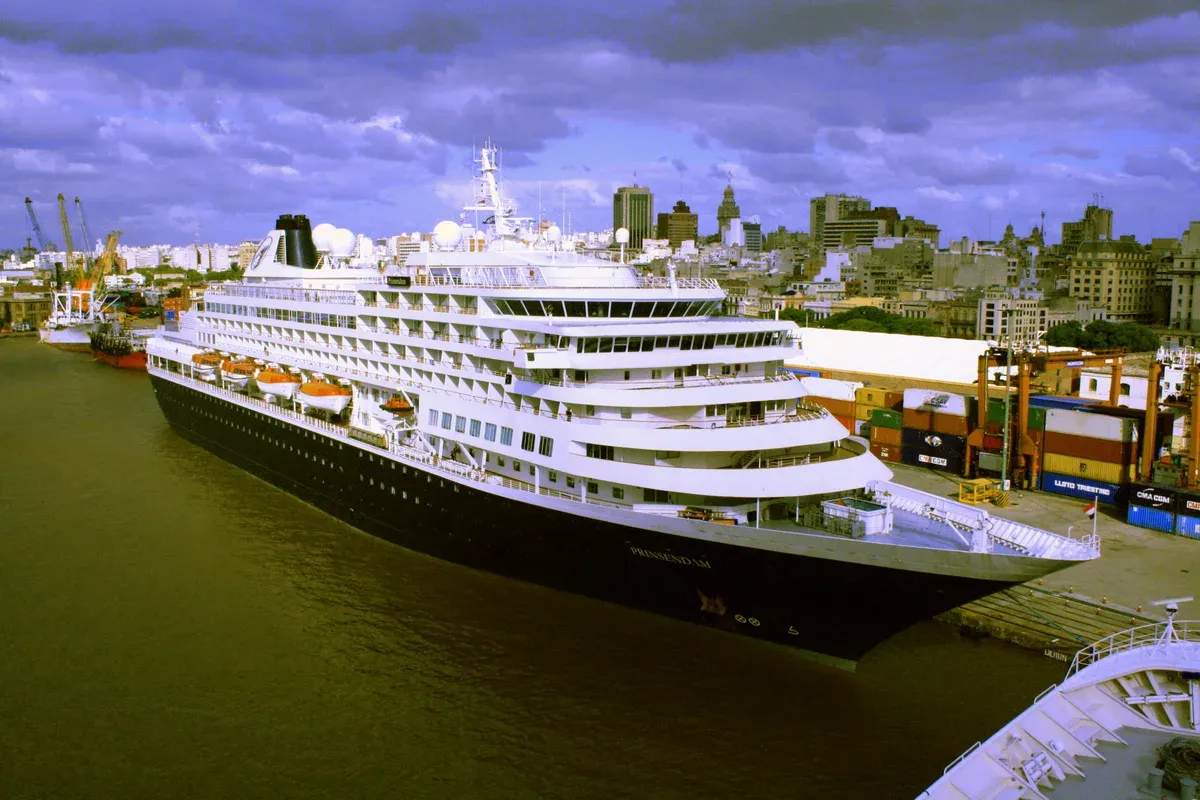
A cruise ship in the port, with the old town behind the cranes. Photo: J. R. INACIO, CC BY-SA 3.0, via Wikimedia Commons
Cruise ships dock at the Port of Montevideo, the country's main commercial port, and they come in summer. The terminal sits right beside Ciudad Vieja, so the Plaza Independencia, the Mercado del Puerto and the old streets are all walkable from the gangway. To see more than the old town you have two easy options. The shore excursion for cruise passengers runs 3.5 hours from a meeting point inside the port, covers Ciudad Vieja, Estadio Centenario and the Rambla, costs $44 per person, is wheelchair accessible and returns you to the ship.
Or buy the hop-on hop-off bus day pass for $25 and ride two circuits with an audio guide at your own pace. Both offer free cancellation up to 24 hours ahead. Details in the Montevideo cruise port guide.
Carrasco International Airport sits about 25 km east of the centre, and the road trip downtown takes 20-30 minutes. Four bus companies run from stops outside the terminal: COPSA, COT, CUTCSA and TURISMAR. No line numbers or fares are posted online, so ask at the terminal.
Official airport taxis and shared shuttle vans of about 12 seats wait inside the terminal. For a fixed price and no waiting, the private airport transfer costs $90.28 per group, takes up to 12 people, and covers airport, port and bus terminal pickups with a driver holding a name sign. It is rated 5 from 68 reviews and can be cancelled free up to a day before.
Practical detail in the Carrasco International Airport guide.
Tres Cruces is the country's main bus terminal, with services to every department of Uruguay and to Brazil, Argentina, Paraguay and Chile. The buses to Punta del Este and to Colonia del Sacramento leave from here, which makes the terminal the natural starting point for day trips. Times and fares are set by each bus company, so check at the terminal or with the operator before the day.
Source: Descubrí Montevideo, by boat, Descubrí Montevideo, by plane, Aeropuerto de Carrasco, Descubrí Montevideo, buses.
Most visitors get a single day in Montevideo, often from a cruise ship or a ferry from Buenos Aires. It is enough for the old town, a long lunch and the seafront.
Walk from the port into Ciudad Vieja and start at Plaza Independencia, where the Artigas Mausoleum sits under the square and Palacio Salvo rises over its east end. In the old town, Museo Andes 1972 remembers the 29 people who died in the 1972 air crash in the Andes and the survivors who walked out. The admission ticket is $8 per person for 45 to 90 minutes, rated 4.9 from 424 reviews, and there is no guided commentary, just the exhibition itself. For context, the Ciudad Vieja walking tour costs $20 per person, runs 2.5 hours, includes entry to three sights and starts at the Citadel Gate on Independence Square.
More in the Ciudad Vieja guide.
The Mercado del Puerto is a hall of grills under one roof at the edge of the port. It stands a short walk from the cruise terminal, which makes it the obvious lunch stop on a one-day visit. Order asado off the parrilla and eat at the counter or a shared table.
Each grill keeps its own hours, and the market itself posts no official opening times, so come at midday and you will find it alive. Pay by card or e-money and the bill carries the VAT cut, 9 percentage points off. That is the single easiest saving in the city.
Read about the Mercado del Puerto and Uruguayan food.
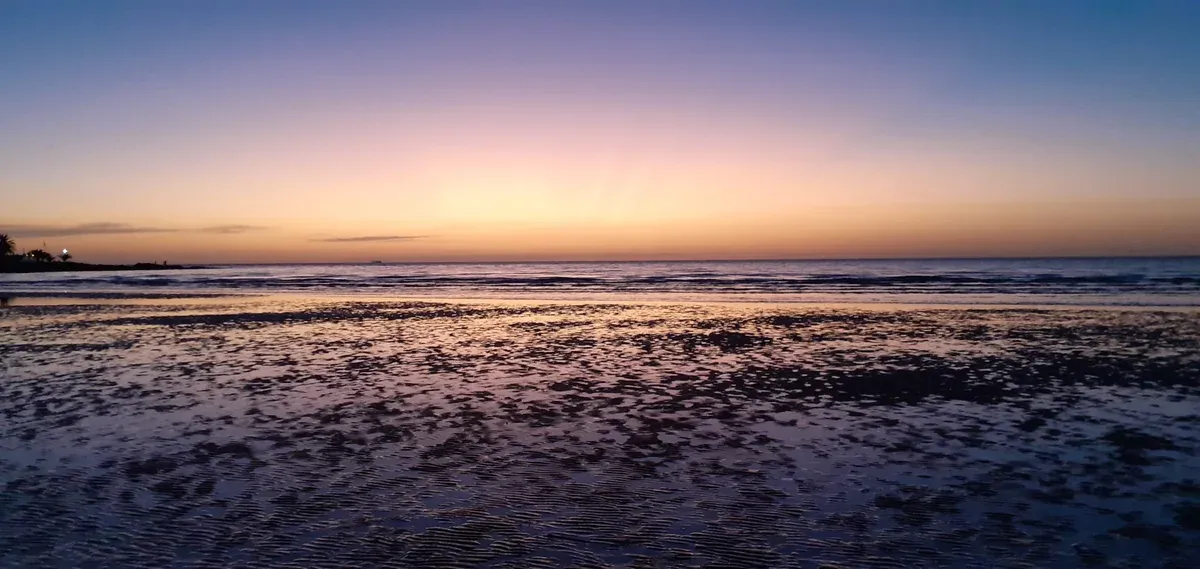
Sunset over the Río de la Plata from Playa Ramírez. Photo: TiziPro22, CC BY-SA 4.0, via Wikimedia Commons
The Rambla runs for almost 30 km along the water, and the walkable stretch east of the old town takes in Parque Rodó, Punta Carretas and Pocitos. Take a city bus east and walk back, or ride. An urban bus ticket costs from $1.29 (UYU 52) for one hour with an STM card, cash costs $1.59 (UYU 64).
Pocitos has a long sand beach under a line of apartment blocks. If you want the whole seafront explained as you go, the electric bike tour is a private 3-hour 15-minute ride covering the city's landmarks for $69 per person, rated 5 from 213 reviews. Route ideas in Rambla of Montevideo.
Plan around the day of the week. Sunday belongs to the Tristán Narvaja street fair in Cordón, which runs along the street between Avenida 18 de Julio and La Paz street. No official hours are posted, so go in the morning.
On Sunday the old-town museums close: the Cabildo and the Museo Andes 1972 list no Sunday hours. On Monday they open, while the national fine arts museum, open Tuesday to Sunday 13:00-20:00 with free entry, closes. Torres García opens every day.
More in shopping in Montevideo and things to do in Montevideo.
One day covers the old town and the seafront. Each extra day opens a barrio, a coast town or a winery. The table matches stay length to what it buys.
| Days you have | What fits | What you give up | Plan it |
|---|---|---|---|
| One day | Ciudad Vieja, the port market, the Rambla | Day trips, Pocitos at leisure | Montevideo tours |
| Two days | adds Parque Rodó, Punta Carretas and the museums | A coast day, unless you skip the museums | Montevideo hotels |
| Three days | adds Punta del Este or Colonia del Sacramento | Beach time in the summer months | Day trips from Montevideo |
| Four days or more | adds wineries near the city | Little: add Estadio Centenario and a candombe evening | Uruguay wine |
Montevideo eats meat, drinks mate and pours Tannat. The portions are big and the prices reward a foreign card.
Asado is the national dish and the parrilla is its altar. Cuts of beef, chorizo and mollejas (sweetbreads) come off the coals, often with no sauce at all, just salt and fire. A shared parrilla board is the way to try several cuts in one sitting.
The saving rule applies here as everywhere: pay by card or e-money and the restaurant takes 9 percentage points of VAT off your bill until 30 April 2027. Cash does not. Ask for the grill's own recommendation and let the parrillero choose.
Read the full guide to Uruguayan food and find where to eat in Montevideo restaurants.
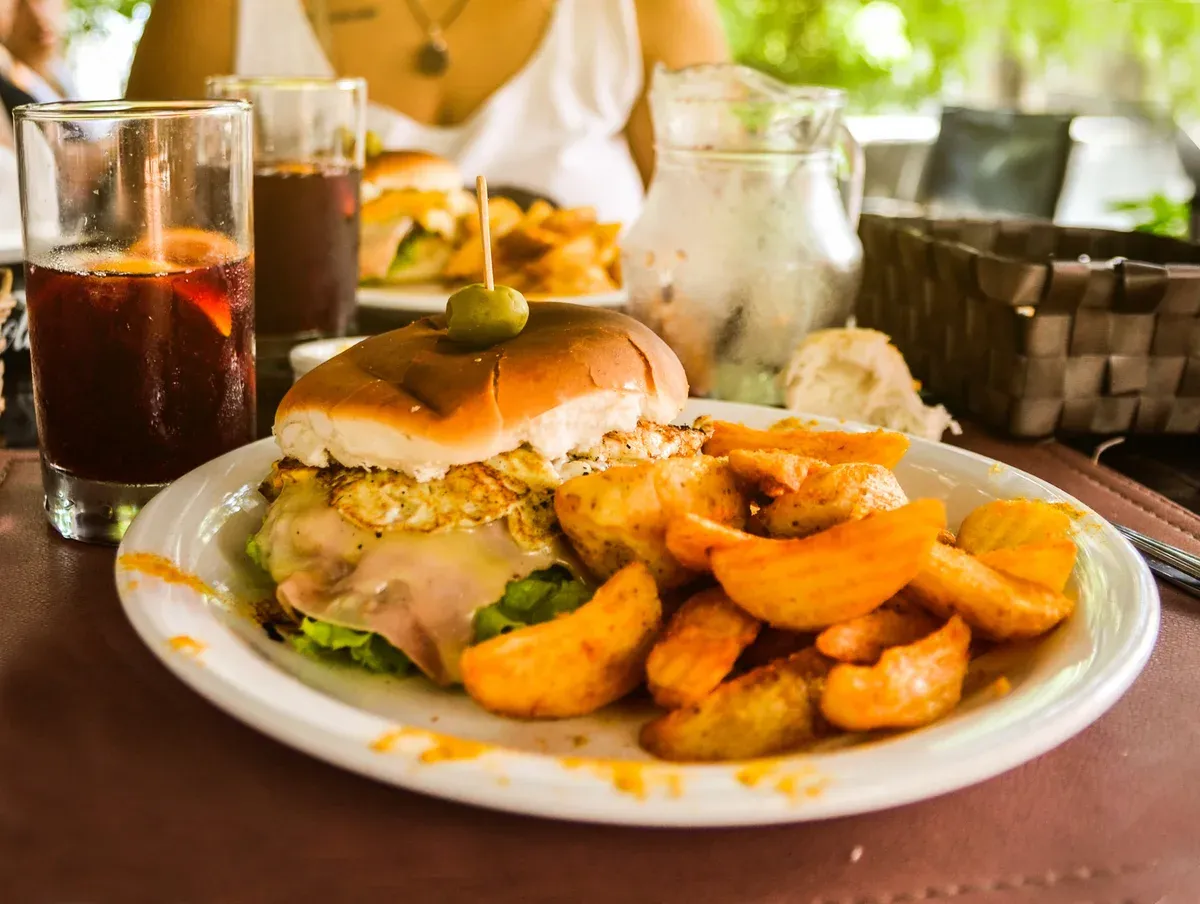
A chivito with fried egg, ham, cheese and lettuce, served with potatoes. Photo: TitiNicola, CC BY-SA 4.0, via Wikimedia Commons
The chivito is Uruguay's steak sandwich and the country's answer to late-night hunger. It is a thin grilled beef steak in a bread roll, and the classic version piles on ham, cheese, egg, lettuce and tomato until it needs two hands and a plan. Every grill, café and corner bar in the city serves its own version, and no two agree on the build.
Order it completo for the full stack or al plato for the same contents on a plate with a knife and fork. More in Uruguayan food.
Mate is not a café habit in Montevideo, it is a way of walking. People carry a gourd, a metal straw called a bombilla and a thermos of hot water under one arm along the Rambla, on the bus and in the office. The yerba is packed into the gourd, water is poured, the same person drinks it all, and the flask gets refilled when it runs dry.
You can buy the kit cheaply in any supermarket and try it on a bench facing the river. The full ritual is explained in mate in Uruguay.
Uruguay's signature red grape is Tannat, and it produces the dark, tannic wines the country is known for. Wineries sit a short drive from Montevideo, which turns a tasting into a half-day trip rather than an expedition. The Bodega Santa Rosa tour runs 2 to 3 hours with a four-wine tasting and a cold-cuts table from $25.70 per person, is wheelchair accessible and is rated 4.9 from 86 reviews. Pay with a card and the VAT cut of 9 percentage points applies to visits and tastings at wineries registered with the Tourism Ministry. Bodega Bouza has its own page.
More in Uruguay wine.
Montevideo sits in a temperate band, with temperatures generally between about 7°C and 27°C across the year. The beaches and the cruise ships both arrive with the summer.
January is the warmest month, averaging 23.3°C, and the beaches fill. Pocitos, Ramírez and Malvín line the Rambla east of the old town, Ramírez is known as a family beach and Malvín is wider with clearer water. Cruise ships are in port in summer, so the old town carries extra crowds around the terminal.
Swimming, an ice cream and a walk along the seafront are the standard afternoon, and the sun sets late over the river. Detail in Montevideo weather and Montevideo beaches.
Carnival falls in late summer. Murgas, the satirical open-air choirs, perform on neighbourhood stages, and the Llamadas parade brings candombe drum lines through the streets of Barrio Sur and Palermo. The city publishes each season's dates on its tourism site: the Desfile Inaugural parade opens carnival in late January and the Llamadas fill two nights in early February.
If your visit falls outside the season, the candombe and tango dinner show at $107 per person runs 3 hours with a three-course meal and optional hotel transfers, so you can hear the drums any night of the year. Background in Carnival in Uruguay and candombe.
July is the coldest month, averaging 11.0°C, and winter overall averages between 6°C and 14°C. Snow is close to a rumour here. Flurries have been recorded only four times, never settling, and the last fell on 13 July 1930 during the opening match of the first World Cup. Winter is the season for indoors: museums, theatres and long lunches by a window, with the 0% VAT rule for non-residents working all year.
Bring a coat for the Rambla, where the wind off the river makes 11°C feel colder than it sounds. The stadium built for that World Cup is Estadio Centenario, and the year in figures is on Montevideo weather.
Source: Descubrí Montevideo, climate, Prado station normals via Wikipedia, Descubrí Montevideo, beaches.
Two full-day trips dominate the list from Montevideo: Punta del Este on the east coast and Colonia del Sacramento up the river. Both run as small-group days with hotel pickup, and the wineries sit closer to town for a shorter outing. See day trips from Montevideo.
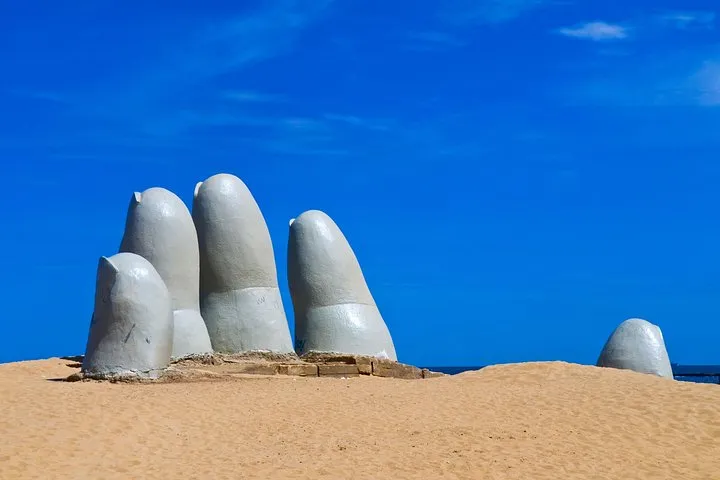 from $45
Editor's pick
A small group day trip to Punta del Este with hotel pickup across Montevideo, capped at 15 travellers for $45 per person.
Check Availability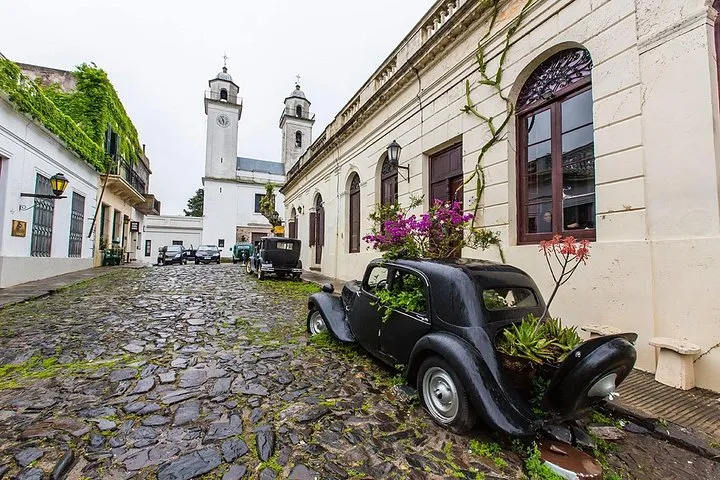 from $60
A small-group shared day trip to Colonia del Sacramento with lots of free time and the option to finish at the ferry port.
Check Availability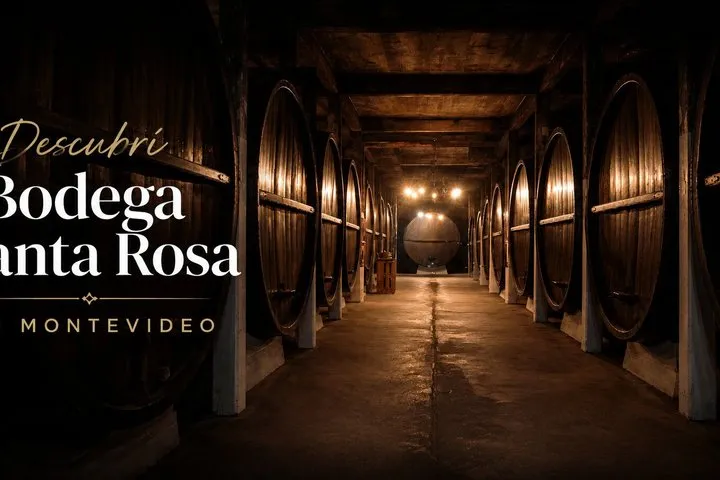 from $25.70
A 2-3 hour winery tour with 4-wine tasting and a cold-cuts table from $25.70, wheelchair accessible, near Montevideo.
Check AvailabilityPrices, ratings and details are the platform's own. Dollar figures are the listed prices. The platform bills in your account's currency.
Short answers to the questions every first-time visitor asks, with links to the full guides.
The UK Foreign Office lists bag-snatching, pickpocketing and sometimes armed muggings as the risks. It advises avoiding isolated or poorly lit areas at night and not walking alone downtown or in the port area at night or on weekends. Use ATMs inside malls or banks. Most visits pass without trouble. Safety in Montevideo
Yes, if you want a capital city you can walk. The old town, the market, the seafront and the museums fit into two or three days without rushing. It rewards travellers who like cities that work at half speed rather than spectacle. Is it worth it
They are a little over two hours apart on the direct ferry, and they feel different. Buenos Aires is a far bigger city. Montevideo is smaller and calmer, with its whole seafront on one Rambla. Many travellers do both, using the ferry to link them rather than choosing. Montevideo or Buenos Aires
A card is the better way to pay, because it takes 9 VAT points off restaurant and bar bills. You still need cash for city buses, where a ticket costs $1.59 (UYU 64) cash against $1.29 (UYU 52) on the STM card. Withdraw pesos at bank or mall ATMs. Money in Uruguay
Yes, the city has proper beaches along the Rambla, with Pocitos, Ramírez and Malvín the best known. Ramírez is considered ideal for families and Malvín is wider with clearer water. The beach pages carry the detail on access and facilities. Montevideo beaches
A workable budget day is cheap: a bus ticket from $1.29 (UYU 52) on the card, a chivito or a market lunch, and one paid sight. The Ciudad Vieja walking tour costs $20 and the hop-on hop-off bus is $25 for a full day. Pay by card wherever you eat to collect the VAT cut. What Montevideo costs
It is the capital of Uruguay on the Río de la Plata, with 1,287,452 people in the city proper. It is known for the Estadio Centenario, where the first World Cup final was played, for the Mercado del Puerto grills, for candombe drumming and for a Rambla of almost 30 km along the water. The summary is in things to do in Montevideo.
Two days cover the old town, the market, the Rambla and the main museums at an easy pace. Three days let you add a day trip to Punta del Este or Colonia del Sacramento. The breakdown is in the table under how long to stay.
It is moderate by capital-city standards, and the tax rules work in your favour. Paying by card or e-money takes 9 percentage points off VAT on restaurants, bars and cafés until 30 April 2027. A city bus costs from $1.29 (UYU 52) by card, and hotels charge non-residents 0% VAT with a foreign ID. Budget detail in what Montevideo costs.
Ciudad Vieja and the streets around Plaza Independencia put you near the port and the market. Pocitos and Punta Carretas put you on the beach end of the Rambla. Most visitors do well in either, and the choice depends on whether you want old streets or seafront. Compare Montevideo hotels.
The Uruguayan peso. Cards are widely accepted and paying by card earns the VAT cut on dining. Cash is still needed for city buses. Rates and denominations in money in Uruguay.
Yes. The direct ferry takes a little over two hours, so a dawn boat gives you a full day and you can return at night, or stay over and take the Colonia route back. The crossing and options are set out in Buenos Aires to Montevideo.
Two options cover a short stay. The half-day city tour runs 3.5 hours with hotel pickup included for $25 per person, rated 4.8 from 488 reviews, and cruise passengers are welcome. Or ride the hop-on hop-off bus, a 24-hour pass on two circuits with an audio guide for $25.
Three videos cover the ground in motion: a city overview, a day with a local guide, and forty-eight hours of eating and sightseeing.
An overview of the city, old town to the beaches.
Video: ExpediaOne day in the capital with a local.
Video: DW TravelTwo days of food and sights.
Video: Tourist to LocalVideos load from YouTube only when you press play.
The office, phone and email above belong to the city's own visitor service, published on the official tourism site and checked on 2026-11-10 — they are not this site's contact details. To reach us, use the contact page.