 Montevideo City Guide
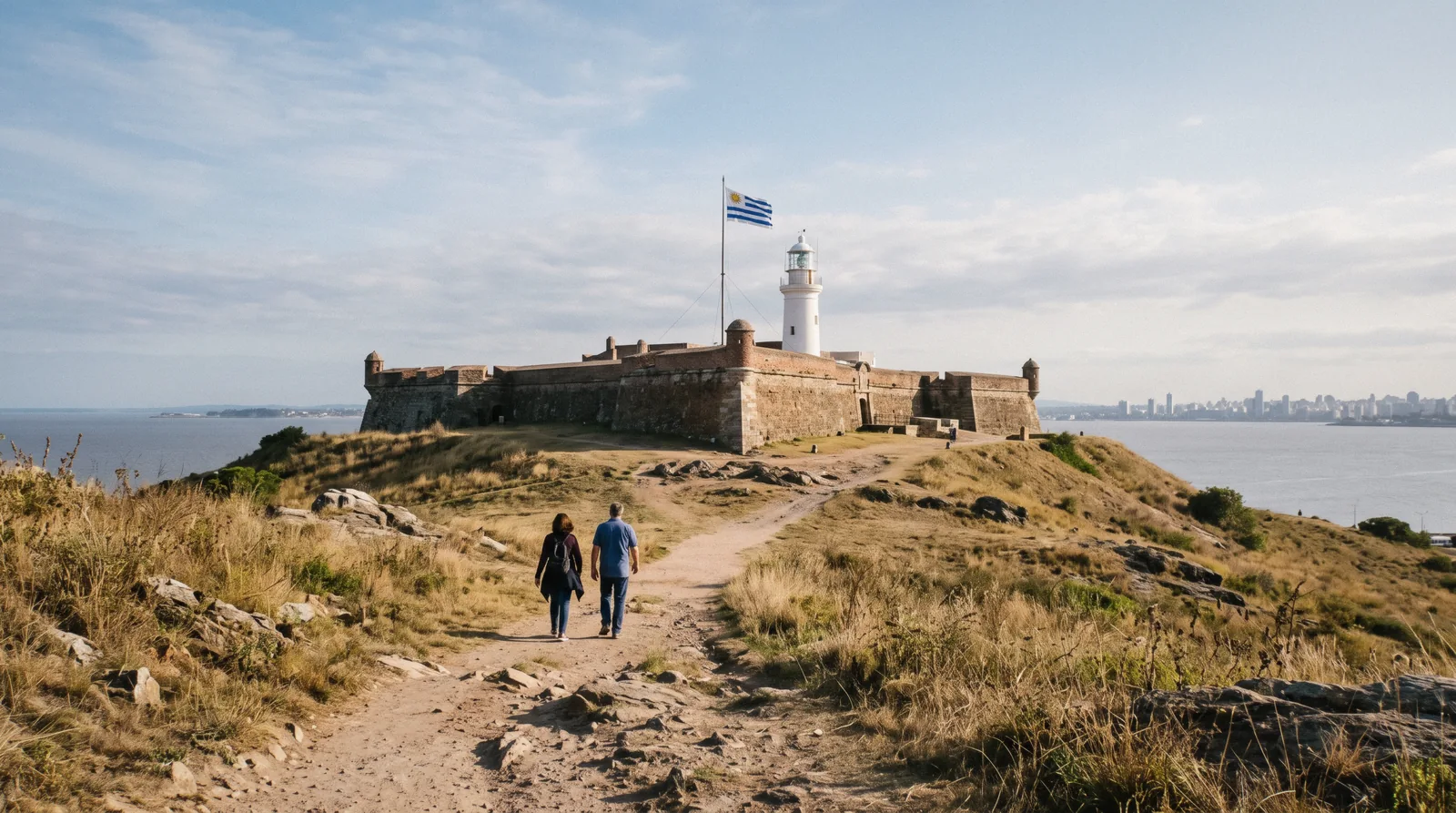
Fortaleza del Cerro: The Fortress on Montevideo's Hill
The Fortaleza del Cerro, officially the Fortaleza General Artigas, crowns the 135-metre Cerro de Montevideo across the bay from the old city, a Spanish fortress built between 1809 and 1811. Inside the walls you find a military museum, a daily-raised Artigas flag and the first lighthouse of the Río de la Plata. This page gives the opening hours, how to get up the hill, the fortress history, the museum collection and what you can see from the top, plus other things to do in Montevideo.
Quick answer Hours, price, how to get up, what you see
The Fortaleza del Cerro opens Monday to Sunday, 10:00-18:00, with no booking needed. The hill stands about 135 metres above the bay and the fortress on top was built between 1809 and 1811. Inside there is a museum of arms and colonial artillery. From the ramparts you see the bay, the port, the Centro and Ciudad Vieja, and rural Montevideo behind. Note that the city's sightseeing bus does not come here.
Key takeaways
- The private tailor-made city tour costs $165 per person and lasts 4-6 hours. The route is set with the guide, so ask for the Cerro.
- The fortress opens on Mondays too, when many city museums close, which makes it a useful stop among Montevideo attractions.
- The name Montevideo comes from this hill. Magellan's 1520 expedition recorded it as the 'montevidi' on the horizon.
- Below the hill lie the west-zone beach Playa del Cerro and the Memorial de los Desaparecidos in Parque Vaz Ferreira.
Key facts
Opening hours
| Daily | 10:00–18:00 |
|---|
Closed Open every day, Monday included. Call (598) 2313 6716 before a long trip.
Admission
- Adult
- No entry price is published. Carry some pesos in cash
- Free
- The view from the hill outside the walls
Planning it
- Time needed
- Our estimate: under an hour for the view, one to two hours with the museum.
- Book ahead
- Optional — walk-up usually fine
- Address
- Cerro de Montevideo, Villa del Cerro, west side of the bay, Montevideo
The fortress sells no ticket online and the city's hop-on hop-off bus does not climb the Cerro. The one bookable way up is a private tour whose route you set with the guide, at the price the platform lists.
Do you have a car or a taxi for the hill? If not, a private tour is the bookable way up, because the sightseeing bus does not go.
| Option | Price | Length | How it reaches the Cerro | Book |
|---|---|---|---|---|
| Private tailor-made city tour with a localTravellers without a car who want the fortress in a day of other sights | $165 per person | 4-6 hours | Electric SUV, route agreed with the guide: ask for the Cerro | Check Availability |
Figures current {checked}.
Tours for the Cerro and the Rest of the City
Only the private tour can be steered up the hill. The bus covers the rest of the city, and the half-day group tour lists no stops, so ask the operator before you book.
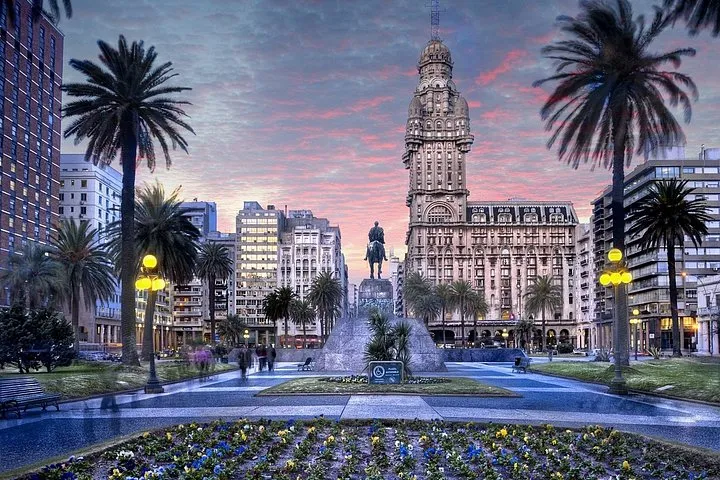 from $165
Tailor-made Montevideo: Private City Tour with a Local
A fully private, tailor-made Montevideo city tour in an electric SUV with a registered guide and free cancellation up to 24 hours before departure.
Check Availability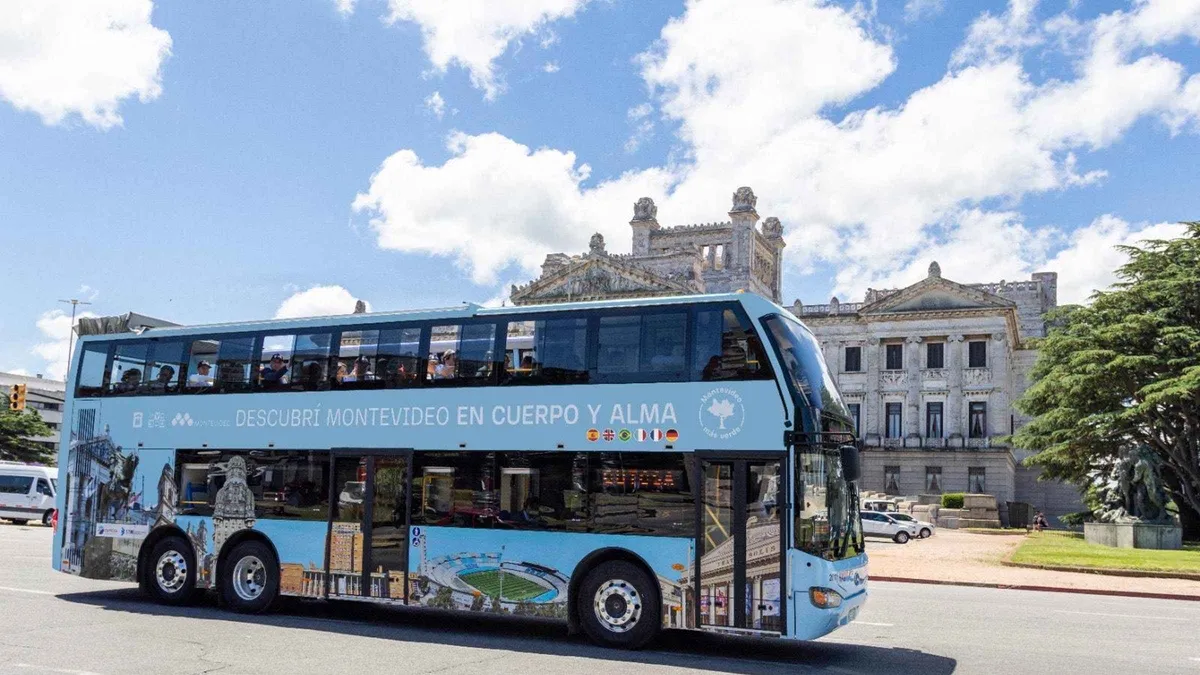 from $25
Montevideo: Sightseeing Hop-On Hop-Off Bus Tour
The cheapest city overview in Montevideo, a two-circuit 24-hour hop-on hop-off pass with audio guide for $25.
Check Availability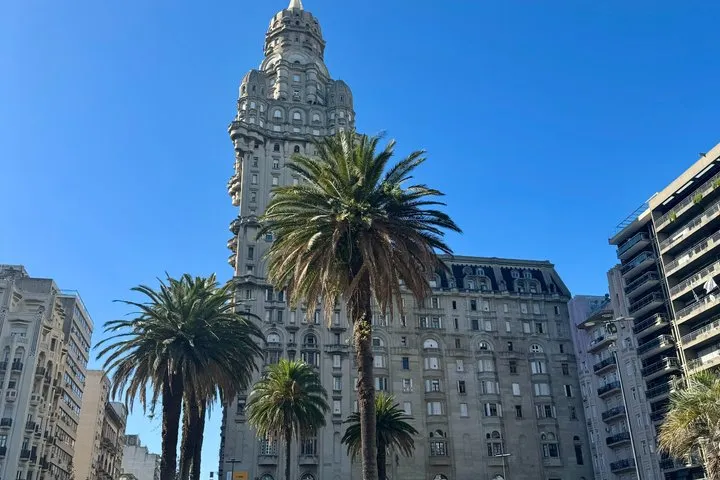 from $25
Half-day Regular City Tour at Montevideo
A short, affordable group city tour of Montevideo with pickup included and cruise passengers welcome, plus a private upgrade option.
Check AvailabilityPrices, ratings and details are the platform's own. Dollar figures are the listed prices. The platform bills in your account's currency.
Visiting the Fortaleza del Cerro: Hours, Entry and Getting Up
The fortress sits on the summit of the Cerro de Montevideo, on the west side of the bay. Come for the view and the museum, on a hill the sightseeing bus does not climb.
Hours and Entry
The Army's Department of Historical Studies, which runs the site, lists the visiting hours as Monday to Sunday, 10:00-18:00. That Monday opening matters: many of the museums in the centre shut on Mondays, so the fortress becomes one of the few historic sights you can enter then. The museums directory confirms that no prior booking is needed.
You simply turn up and walk in. No entry price is published, so carry some pesos in cash for the day. The fortress depends on the Ministry of National Defence, and the Army gives two phone numbers if you want to confirm a visit before making the trip across the bay: (598) 2313 6716 and 2900 1983.
Getting Up the Cerro
The hill stands across the bay from Ciudad Vieja, on the west side of the port. This is the one practical trap for visitors. The city's hop-on hop-off Bus Turístico does not cover the Cerro.
The government gave three reasons when it explained the route: the distance from the port, the short time many cruise ships spend in call, and the turning radius of the double-deckers on the hill's streets. So the fortress needs a taxi, your own car, which you can arrange through car rental in Montevideo, or a private tour. The private tailor-made city tour runs in an electric SUV with a registered guide and the route is agreed with the guide, so the Cerro is exactly the kind of stop you can ask for. Plan your ride back before you go up.
The safe plan is to arrive and leave with the same vehicle.
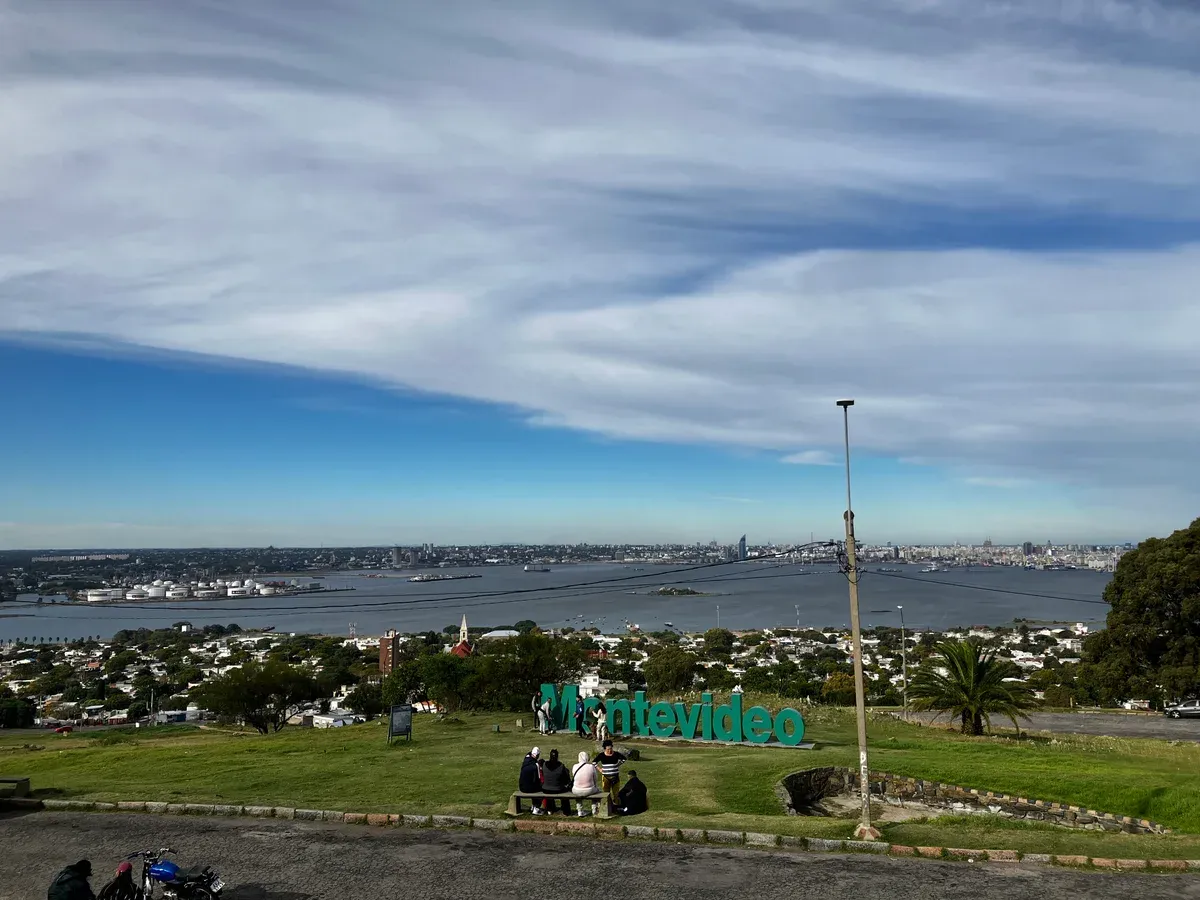
The MONTEVIDEO letters on the Cerro, with the bay and the city across the water. Photo: Efeland, CC BY-SA 4.0, via Wikimedia Commons
What You See From the Top
The tourism office describes the reward: a panoramic view over the bay and the port, with the Centro and Ciudad Vieja laid out in front of you across the water, and rural Montevideo stretching away on the other side. Few viewpoints in the city give you both halves at once. In February 2018 the government put up a MONTEVIDEO letters sign at the fortress, the same idea as the better-known sign on the rambla but with the whole city at your feet.
Inside the parade ground, a 25-metre mast flies the Artigas flag every day, raised for the bicentenary celebrations. The walls run 182 metres around, with the bay on one side and the open country on the other.
Source: Army Department of Historical Studies, Descubrí Montevideo, Presidencia.
Inside the Military Museum
The fortress has housed the Army's Military Museum since 1939 and the collection fills the rooms around the parade ground.
Arms and Artillery
The Defence Ministry calls it a monographic museum of arms. The colonial artillery spans the 17th to the 20th centuries,. Among the more unusual items are a rare bronze Browning machine gun and Nordenfelt guns, multi-barrel weapons of the late 1800s.
The racks hold flintlock and percussion arms, plus the rifles that served the Army in sequence: Remington from 1876 and Mauser from 1894. A case of duelling pistols carries its own story, because duelling was legal in Uruguay from 1920 to 1992. If you care about old weapons, give the collection more than a glance on your way to the ramparts.
Maps, the Artigas Room and the Time Capsule
Away from the weapons, one room holds maps of the region from the 16th to the 19th century, worth time if you want to see how the Río de la Plata took shape on paper. Another room is devoted to General José Artigas, the national figure whose name the fortress has carried since 1882 and whose flag flies on the mast outside. The Army sealed a time capsule here in 2011 for the bicentenary, to be opened in 2111.
It stays sealed until then. The fortress friends' association also displays a case of objects found buried around the building, dug up over years of care for the site. Together these rooms explain the hill as well as the guns.
Source: Ministry of National Defence.
The Last Spanish Fortress of the Río de la Plata
This is the last great Spanish military engineering work in the Río de la Plata, and one of only three big Spanish fortifications still standing in Uruguay. Its short service life was eventful.
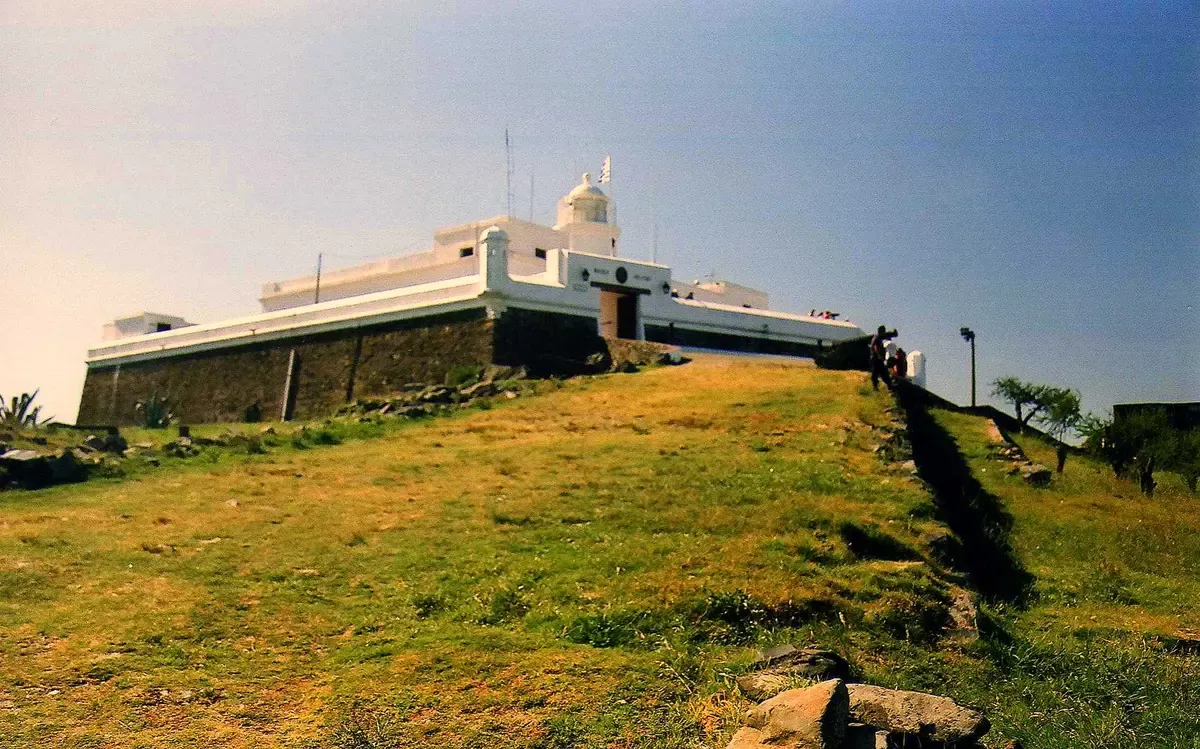
The walls of the Fortaleza General Artigas with the lighthouse dome above. Photo: rodoluca, CC BY-SA 3.0, via Wikimedia Commons
Why Spain Built It, 1809-1811
Montevideo fell to a British invasion in 1807. The Spanish governor Francisco Javier de Elío then ordered a fortress on the Cerro to strengthen the city's defences and protect the lighthouse that guided ships into the bay. The military engineer José Antonio del Pozo y Marquy began work in 1809.
The plan is pentagonal, drawn around the lighthouse that stands in the middle today, with walls up to nine metres high in stone and brick. There are no projecting bastions and no moat. The perimeter runs 182 metres.
The gate you use to enter is the builders' gate, not the one drawn in the original plan. The fortress entered action barely finished, when the siege of Montevideo began in 1811, and the royalists handed it over on 22 June 1814, before the city itself surrendered.
Sieges, Raids and a Prison
The hill kept seeing action after the Spanish left. In 1826, during the war with Brazil, Oribe's forces sprang an ambush at the foot of the hill and 71 men of the Brazilian imperial troops died there. In 1843, during the Guerra Grande, Garibaldi and his Italian Legion fought close to the Casa de la Pólvora del Cerro, the powder-store outwork that still survives below the fortress.
In 1870, during the Revolución de las Lanzas, rebels took the fortress at night. Between wars the building served softer duties: it worked as a quarantine lazaretto for arriving immigrants, and from 1895 to 1907 it served as a military prison.
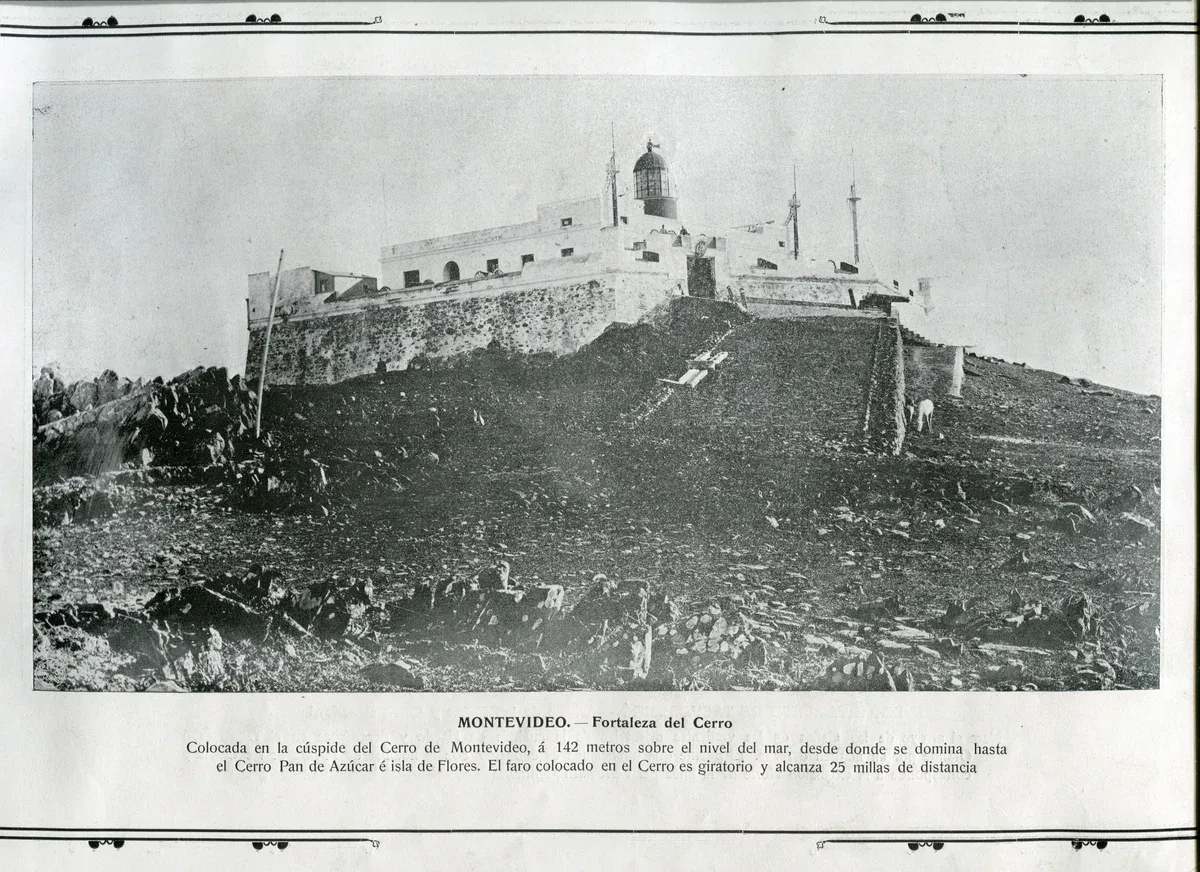
The fortress on its hill in 1907, before the restoration. Photo: Dornaleche y Reyes Impresores., Public domain, via Wikimedia Commons
From Fort to Museum
In 1882 the fortress was renamed Fortaleza General Artigas under President Máximo Santos, giving the hill its modern official name. Its heritage status came in steps. It was declared a National Monument on 6 July 1931 under law 8741,.
Restoration followed, and on 12 October 1939 the fortress opened as the Military Museum it still is. The hill itself carries national symbolism beyond the walls: the Army notes that the national shield of Uruguay includes the Cerro as a symbol of strength.
Source: Army Department of Historical Studies, Ministry of National Defence.
Where the Name Montevideo Comes From
The Defence Ministry's historian traces the city's name back to this hill. When Magellan's expedition passed the mouth of the Río de la Plata in 1520, a mount on the horizon served as a reference point for navigators entering the estuary, recorded as the 'montevidi'. Sailors used that visible hill to fix their position long before any town existed below it.
Over the 17th and 18th centuries the settlement that grew at the bay's edge took the hill's name as its own, and the city of Montevideo grew up named after the mount that stands across the water from its old quarter. When you stand on the summit you are on the feature that named the capital.
Source: Ministry of National Defence.
At the Foot of the Cerro
The hill's lower slopes hold a park, a memorial and a beach that most visitors to Montevideo never see.
Parque Vaz Ferreira and the Memorial
Parque Vaz Ferreira at the foot of the hill is named for Carlos Vaz Ferreira, the Uruguayan philosopher. Within the park stands the Memorial de los Desaparecidos, built for the people detained and disappeared during the dictatorship of 1973-1985. The tourism office describes the design: the names of the disappeared are engraved on two glass plates, and a stone path runs from the shore of the bay up to them, a route walked as a pilgrimage.
It is a quiet, sobering counterpart to the fortress above. If you have walked the ramparts and looked down at the bay, the short walk down into the park gives the hill a second, more recent layer of history.
Playa del Cerro
Playa del Cerro is the west-zone beach below the hill, listed by the city alongside Punta Espinillo, La Colorada, Zabala and Santa Catalina among the west-side sands. The tourism office records its working past: the beach was once used by the people of the area, mostly workers, reached in earlier times by tram, and its main attraction was a steamboat that crossed the bay in about 15 minutes. Today it is a popular walk for the west of the city, with the fortress visible on the slope above.
Do not expect the wide sands of Pocitos on the eastern rambla. Come for the view back across the bay and for a stretch of shore most tourist itineraries skip. See the other beaches of Montevideo before you choose.
Source: Descubrí Montevideo, el Cerro, Descubrí Montevideo, Playa del Cerro.
How Much Time to Give the Cerro
The hill rewards three different depths of visit. Choose before you set out, because getting there takes planning.
The first option is the view only. Walk the walls, read the plaques, photograph the MONTEVIDEO sign and the bay. Our estimate is under an hour at the top.
The second adds the Military Museum, with its artillery, map room and Artigas room. Our estimate is one to two hours for the fortress in full. The third is the hill plus what lies below: the beach, the rambla and the Memorial de los Desaparecidos in Parque Vaz Ferreira, which turns the trip into half a day on the west side.
Whatever you choose, remember the rule of the day. The sightseeing bus does not climb here, so the time budget must include the ride up and the ride back.
| Plan | Time on the hill | What you see | Cost |
|---|---|---|---|
| The view only | Our estimate: under an hour | Walls, the bay, the MONTEVIDEO letters | Your ride up and back |
| View and museum | Our estimate: one to two hours | Artillery, map room, Artigas room | No fee published, carry pesos |
| The hill and the shore | Half a day | Parque Vaz Ferreira, the memorial, Playa del Cerro | Your ride up and back |
The Fortaleza del Cerro in Dated Lines
-
1520
Magellan records the 'montevidi'
Magellan's expedition passes the estuary and logs the hill as a reference point for navigators, the origin of the city's name.
-
1809
Work begins
Engineer José Antonio del Pozo y Marquy starts the fortress on the order of governor Francisco Javier de Elío, after the British invasion of 1807.
-
1811
In action barely finished
The fortress enters service just as the siege of Montevideo begins.
-
22 June 1814
Handed over
The royalists hand the fortress over before Montevideo itself surrenders.
-
1826
Oribe's ambush
An ambush at the foot of the hill during the war with Brazil leaves 71 dead among Brazilian imperial troops.
-
1870
Taken at night
Rebels seize the fortress by night during the Revolución de las Lanzas, after Garibaldi's legion fought nearby in 1843.
-
1882
Renamed
The fortress takes the name Fortaleza General Artigas under President Máximo Santos.
-
6 July 1931
National Monument
Law 8741 declares the fortress a National Monument.
-
12 October 1939
Museum opens
After restoration the fortress opens as the Military Museum, the collection visitors walk today.
Dates from the Army Department of Historical Studies, the Defence Ministry and the Montevideo tourism office.
Do and Don't at the Fortaleza del Cerro
Do
- Go on a Monday, when many museums in the centre are shut and the fortress is open from 10:00 to 18:00.
- Carry pesos in cash, because no entry price is published and card payment is not guaranteed.
- Arrange your ride back before you go up, since the sightseeing bus does not serve the hill.
- Look both ways from the top: the bay and the city in front, rural Montevideo behind.
- Ask the private tailor-made city tour guide to include the Cerro when you book.
Don't
- Don't wait for the hop-on hop-off bus to bring you here, it never will.
- Don't assume the fortress closes on Mondays like the city museums, it opens every day.
- Don't skip the Military Museum rooms if you like old weapons, the bronze Browning machine gun is a rare piece.
- Don't book a group tour without asking the operator if it stops at the Cerro.
- Don't visit the neighbourhood without reading local guidance on safety in Montevideo.
Five Things Most Visitors Do Not Know
- The city of Montevideo is named after this hill. Magellan's 1520 expedition recorded it as the 'montevidi', a reference point for ships entering the estuary. (Defence Ministry) - This is the last great Spanish military engineering work in the Río de la Plata, and one of only three big Spanish fortifications still standing in Uruguay, with Fuerte San Miguel and Fortaleza de Santa Teresa.
(Defence Ministry) - The first lighthouse of the Río de la Plata stands inside the fortress walls, and the whole pentagonal plan was drawn around it. (Descubri Montevideo) - The Army sealed a time capsule in the fortress in 2011 for the bicentenary, set to be opened in 2111. (Defence Ministry) - The Cerro appears on the national coat of arms, where it stands as a symbol of strength.
The Cerro on the Map
The fortress across the bay from the old city, and the beach below it.
Next Stops From the Cerro
The places you look at from the walls.
Ciudad Vieja
The old city across the bay, its port edge and its pedestrian streets.
Montevideo beaches
From Playa del Cerro below the hill to Pocitos and Carrasco in the east.
Car rental in Montevideo
The simplest way up the hill if you want to set your own hours.
Fortaleza del Cerro Questions
What is the Fortaleza del Cerro?
It is a Spanish fortress built between 1809 and 1811 on the Cerro de Montevideo, the hill across the bay from the old city. Its official name is Fortaleza General Artigas. It is the last great Spanish military engineering work in the Río de la Plata and now houses the Army's Military Museum, with colonial artillery, historic rifles and a map room. The first lighthouse of the Río de la Plata stands inside the walls. Start your planning with the Montevideo attractions overview.
Where does the name Montevideo come from?
Per the Defence Ministry, the name comes from this hill. Magellan's 1520 expedition recorded the mount on the horizon as the 'montevidi', and navigators used it as a reference point when entering the Río de la Plata. The settlement that grew on the bay took the hill's name over the 17th and 18th centuries. Standing on the summit, you are on the very feature that gave the capital its name, which is a good reason to look inland as well as at the bay.
What is the history of the Cerro and the fortress?
Spain built the fortress in 1809-1811 after the British invasion of 1807, and the royalists handed it over on 22 June 1814. Later came Oribe's ambush at the foot of the hill in 1826, Garibaldi's fighting nearby in 1843, and a rebel night raid in 1870. It served as a quarantine lazaretto and as a military prison from 1895 to 1907. It was renamed Fortaleza General Artigas in 1882, made a National Monument on 6 July 1931 and opened as a museum on 12 October 1939.
What are the Fortaleza del Cerro hours?
The Army's Department of Historical Studies lists the visiting hours as Monday to Sunday, 10:00-18:00. It opens every day of the week, which is unusual in a city where many museums shut on Mondays. No booking is needed. If a specific day matters to your plan, call the fortress on (598) 2313 6716 or 2900 1983 before you cross the bay, since a failed trip up the hill costs you a good part of a day.
What is the entry price?
No entry price is published for the fortress, and no booking is needed. The practical move is to carry some pesos in cash for the visit and for anything at the foot of the hill. For background on money in the country, including card rules that can cut costs elsewhere on your trip, see currency in Uruguay.
How do I get to the Fortaleza del Cerro?
The hill sits across the bay from the old city on the west side, and the city's hop-on hop-off Bus Turístico does not go there. The government cited the distance from the port, short cruise calls and the turning radius of the double-deckers. So take a taxi, drive your own rental car, or book the private tailor-made city tour and ask the guide to include the Cerro, since the route is set with the guide. Plan the return trip before you start.
Is the Fortaleza del Cerro worth it, and what can you see from the top?
For many visitors it is, because the view takes in the whole bay. From the top, about 135 metres up, you see the bay and the working port below, the Centro and Ciudad Vieja in front of you across the water, and rural Montevideo on the other side. There is a MONTEVIDEO letters sign for photos and a 25-metre mast flying the Artigas flag daily. The trade-off is transport, since no sightseeing bus comes up. Weigh it against the other what to see in Montevideo options.
Where the Cerro Fits in a Montevideo Trip
The fortress earns its place on two kinds of day. The first is a Monday, when the museums of the centre are shut but the fortress opens as usual from 10:00 to 18:00. The second is a clear afternoon, when the view across the bay stretches to the far shore.
Pair it with Ciudad Vieja, which you will have just looked at from across the water, and let the hop-on hop-off bus carry you around the rest of the city, since it covers the centre and the rambla but not the hill. If a half-day group tour is your speed, check the half-day regular city tour and ask the operator before booking whether it stops at the Cerro. For more Montevideo attractions and where to stay in Montevideo, see the rest of this guide.
The Fortaleza del Cerro on Film
Three films of the walls, the museum and the view.
Así es la Fortaleza del Cerro y el Museo Militar
A walk through the fortress and its museum, in Spanish.
Video: Un viajecito aPatrimonio Silencioso: Fortaleza del Cerro
A heritage film from a Uruguayan broadcaster.
Video: Canal 5 UruguayExploring the Cerro Fortress in Montevideo, Uruguay
The walls and the view, in English.
Video: ExplorerXuy | UrbexVideos load from YouTube only when you press play.
Prices, hours and terms are set by the venue or operator and confirmed at checkout.
We may earn a commission if you book through one of our links, at no extra cost to you. Full affiliate disclosure