 Montevideo City Guide
Museo del Carnaval, Montevideo: Hours, Tickets and the Friday Guided Visit
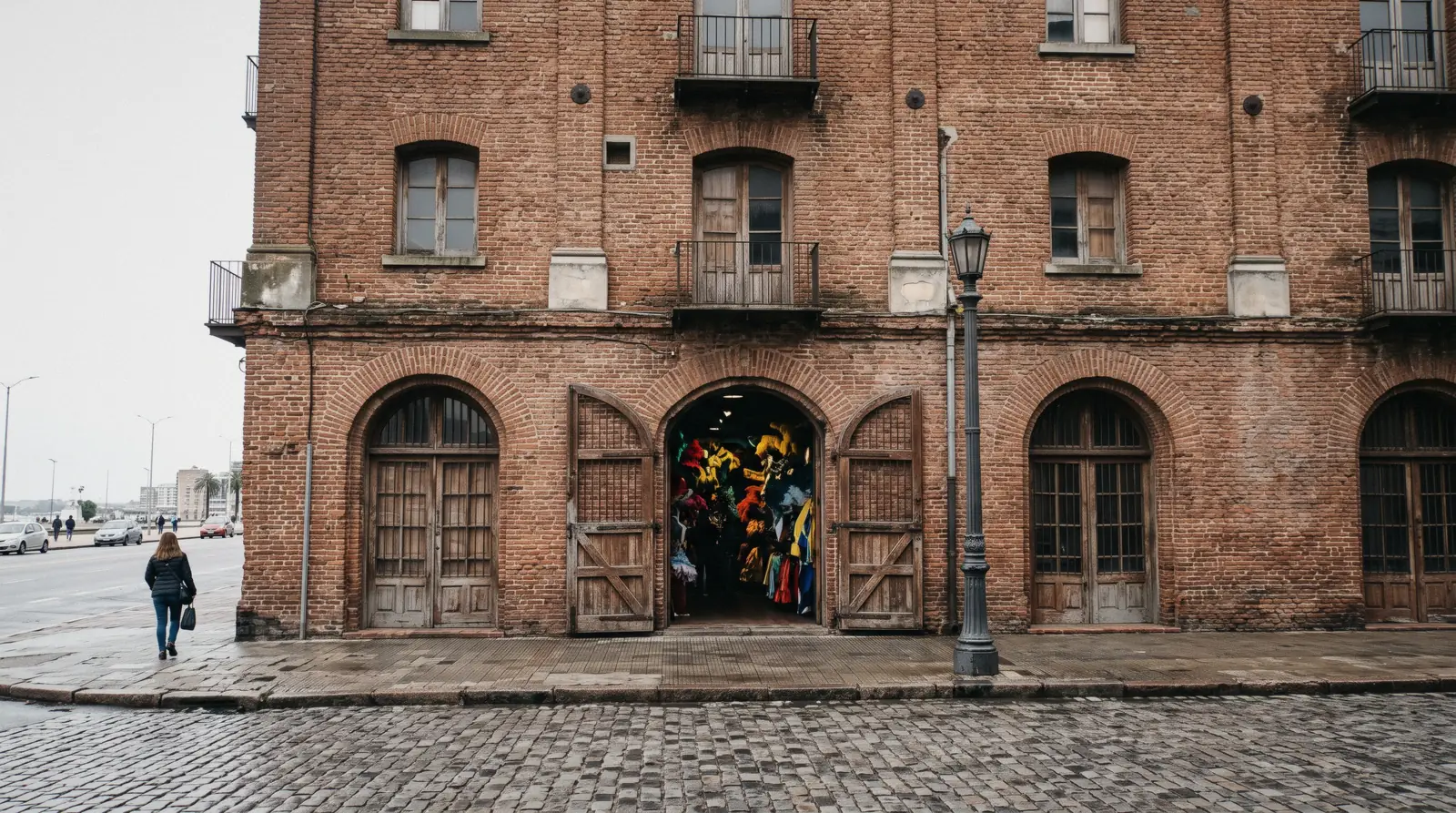
The Museo del Carnaval is Montevideo's museum of its own carnival, the festival that fills about forty nights of the southern summer. It opened in November 2006 in an old port warehouse block it shares with the Mercado del Puerto in Ciudad Vieja. This page covers the hours, the entry prices, the Friday guided visit that comes free with your ticket, what is inside, the summer tablado stage and the museum's parade seats. For more of the old town, see our guide to things to do in Montevideo and Ciudad Vieja.
Quick answer Price, hours, the Friday guided visit, how long
Entry to the Museo del Carnaval costs $4.96 (UYU 200), and it opens Wednesday to Sunday 11:00-17:00. Inside you find costumes, drums and masks from the five carnival categories, plus a documentation centre upstairs. A guided visit runs every Friday at 11:30 and is included in the ticket. The museum sits beside the Mercado del Puerto, so lunch is steps away.
Key takeaways
- Uruguay's carnival runs about forty nights from the last days of January to early March, with murga singing and candombe drum lines, all explained on our carnival in Uruguay page.
- The museum shares its block with the Mercado del Puerto, so grill lunch next door works well before or after your visit.
- The Ciudad Vieja historical walking tour at $20 includes the Mercado del Puerto, so pairing it with the museum makes a full old-town day.
- In summer the museum stages its own tablado in the Plaza del Carnaval and sells tourist seats for the big parades, including the Desfile de Llamadas.
Key facts
Opening hours
| Wed-Sun | 11:00–17:00 |
|---|
Closed Monday and Tuesday, plus 1 and 6 January, 1 May, 18 July, 25 August, 24, 25 and 31 December
Admission
- Adult
- $4.96 (UYU 200)
- Reduced
- $3.72 (UYU 150) students and residents over 65, $2.48 (UYU 100) Tarjeta Dorada
- Free
- Children under 12, Tarjeta Verde
Planning it
- Time needed
- The museum's guided visit is about 30 minutes. Our estimate for a self-guided visit: under an hour.
- Book ahead
- Optional — walk-up usually fine
- Address
- Rambla 25 de Agosto de 1825 no. 218, corner Maciel, Ciudad Vieja, Montevideo
No platform sells entry to the Museo del Carnaval, so these are the museum's own ticket prices from its visit page, with the dollar figure first. Cards are accepted at the desk.
Can you come on a Friday? The 11:30 guided visit is included in the ordinary ticket.
| Ticket | Price | Who it is for | Includes | Book |
|---|---|---|---|---|
| GeneralMost visitors | $4.96 (UYU 200) | Adults | Exhibitions, Friday 11:30 guided visit | Official site |
| ReducedStudents with ID and residents over 65 | $3.72 (UYU 150) | Students, residents over 65 | Same visit | Official site |
| ChildFamilies | Free | Under 12 | Same visit | Official site |
Group visits with a candombe or murga demonstration are arranged by email, minimum 10 people. Source: Museo del Carnaval, visit the museum.
Old Town Tours to Pair With the Museum
None of these includes the museum ticket. They cover the streets and the market around it, and the evening show puts candombe on stage. Figures current {checked}.
 from $20
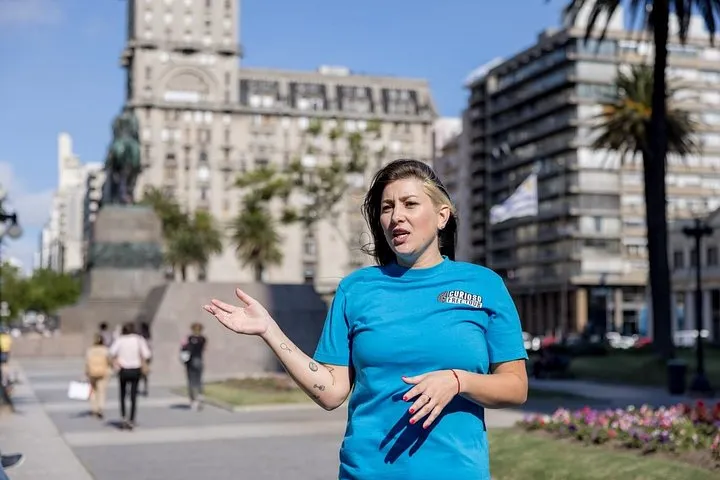
Historical and Cultural Tour of Montevideo Discover Old Town
A 2.5 hour guided walking tour of Montevideo's Old City with entry to three sights included for $20.
Check Availability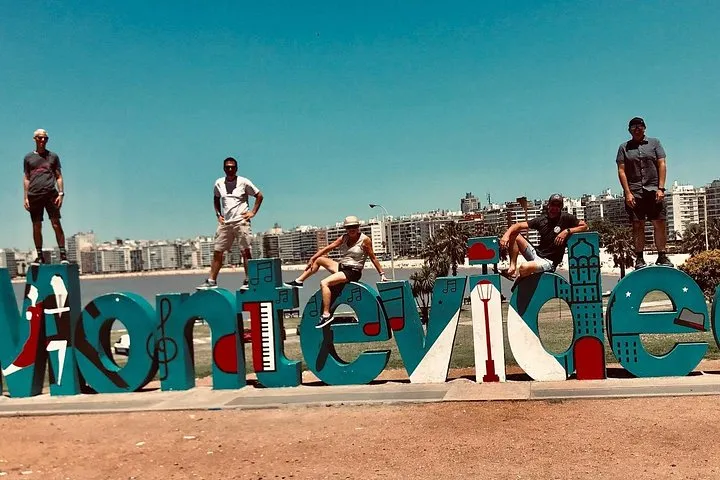 from $129
Private Walking Tour in Montevideo
A private certified-guide walking tour of the old city that starts within walking distance of the cruise port, with an optional candombe drum class.
Check Availability from $37.99
Montevideo: Walking Tour with Photographer and Audioguide
A 105-minute Old City walk where a professional photographer takes your photos and around 40 edited images arrive by email within 7 days.
Check Availability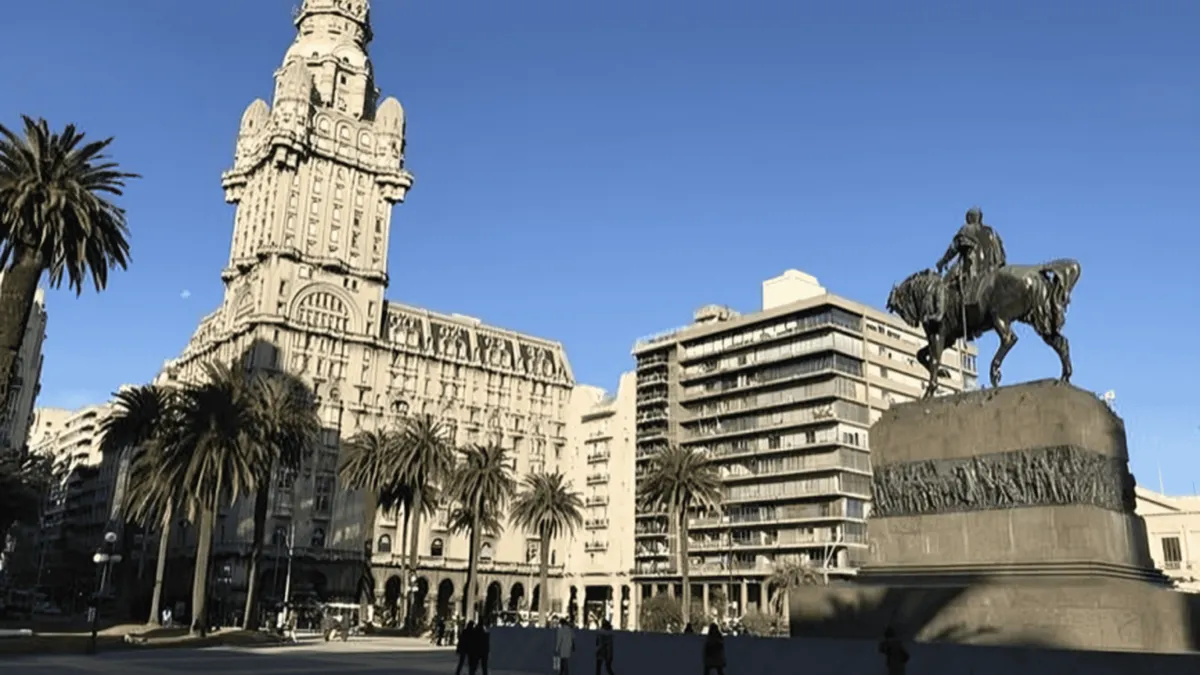 from $31
Montevideo: Must-See Sites Walking Tour With A Guide
A private customized walking tour with hotel transport, museum entry and a drink or food included, from $31 per person.
Check Availability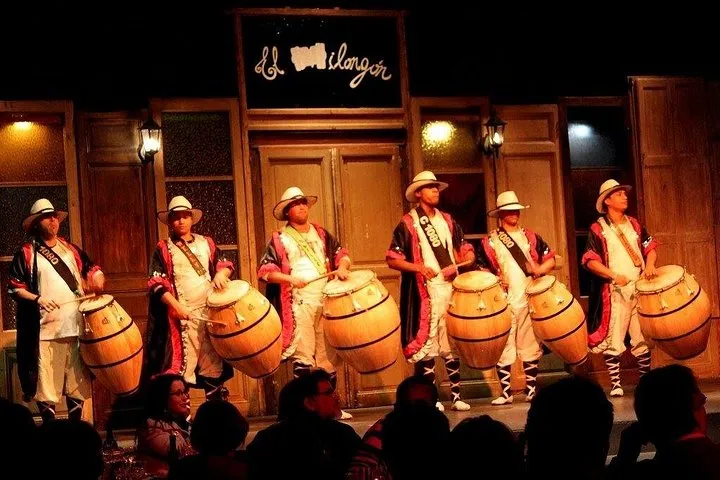 from $107
El Milongon Dinner & Show: Candombe, Tango and Folklore
An evening dinner show combining candombe, tango and folklore with a three-course meal and optional hotel transfers.
Check Availability from $55
Montevideo Small Group Bike Tour or E-bike tour with picnic
Small-group bike or e-bike ride through Ciudad Vieja and the Rambla with a picnic at the end, capped at 6 riders.
Check AvailabilityPrices, ratings and details are the platform's own. Dollar figures are the listed prices. The platform bills in your account's currency.
Visiting the Museo del Carnaval: Hours, Prices and the Friday Tour
The museum is small enough to see in a morning, but the opening days catch people out. Here is exactly when it opens and what entry costs.
Hours and Closed Days
The address is Rambla 25 de Agosto de 1825 no. 218, corner Maciel, in Ciudad Vieja, and the phone is (+598) 2916 5493. Doors open Wednesday to Sunday 11:00-17:00. The museum closes on 1 and 6 January, 1 May, 18 July, 25 August, and 24, 25 and 31 December.
Monday and Tuesday it is shut all day, which surprises visitors who assume capital-city museums open daily. Cruise passengers docking on a Monday or Tuesday will need another plan, or another day. Reaching it is easy: the museum says every bus bound for Ciudad Vieja or Aduana takes you there, and so does the Bus Turístico.
For orientation across the whole city, our Montevideo map helps.
Tickets and the Friday Guided Visit
The general ticket is $4.96 (UYU 200). Students and residents over 65 pay $3.72 (UYU 150), holders of the Tarjeta Dorada pay $2.48 (UYU 100), and the Tarjeta Verde and children under 12 enter free. Cards are accepted, including Visa, Mastercard, Maestro, Oca, Cabal and Amex, so you do not need a pocket of pesos.
The reason to come on a Friday: at 11:30 a guided visit departs and it is included in your general ticket, no extra charge. For pre-arranged groups, a standard guided visit lasts about 30 minutes, and a 'visita participativa' adds a candombe or murga demonstration workshop for a total of about an hour. Groups need a minimum of 10 people, and visits run in Spanish, Portuguese, English or French.
Write to contacto@museodelcarnaval.org to arrange one.
Access
The exhibition rooms and the workshop space sit on the ground floor, reached by ramps, and there is an accessible toilet. General visitors enter at Rambla 25 de Agosto 218. Groups with reduced mobility can use the gate on Maciel street instead, which avoids the main approach.
The documentation centre is on the second floor, so travellers who cannot manage stairs should ask staff what can be shown downstairs. Anyone planning a longer accessible itinerary can find more practical notes in our Montevideo travel tips.
Source: Museo del Carnaval, visit the museum, Museo del Carnaval, FAQ.
What Is Inside the Museum
The museum keeps, shows and explains the objects and traditions of Uruguay's biggest popular festival.
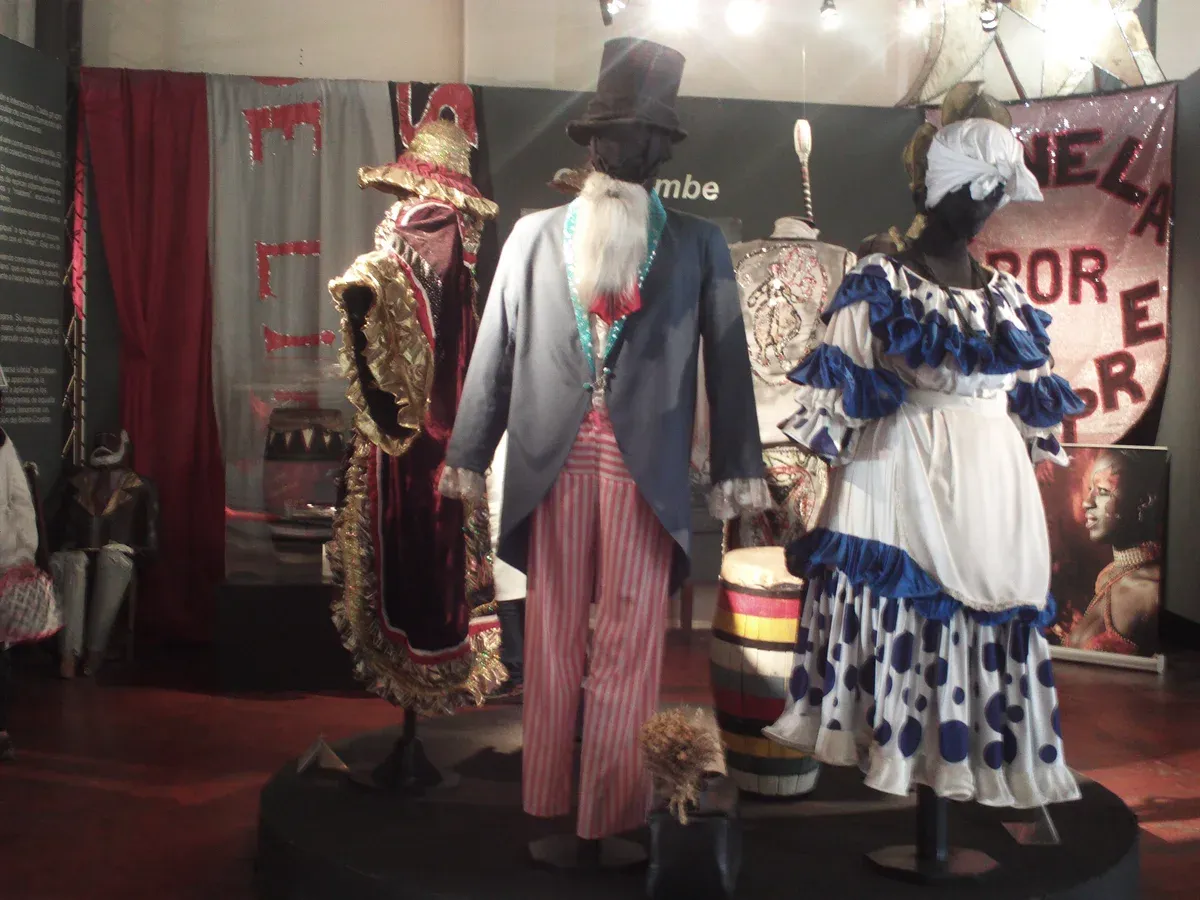
Carnival costumes on display in the museum. Photo: Ypsilon from Finland, CC0, via Wikimedia Commons
Costumes, Drums and Masks
The exhibition rooms on the ground floor show the costumes, masks and drums of Uruguayan carnival, the same pieces the groups wear and play on the summer stages. The people who show you round are part of the story: the museum says its hosts are artists and musicians with long careers, many of them carnival performers themselves, so the history comes with first-hand experience. The drums belong to the comparsas and the candombe tradition, which you can hear in the street in Barrio Sur and Palermo.
The museum shop, open Wednesday to Sunday 11:00-17:00 like the museum, sells national crafts by artisans and artists, reproductions, books, records and souvenirs, a better bet than a fridge magnet if you want something made in Uruguay.
The Five Categories of Carnival
Uruguayan carnival groups compete in five categories: murgas, humoristas, parodistas, revistas and comparsas de negros y lubolos. The comparsas carry the candombe drums, and the museum describes their street parade as an expression of identity and resistance of Uruguay's Black community. All five perform on open-air neighbourhood stages called tablados and compete in the Concurso Oficial de Agrupaciones Carnavalescas at the Teatro de Verano Ramón Collazo, in Parque Rodó.
The contest runs about forty consecutive nights, from the last days of January to early March. The Desfile de Llamadas, the great drum parade through Barrio Sur and Palermo, was made official in 1956. Our carnival in Uruguay guide explains the whole calendar.
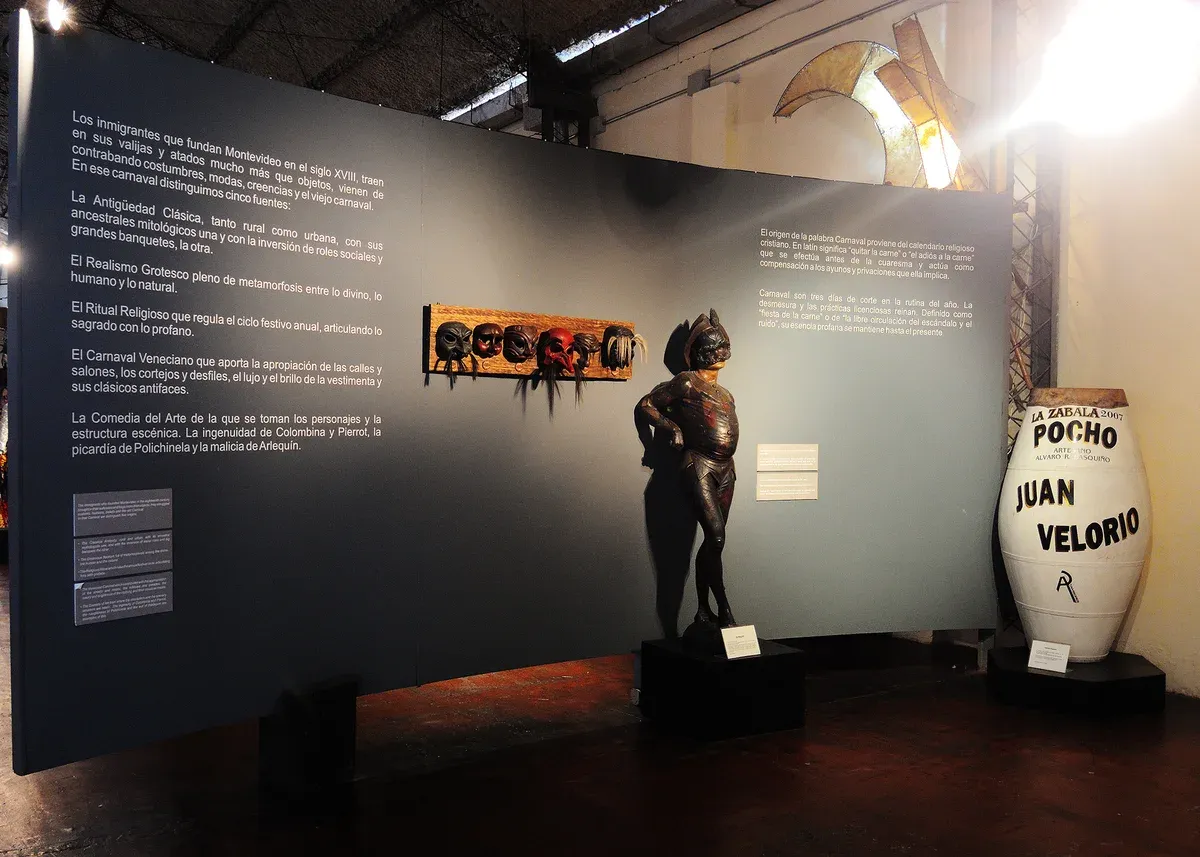
Panels and figures in the exhibition rooms. Photo: Fernando da Rosa (Fedaro), CC BY-SA 3.0, via Wikimedia Commons
The Archive Upstairs
The second floor holds the museum's documentation centre, where the documents of the festival are kept and studied. It matters more than it sounds: the museum reopened on 30 September 2022 after a year of works that added new workshop spaces, an artisans' shop and a café, and put a new roof over the archive to protect it. The documentation project has won outside recognition, including support through Iberarchivos and the Reina Sofía prize for heritage conservation in 2009.
The café added in those works is a place to wait if you arrive early for the Friday 11:30 visit.
Source: Museo del Carnaval, tourist proposals, Ministry of Education and Culture.
A Warehouse on the Old Shoreline
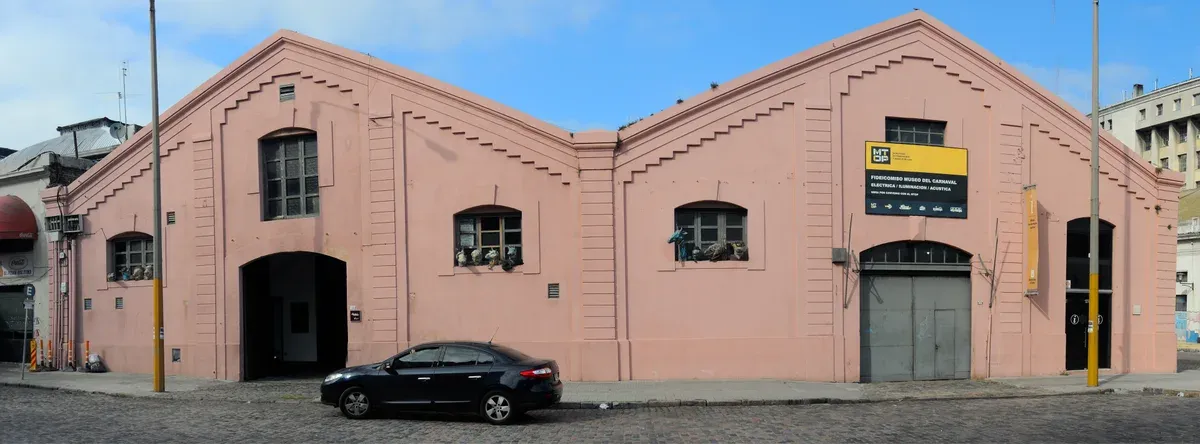
The museum's warehouse front on Rambla 25 de Agosto de 1825. Photo: Fernando da Rosa (Fedaro), CC BY-SA 3.0, via Wikimedia Commons
The plot has a longer story than the museum. When Montevideo was founded, a third of it lay under the water of the bay. The old colonial city wall crossed this ground, and remains of it lie underground near the wall line on Piedras street.
The buildings were port warehouses, including the barraca of the shipping firm Wilson Sons & Co.. Today the plot covers 3,076 square metres and completes the block it shares with the Mercado del Puerto, the covered market hall of the port. Since January 2008 the museum has been run as a trust of the Ministry of Education and Culture, the Ministry of Tourism and the Intendencia de Montevideo.
Source: Museo del Carnaval, presentation.
In Carnival Season: the Tablado and Parade Seats
The museum is not only a display about carnival. In summer it stages carnival itself.
The Tablado del Museo
Since 2010 the Plaza del Carnaval inside the museum has hosted the museum's own summer tablado, an open-air stage where real carnival groups perform. The plaza covers 1,000 square metres and opened in February 2010 on the corner of Piedras and Maciel, so it is part of the museum complex rather than a separate venue. You enter through the museum, which means your warm-up is the exhibition itself, a sensible order for anyone seeing carnival groups for the first time.
There is a second covered stage, so if summer rain arrives the show goes on instead of being cancelled. Tablado tickets are sold separately each season, so ask at the desk or email before you go. Performances run during Carnaval, from late January to early March.
Seats for the Parades
The museum sells tourist palco seats, grandstand places with hosts, toilets and security, for the big parades of the season. Three are on offer: the Desfile Inaugural in Plaza Cagancha, which runs about 6 hours, the samba schools parade at about 3.5 hours, and the Desfile de Llamadas, the drum parade through Barrio Sur and Palermo. Buying a palco seat means you sit rather than stand for hours on the pavement, which on a hot summer night matters more than you expect.
To arrange seats, write to contacto@museodelcarnaval.org well ahead. The parades fall in late January and February each year. The months, routes and the meaning of each parade are on our carnival in Uruguay page, and the drum tradition itself has its own story on candombe.
Source: Museo del Carnaval, presentation, Museo del Carnaval, tourist proposals.
How Much Time to Give the Museo del Carnaval
The museum is compact, so this is not an all-morning sight. The honest answer depends on whether you take a tour.
The museum's own guided visit runs about 30 minutes. The participatory visit, with a candombe or murga demonstration added, takes about an hour. For a self-guided look, our estimate is under an hour for the two exhibition floors, longer if you read every label or spend time in the documentation centre.
Plan the practical side around the rule that the museum opens Wednesday to Sunday 11:00-17:00 only. If you want the included guided visit, come Friday and be at the desk before 11:30, then walk straight into lunch next door. That sequence fills the morning without rushing.
If you still have energy afterwards, the rest of Ciudad Vieja is on your doorstep and can absorb a full afternoon of squares, gates and street art.
| Visit | Time | What you get | Cost |
|---|---|---|---|
| Self-guided | Our estimate: under an hour | Costumes, masks, drums | $4.96 (UYU 200) |
| Friday guided visit, 11:30 | About 30 minutes | A host's account of carnival | Included in the ticket |
| Participatory group visit | About an hour | Tour plus a candombe or murga demonstration | By arrangement, minimum 10 |
Do and Don't at the Museo del Carnaval
Do
- Do come on a Friday if you can, so the 11:30 guided visit is included in your general ticket at no extra cost.
- Do check which day of the week your cruise ship docks, because the museum shuts every Monday and Tuesday.
- Do plan lunch at the Mercado del Puerto, which shares the block, before or after the museum.
- Do email contacto@museodelcarnaval.org ahead if you want a palco seat for a parade or a group visit with a drum demonstration.
- Do bring a card rather than cash, since Visa, Mastercard, Maestro, Oca, Cabal and Amex are all accepted.
Don't
- Don't arrive on 1 January, 6 January, 1 May, 18 July, 25 August, or 24, 25 or 31 December, when the museum is closed.
- Don't budget two hours for the visit, because the guided tour is about 30 minutes and a self-guided look needs under an hour.
- Don't assume the tablado performances are free with museum entry, because tablado prices change each season.
- Don't expect a tablado show outside Carnaval, the summer stage runs only in the carnival months.
- Don't leave palco seat requests to the last minute, they are arranged by email with the museum.
Five Things Most Visitors Do Not Know
- A third of the museum's plot was under the bay when Montevideo was founded, before the shoreline was filled in. (Museo del Carnaval) - Remains of the old colonial city wall lie underground on the plot, near the wall line on Piedras street. (Museo del Carnaval) - The building was a warehouse of the shipping firm Wilson Sons & Co., and the museum shares the whole block with the Mercado del Puerto.
(Museo del Carnaval) - The museum won the Reina Sofía prize for heritage conservation in 2009 for its archive work, and reopened after renovations on 30 September 2022. (Museo del Carnaval) (Ministry of Education and Culture) - The museum's Friday guided visit is included in the ordinary ticket, so arriving at 11:30 on a Friday costs you nothing extra. (Museo del Carnaval)
Museo del Carnaval on the Map
The museum on the port edge of Ciudad Vieja, the market next door and the squares of the old town.
Next Stops From the Museo del Carnaval
Lunch next door, the old town on foot and carnival itself.
Museo del Carnaval Questions
How much is entry to the Museo del Carnaval?
The general ticket is $4.96 (UYU 200). Students and residents over 65 pay $3.72 (UYU 150), the Tarjeta Dorada costs $2.48 (UYU 100), and the Tarjeta Verde and children under 12 enter free. Cards are accepted, including Visa, Mastercard, Maestro, Oca, Cabal and Amex, so you do not need cash. For what your bank may charge in fees, see our page on Uruguay's currency.
What is in the Museo del Carnaval?
The museum keeps and shows the objects and traditions of Uruguay's biggest popular festival. Displays cover costumes, drums and masks from the five carnival categories, from murga choirs to the candombe drum comparsas. Upstairs is a documentation centre with decades of carnival material. Since the 2022 reopening there are also workshop spaces, an artisans' shop and a café.
How long does a visit take?
The museum's guided visit lasts about 30 minutes, and a participatory visit with a candombe or murga demonstration takes about an hour. For a self-guided look, our estimate is under an hour. Most travellers therefore treat it as a one-hour sight, paired with lunch at the Mercado del Puerto next door and a walk through the old town.
Where is the Museo del Carnaval?
It is at Rambla 25 de Agosto de 1825 no. 218, corner Maciel, in Ciudad Vieja. The museum shares the block with the Mercado del Puerto. Any bus to Ciudad Vieja or Aduana gets you close, as does the Bus Turístico. The phone is (+598) 2916 5493 if you need to confirm anything on the day.
What are the Museo del Carnaval hours?
Wednesday to Sunday 11:00-17:00. The museum closes every Monday and Tuesday, and also on 1 and 6 January, 1 May, 18 July, 25 August, and 24, 25 and 31 December. The Monday and Tuesday closures catch cruise passengers more than anyone, so check your ship's docking day before building the museum into a port-day plan.
Is the museum worth visiting outside carnival season?
Yes, and many visitors see it precisely because their trip falls outside the carnival months. The costumes, drums and displays explain the five categories and the parade traditions, so if you return in summer or catch a performance you understand what you are watching. In summer the museum also stages its own tablado in the Plaza del Carnaval and sells seats for the parades.
Can I buy parade tickets at the museum?
The museum sells tourist palco seats, grandstand places with hosts, toilets and security, for the Desfile Inaugural in Plaza Cagancha, the samba schools parade and the Desfile de Llamadas. The parades fall in late January and February. Write to contacto@museodelcarnaval.org ahead of your trip. Our carnival in Uruguay guide covers the routes and the rest of the season.
Where the Museum Fits in a Ciudad Vieja Day
The cleanest plan is a Friday. Arrive before 11:30 for the guided visit included in the general ticket, then step next door for grill lunch at the Mercado del Puerto after the tour. At 14:30, Monday to Saturday, the Ciudad Vieja historical walking tour departs and takes in the old city including the market, so the afternoon fills itself.
In the evening, the El Milongón dinner show puts candombe, tango and folklore on stage with dinner, and our candombe page explains where the drums play in the street. If you prefer to explore alone, our Ciudad Vieja guide and the wider list of Montevideo attractions cover the squares and gates nearby, and where to stay in Montevideo helps if you want to sleep in the old town.
The Museo del Carnaval on Film
Three films of the costumes, the drums and the rooms.
Museo del Carnaval
The museum's own film of its rooms.
Video: Museo del CarnavalMuseo del Carnaval: Candombe y Murga Uruguaya
A visit with candombe and murga explained.
Video: Rodando Con PropósitoWalking Montevideo, Uruguay: Museo del Carnaval
A walk through the museum without narration.
Video: Walking & Driving IncognitoVideos load from YouTube only when you press play.
Prices, hours and terms are set by the venue or operator and confirmed at checkout.
We may earn a commission if you book through one of our links, at no extra cost to you. Full affiliate disclosure