 Montevideo City Guide
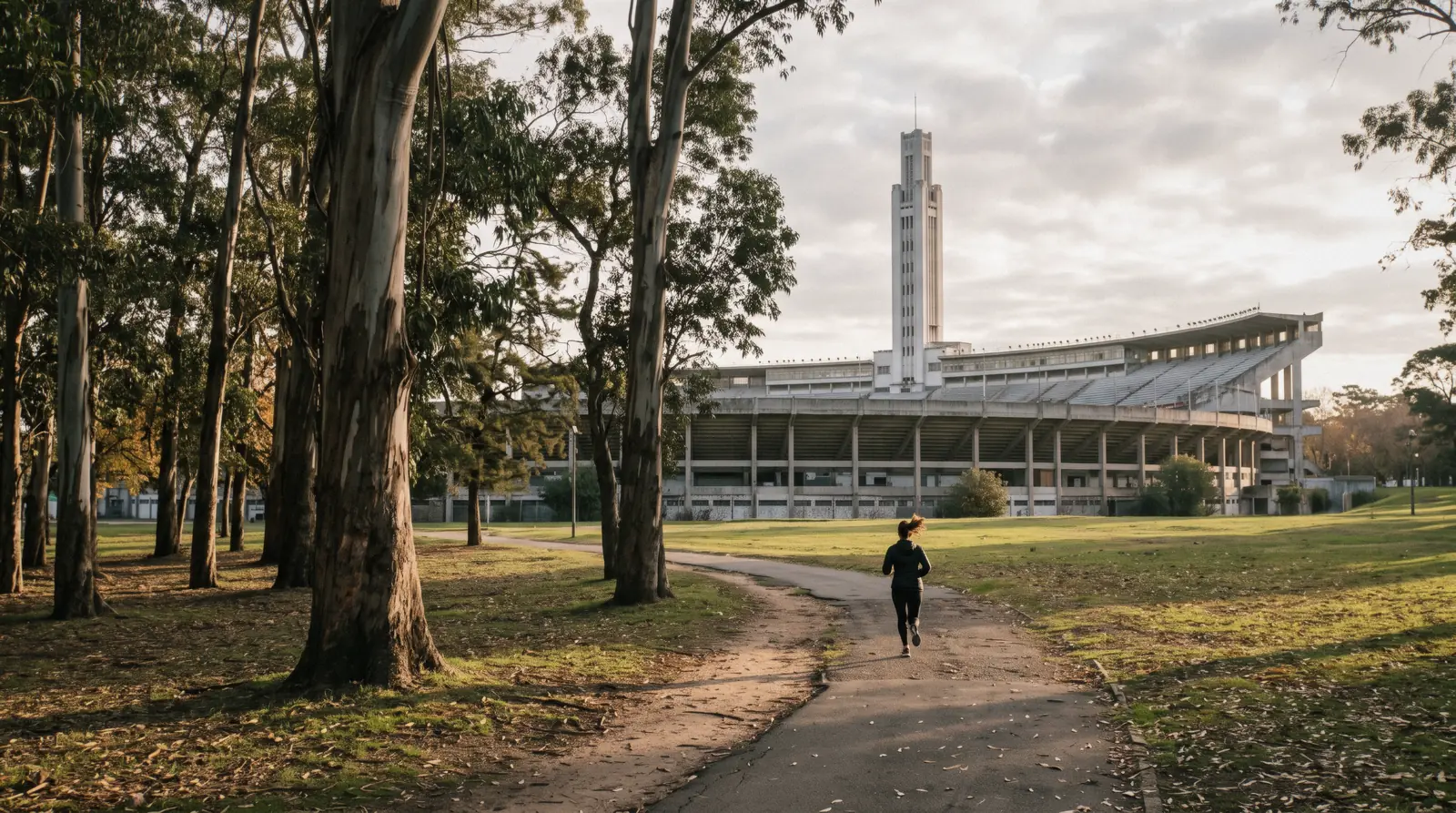
Estadio Centenario: The 1930 World Cup Stadium and the Museo del Fútbol
The Estadio Centenario stands in Parque Batlle, Montevideo, built for the first World Cup and opened on 18 July 1930. It hosted the first final, where Uruguay beat Argentina 4-2, and FIFA has named it a Historic Monument of World Football. This page covers the Museo del Fútbol with its hours and entry price, the 1930 story, the stands and the tower, how to see a match, and how the stadium fits into a day of things to do in Montevideo.
Quick answer Museum hours and price, match days, how long, how to get there
The Museo del Fútbol costs $9.92 (UYU 400) for foreigners and opens Monday to Saturday 10:00-17:00, Sunday 11:00-15:00. The stadium hosted the first World Cup final in 1930 and is the only construction FIFA has declared a Historic Monument of World Football, since 1983. The museum closes on any match day. FIFA has set the opening game of the 2030 World Cup for this stadium.
Key takeaways
- Cruise passengers short on time can take the shore excursion for cruise passengers at $44, which includes a 10-minute guided stop at the stadium and returns to the cruise port.
- The museum closes whenever there is a match, so check the fixture list the day before you go.
- The Torre de los Homenajes and the Tribuna Olímpica stand are reached through the museum visit.
- Good next stops nearby are the Palacio Legislativo and the rest of the Montevideo attractions.
Key facts
Opening hours
| Mon-Sat, Museo del Fútbol | 10:00–17:00 |
|---|---|
| Sun, Museo del Fútbol | 11:00–15:00 |
Closed The museum closes on any match day. The stadium's history page lists weekdays only, so check before a Sunday.
Admission
- Adult
- $9.92 (UYU 400) for foreign visitors
- Reduced
- $4.96 (UYU 200) Uruguayans, $2.23 (UYU 90) retirees
- Free
- Children under 12
Planning it
- Time needed
- Our estimate: 1 to 1.5 hours for the museum and the stand. Tour stops last about 10 minutes.
- Book ahead
- Optional — walk-up usually fine
- Address
- Av. Américo Ricaldoni, Tribuna Olímpica, next to Gate 13, Parque Batlle, Montevideo
The Museo del Fútbol is the visitor way into the Estadio Centenario and no platform sells its ticket. The rates below are the ones the stadium prints on its museum page.
Do you want to stand inside the stadium, or see it from the coach? Only the museum ticket takes you onto the Tribuna Olímpica.
| Ticket | Price | Hours | Includes | Book |
|---|---|---|---|---|
| Museum, foreign visitorEvery visitor from outside Uruguay | $9.92 (UYU 400) | Mon-Sat 10:00-17:00, Sun 11:00-15:00 | Collection, auditorium, the Olímpica stand, phone photos | Official site |
| Museum, child under 12Families | Free | Same hours | Same visit | Official site |
Closed on match days. Uruguayans pay $4.96 (UYU 200) and retirees $2.23 (UYU 90). Source: Estadio Centenario, football museum, Descubrí Montevideo.
City Tours That Stop at the Estadio Centenario
These cards include the stadium as one stop on a city loop, mostly from the cruise port. None includes the museum ticket. Stop lengths are the operators' own. Figures current {checked}.
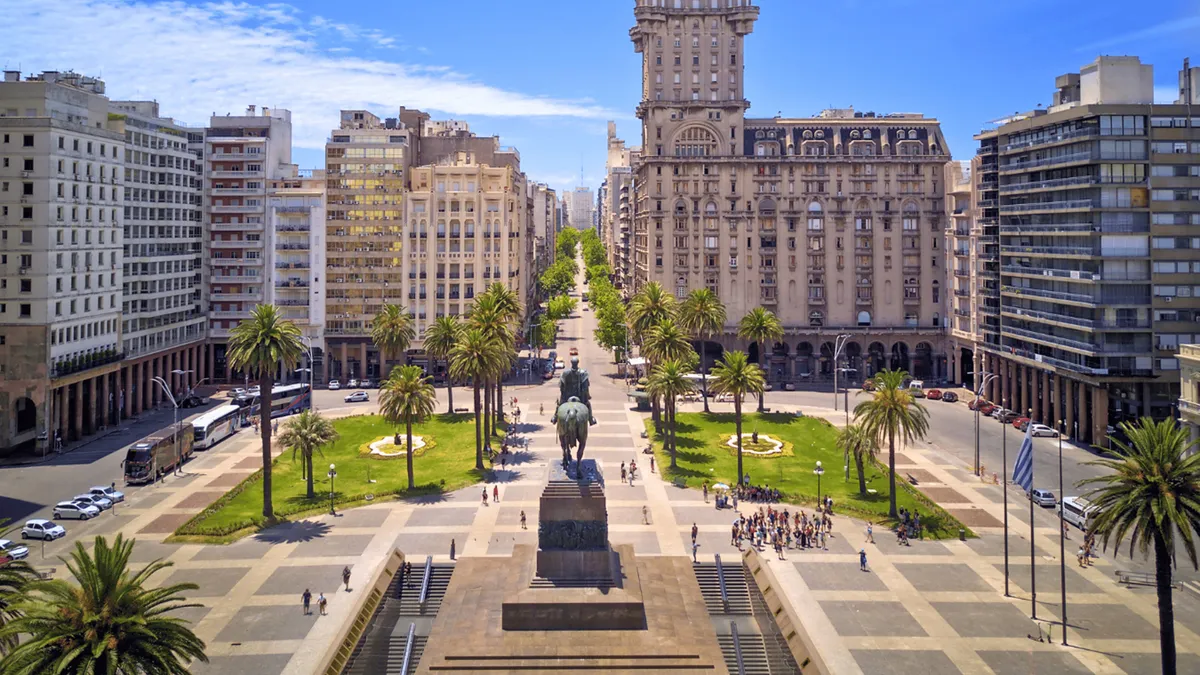 from $44
Montevideo: Shore Excursion for Cruise Passengers
A 3.5-hour port-based city loop for cruise passengers at $44, covering Ciudad Vieja, Estadio Centenario and the Rambla with wheelchair access.
Check Availability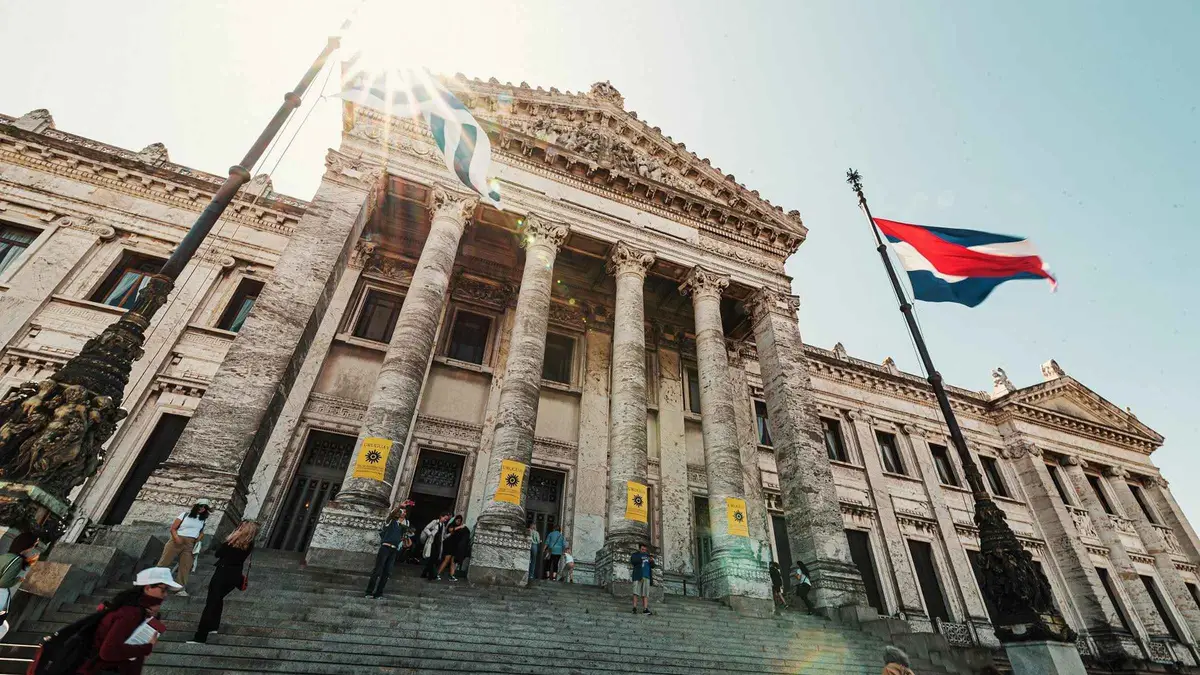 from $35
Montevideo City Tour for Cruisers
A 3-hour port-to-port overview tour at $35 per person that waits for late cruise ships and returns to the terminal.
Check Availability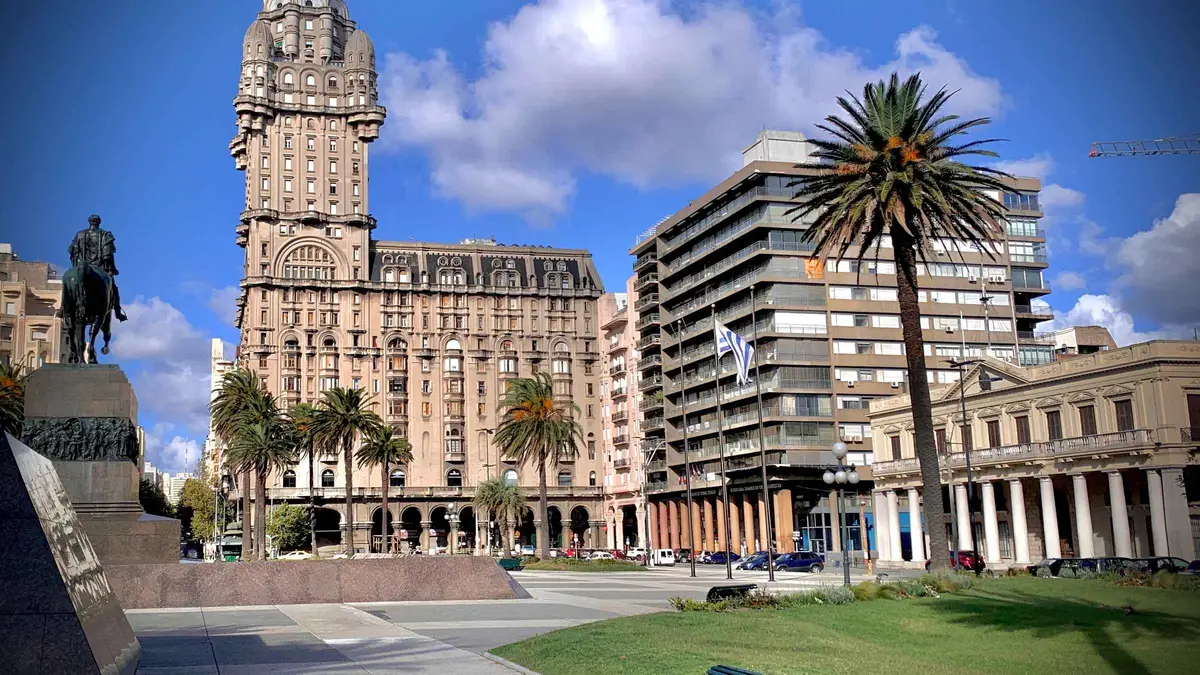 from $20
Montevideo: Complete Half-Day Tour with Guide and 6 Stops
Six-stop orientation coach tour of Montevideo at $20 per person with hotel pickup, free time at two markets and no entrance fees included.
Check Availability from $65
"Discovering Montevideo" shared tour for cruise passengers in a small group
A small-group port pickup tour for cruise passengers covering 12 city sights, with a 22nd-floor viewpoint and free time at Mercado Agrícola.
Check Availability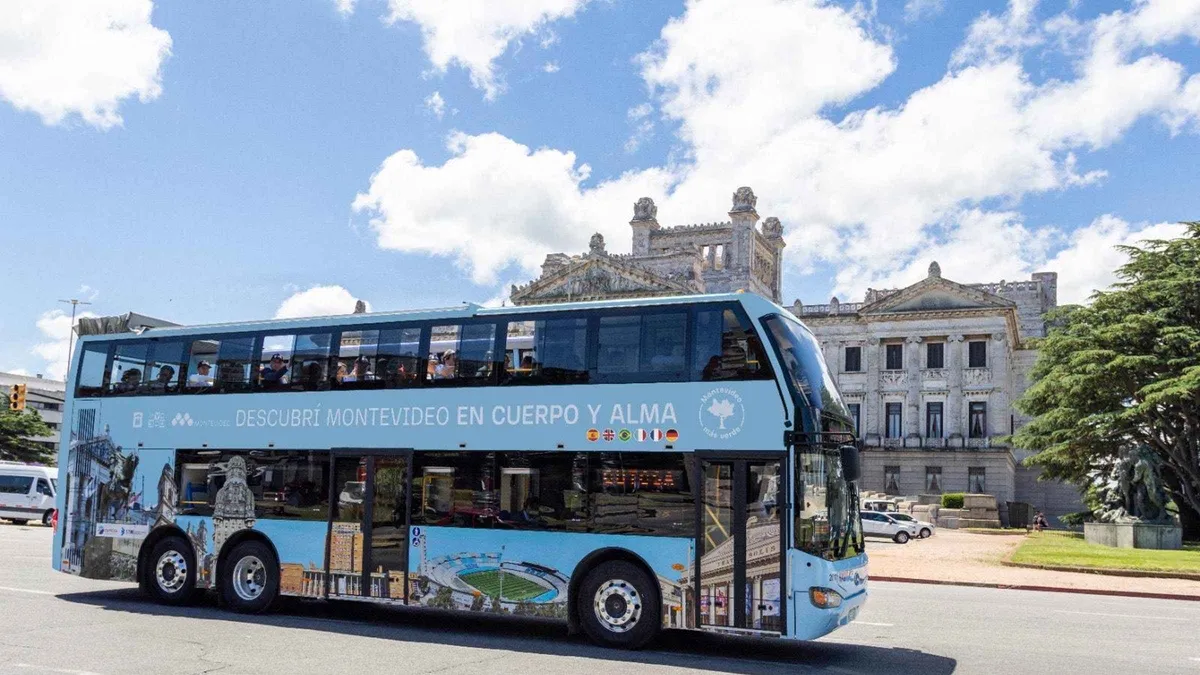 from $25
Montevideo: Sightseeing Hop-On Hop-Off Bus Tour
The cheapest city overview in Montevideo, a two-circuit 24-hour hop-on hop-off pass with audio guide for $25.
Check Availability from $25
Montevideo: Half-Day City Tour with Live Guide
A short 3.5-hour overview of Montevideo's main sights with lunch included, from $25 per person.
Check AvailabilityPrices, ratings and details are the platform's own. Dollar figures are the listed prices. The platform bills in your account's currency.
The Museo del Fútbol: Hours, Price and What Is Inside
The football museum is the way into the stadium itself. It sits under the Olímpica stand.
Hours, Price and Match Days
The entrance is on Av. Ricaldoni in the Tribuna Olímpica, next to Gate 13. The museum opens Monday to Saturday 10:00-17:00 and Sunday 11:00-15:00.
The stadium's own history page gives weekdays only, so check before a Sunday trip. Foreigners pay $9.92 (UYU 400), Uruguayans $4.96 (UYU 200), retirees $2.23 (UYU 90), and children under 12 go free. The rate includes phone photos without flash.
There is an online reservation form on the museum's site. The single rule that catches visitors out is match days: when there is a game, the museum stays closed. Staff speak Spanish, English, Portuguese and French, which helps most first-time visitors.
| Ticket | Price |
|---|---|
| Foreign adult | $9.92 (UYU 400) |
| Uruguayan adult | $4.96 (UYU 200) |
| Retiree | $2.23 (UYU 90) |
| Children under 12 | Free |
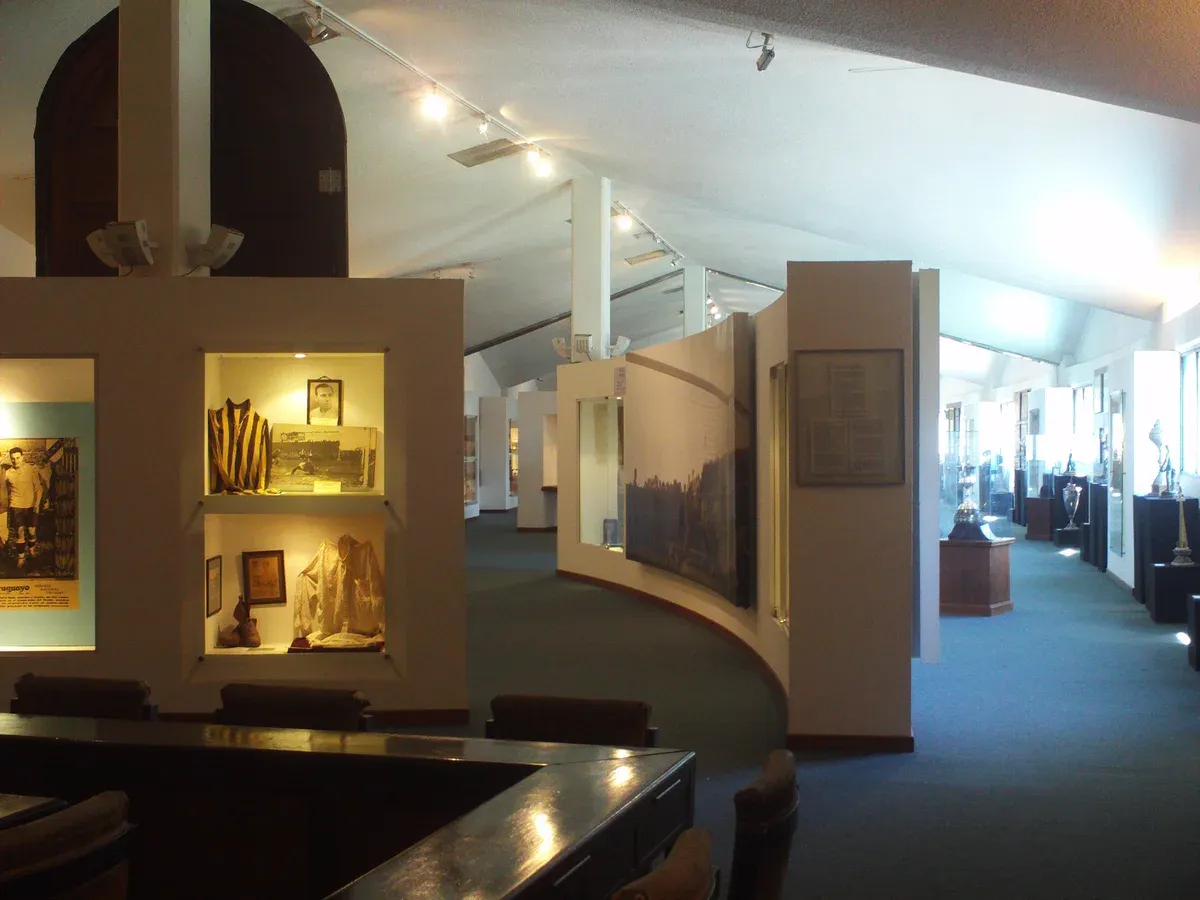
Inside the Museo del Fútbol under the Olímpica stand. Photo: Ypsilon from Finland, CC0, via Wikimedia Commons
The Collection
The museum opened on 15 December 1975 and was remodelled in 2004. It covers about 3,000 square metres on two floors. The oldest piece is the 1916 furniture used when Uruguay, Argentina, Brazil and Chile ratified the founding of CONMEBOL, the South American football body.
Cases hold flags, trophies and shirts from the Olympic titles at Colombes 1924 and Amsterdam 1928, plus items from the 1930 and 1950 World Cups. You can see belongings of the two great Uruguay captains, José Nasazzi and Obdulio Varela. There are also Copa Libertadores items.
For anyone who follows football, this is the room where Uruguayan football stops being a quiz answer and becomes real objects.
The Auditorium, the Screens and the Stand
The ground floor hosts temporary shows and an auditorium. Its film shows the 1928 Olympics, the building of the stadium and the 1930 World Cup. An audiovisual runs every half hour on three screens moved by robot arms, which is more theatre than museum case.
The visit also takes you out onto the Tribuna Olímpica, the side stand, where you stand inside the bowl. This stand access is the reason to buy the museum ticket rather than just photographing the stadium from the street.
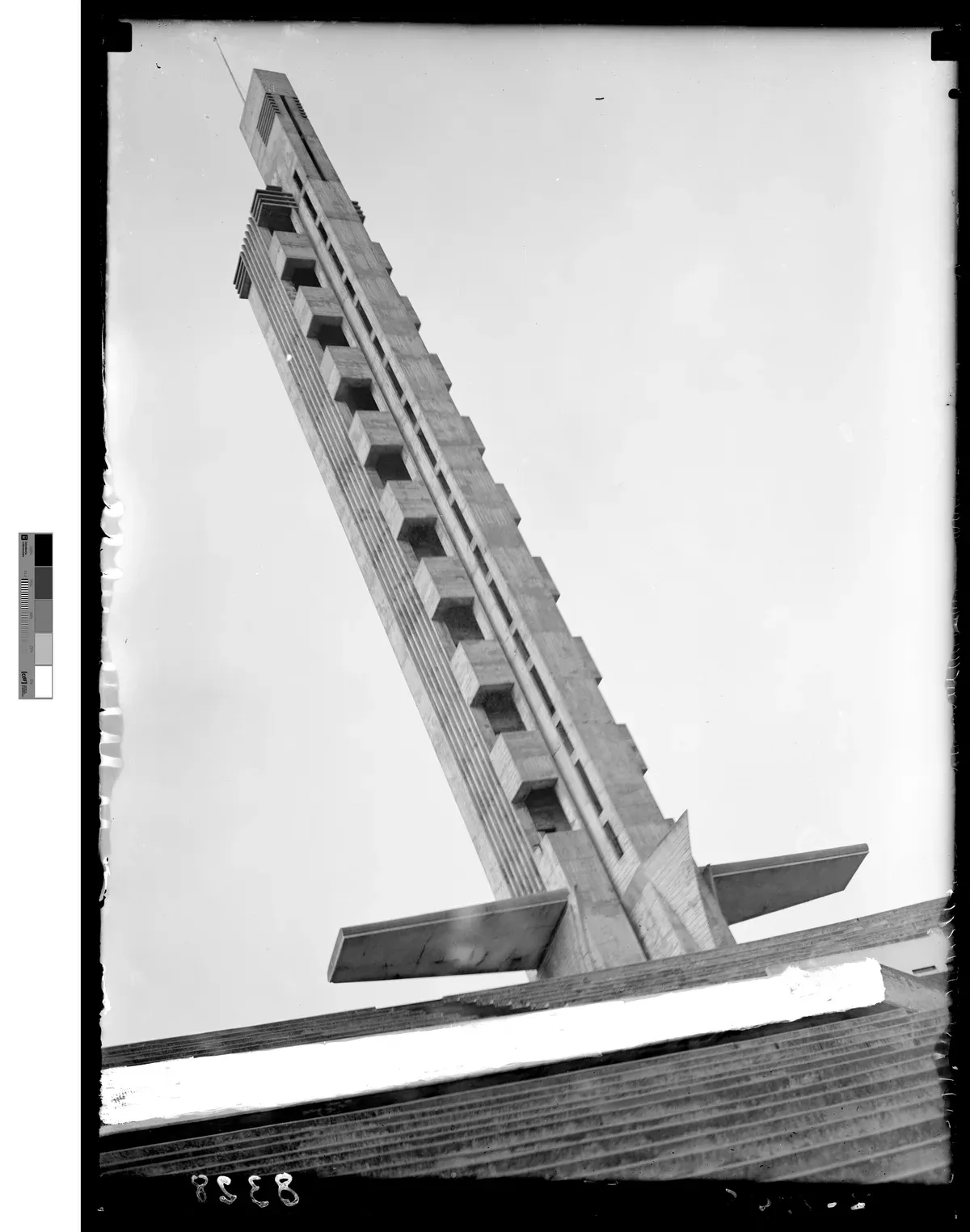
The Torre de los Homenajes in 1948, its balconies stepping up the shaft. Photo: Wikimedia Commons, Public domain, via Wikimedia Commons
The Torre de los Homenajes
The tower rises over the Olímpica stand. Its designers shaped it like a ship's rudder as a nod to the immigrants who came across the Atlantic to Uruguay, and it carries nine balconies for the nine stripes of the Uruguayan flag. A panoramic lift was added in 2004.
The foundation stone laid in July 1929 lies beneath the tower. The museum page prints no separate price for the lift, so ask at the desk when you buy your ticket.
Source: Estadio Centenario, football museum, Estadio Centenario, history, Descubrí Montevideo.
Built in Six Months for the First World Cup
The story of the stadium is a race against the calendar. Uruguay wanted the first World Cup and one building to mark its constitutional centenary.
A Stadium Against the Clock
The cornerstone went in on 21 July 1929. Works ran from February to July 1930 under the architect Juan Antonio Scasso. About 1,100 labourers worked in three shifts a day, moving 160,000 cubic metres of earth and pouring 14,000 cubic metres of reinforced concrete.
Heavy rain delayed the project, so six of the 18 World Cup matches had to be played at two other stadiums. The stadium opened on 18 July 1930, the centenary of the oath of the Constitution, with Uruguay beating Peru 1-0 before a crowd of 57,735.
30 July 1930: the First Final
On 30 July 1930 Uruguay came from 2-1 down to beat Argentina 4-2 and take the first World Cup. The final crowd is recorded as 68,346 (Wikipedia). Its attendance record came at the 1930 semifinal: 79,867 for Uruguay against Yugoslavia (Wikipedia).
FIFA settled the question of the stadium's place in history on 18 July 1983, declaring it a Historic Monument of World Football, the only construction anywhere with that title.
Source: Estadio Centenario, history, FIFA, Wikipedia.
The Four Stands and What Their Names Mean
Each stand carries a name tied to a Uruguayan victory.
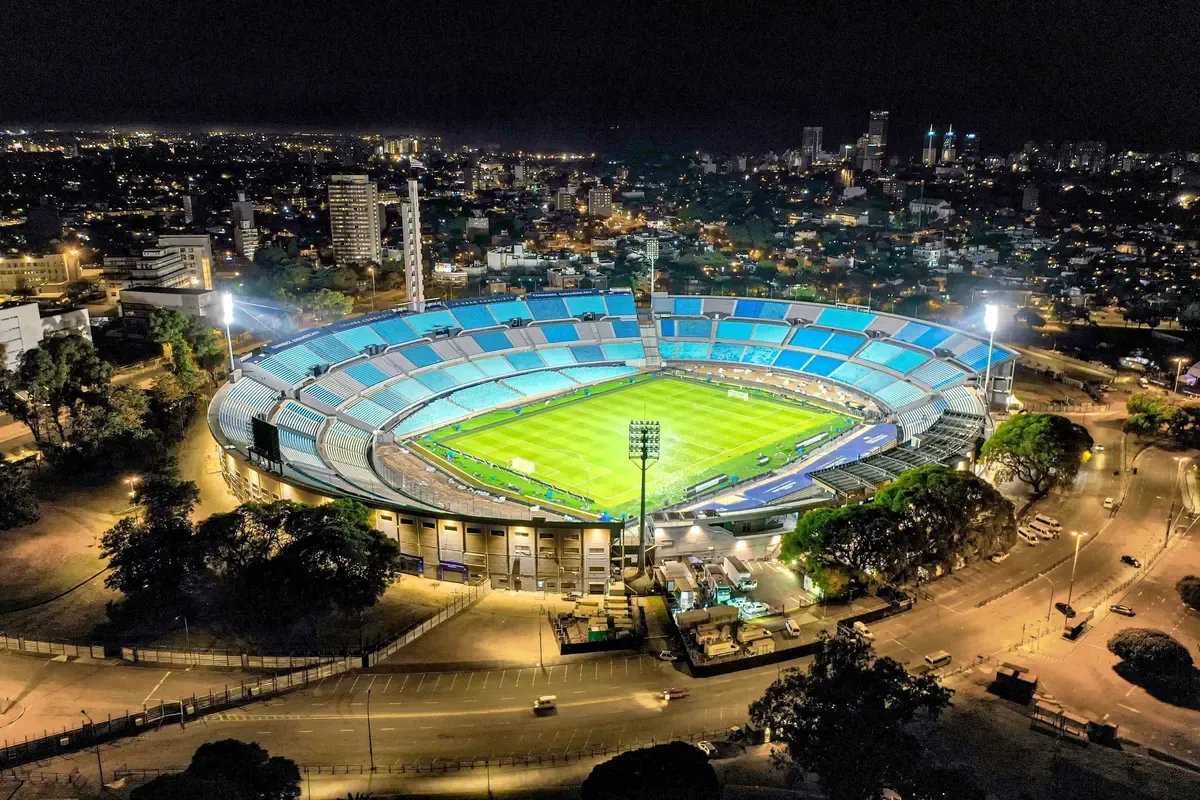
The bowl and its four stands at night, with Parque Batlle around it. Photo: Marcelo Campi, CC BY-SA 2.0, via Wikimedia Commons
Colombes, Ámsterdam, Olímpica and América
The Colombes stand takes the north side, named for the Paris stadium where Uruguay won Olympic gold in 1924. The Ámsterdam stand is the south, honouring the 1928 Olympic title. The Olímpica is the side stand, its name covering both Olympic triumphs, and the América stand sits opposite, holding the official box and the press.
School No. 100 operates under the Olímpica stand, an ordinary school a few metres from the pitch. The stadium is managed by CAFO, made up of the Uruguayan football association and the Intendencia de Montevideo. Capacity today is about 60,235 (Wikipedia), well below the 79,867 who packed in for the 1930 semifinal.
Source: Estadio Centenario, history, Wikipedia.
Seeing a Match at the Centenario
The national team plays here, and the museum shuts whenever it does.
Fixtures, Tickets and Match-Day Rules
The Estadio Centenario is the home of the Uruguayan national team. Uruguay won the Copa América all four times it hosted the tournament after the stadium was built, in 1942, 1956, 1967 and 1995. The first Intercontinental Cup match was played here in 1960, Peñarol against Real Madrid, 0-0.
Peñarol used the stadium for home games from 1933 to 2016 (Wikipedia). No ticket price is posted in official visitor material, so fixtures and tickets are announced by the clubs and the national association close to each date, and you buy through their channels. Remember the museum is closed on match days, so a game and a museum visit cannot happen the same day.
For general city precautions before and after a match, read is Montevideo safe.
The 2030 World Cup Comes Back to the Centenario
The Centenary Match
FIFA has set the opening game of the 2030 World Cup for the Estadio Centenario. It is one of three centenary matches, one each in Argentina, Paraguay and Uruguay, honouring the tournament's South American birth. Morocco, Portugal and Spain host the rest of the competition.
For a football traveller, the practical point is simple: the stadium where the first final was played on 30 July 1930 will open the centenary World Cup, and Montevideo will be busier than usual when it does.
How Much Time to Give the Estadio Centenario
Three visits are possible here and they take very different amounts of time.
Ten Minutes, Ninety Minutes or a Match
Most visitors see the stadium through a city tour, which stops about ten minutes outside for photos and a guide's talk. The Montevideo tours listed below all work this way. If you come on your own for the Museo del Fútbol and the Tribuna Olímpica, our estimate is an hour to an hour and a half.
The third way is a match day, which means the full experience but no museum. Two rules decide everything: the museum closes when there is a match, and Sunday hours are short, 11:00-15:00, with the stadium's own history page listing weekdays only. Check both before you set out.
| Way to see it | Time at the stadium | What you get | What it costs |
|---|---|---|---|
| Coach tour stop | About 10 minutes | Outside, a guide's talk, photos | From $20 for the whole tour |
| Museum on your own | Our estimate: 1 to 1.5 hours | Collection, films, the Olímpica stand | $9.92 (UYU 400) |
| A match | Half a day with the crowds | The bowl full, museum closed | Ticket price set per match by the organisers |
The Estadio Centenario in Dated Lines
-
21 July 1929
Cornerstone laid
The foundation stone is placed in July 1929 and still lies beneath the Torre de los Homenajes.
-
18 July 1930
Opening and first match
The stadium opens on the Constitution centenary holiday with Uruguay beating Peru 1-0 before 57,735.
-
30 July 1930
The first World Cup final
Uruguay comes from 2-1 down to beat Argentina 4-2 in front of 68,346 (Wikipedia).
-
1960
First Intercontinental Cup match
Peñarol and Real Madrid draw 0-0 in the first leg of the new competition.
-
15 December 1975
Museo del Fútbol opens
The museum opens under the Olímpica stand, later remodelled in 2004.
-
18 July 1983
FIFA Historic Monument
FIFA declares the stadium a Historic Monument of World Football, the only construction with the title.
-
2004
Remodel and panoramic lift
The museum is remodelled and a panoramic lift is added to the Torre de los Homenajes.
-
2030
World Cup returns
FIFA sets the opening game of the 2030 World Cup for this stadium as a centenary match.
Dates below come from the stadium's own history page, FIFA and Wikipedia.
Do and Don't at the Estadio Centenario
Do
- Do use the stadium's online reservation form if you are a group or want a set time.
- Do plan the museum for a day without a fixture, since match days close it.
- Do ask at the desk about the lift up the Torre de los Homenajes, since the museum page prints no separate price for it.
- Do phone-photograph the collection, as photos without flash are included in the ticket.
- Do combine the stadium with the Legislative Palace and Parque Batlle on a weekday.
Don't
- Don't count on a Sunday visit without checking first, the stadium history page lists weekdays only.
- Don't expect a city tour to get you inside, the stops last about ten minutes.
- Don't leave the museum ticket for match day, the doors will be shut.
- Don't arrive after 15:00 on a Sunday, the museum closes then.
- Don't skip the Tribuna Olímpica, standing in the bowl is the best part of the visit.
Five Things Most Visitors Do Not Know
Details That Change the Visit
- The tower is shaped like a ship's rudder in honour of the immigrants who arrived by sea, with nine balconies for the nine stripes of the flag (FIFA). - Six of the 18 matches at the 1930 World Cup were played at two other stadiums because heavy rain delayed construction (FIFA). - The stadium's attendance record is not the final: 79,867 watched the 1930 semifinal Uruguay v Yugoslavia (Wikipedia). - An ordinary state school, School No. 100, operates under the Olímpica stand a few metres from the pitch (stadium history page). - The oldest piece in the museum is the 1916 furniture used when four nations ratified the founding of CONMEBOL (stadium history page).
Estadio Centenario on the Map
The stadium in Parque Batlle and the stops the coach tours pair with it.
Next Stops From the Estadio Centenario
Where the coach tours and a half day on your own go next.
Palacio Legislativo
Uruguay's marble parliament, with weekday guided visits at 11:00 and 16:00.
Parque Rodó
The lake, the Sunday fair and the free national art museum, south towards the river.
The Rambla
The seafront promenade along the Río de la Plata, the afternoon half of most city tours.
Estadio Centenario Questions
What is the biggest stadium in Uruguay?
The Estadio Centenario in Parque Batlle, Montevideo is the largest stadium in Uruguay, with a capacity of about 60,235 (Wikipedia). It was built for the first World Cup in 1930 and remains the national stadium, home of the Uruguayan team. No other ground in the country comes close in size or in history, and FIFA has declared it a Historic Monument of World Football.
What is the seating capacity of the Estadio Centenario?
Capacity today is about 60,235 (Wikipedia). The record crowd is far higher: 79,867 attended the 1930 semifinal between Uruguay and Yugoslavia (Wikipedia), and the 1930 final drew 68,346 (Wikipedia).
Can you visit the stadium and the museum?
Yes. The Museo del Fútbol, entered on Av. Ricaldoni next to Gate 13 in the Tribuna Olímpica, is the visitor route into the stadium. The ticket covers the collection, the auditorium films and access to the Tribuna Olímpica stand, with the Torre de los Homenajes above it. Hours are Monday to Saturday 10:00-17:00 and Sunday 11:00-15:00, and the museum closes on match days. An online reservation form is on the stadium's site.
How much does the Museo del Fútbol cost?
Foreign visitors pay $9.92 (UYU 400). Uruguayans pay $4.96 (UYU 200), retirees $2.23 (UYU 90), and children under 12 enter free. The price includes phone photographs without flash. For currency background and card tips in Uruguay, see Uruguay currency. Check the fixture list so you do not arrive on a closed day.
How do I get Estadio Centenario tickets for a match?
No ticket price is posted in the visitor material, and fixtures and tickets are announced by the clubs and the national association close to each date, so you buy through their official channels when a game is scheduled. Remember that the museum closes whenever there is a match, so you cannot combine the two in one visit. Arrive early, expect crowds in Parque Batlle, and read is Montevideo safe for general city precautions.
Why is it called Estadio Centenario?
The name marks the centenary of the Uruguayan Constitution. The cornerstone was laid on 21 July 1929 and the stadium opened on 18 July 1930, exactly one hundred years after the oath of the Constitution, with Uruguay beating Peru 1-0. Twelve days later Uruguay won the first World Cup on the same pitch, beating Argentina 4-2 in the final on 30 July 1930.
What about the Estadio Centenario renovation and the 2030 World Cup?
FIFA has set the opening game of the 2030 World Cup for this stadium, one of three centenary matches in Argentina, Paraguay and Uruguay, with Morocco, Portugal and Spain hosting the rest of the tournament. FIFA's announcement gives no renovation figures or works schedule. The centenary match honours the first final played here on 30 July 1930.
Where the Centenario Fits in a Montevideo Day
Pairing the Stadium with the Rest of the City
On a weekday, the natural pairing is the Palacio Legislativo, which opens at 11:00, then the football museum in the early afternoon. On a cruise call, take one of the port tours listed on this page and add the museum only if your ship stays late enough. Afterwards, walk or ride east to the Rambla for the waterfront, and use our list of what to see in Montevideo to fill the rest of the day.
If you need a bed near 18 de Julio or the centre, browse Montevideo hotels. Match days aside, the stadium rewards half a day at most.
The Estadio Centenario on Film
Three films of the stadium, the museum and the story of 1930.
Visiting Estadio Centenario, the home of the World Cup
A visit to the museum and out onto the stand.
Video: The PartidoThe History of the Centenario Stadium in Montevideo
How the stadium was built in time for 1930.
Video: Manytops EstadiosEl estadio más histórico del mundo, el Centenario
The bowl, the tower and the museum, in Spanish.
Video: Destinos y MasVideos load from YouTube only when you press play.
Prices, hours and terms are set by the venue or operator and confirmed at checkout.
We may earn a commission if you book through one of our links, at no extra cost to you. Full affiliate disclosure