 Montevideo City Guide
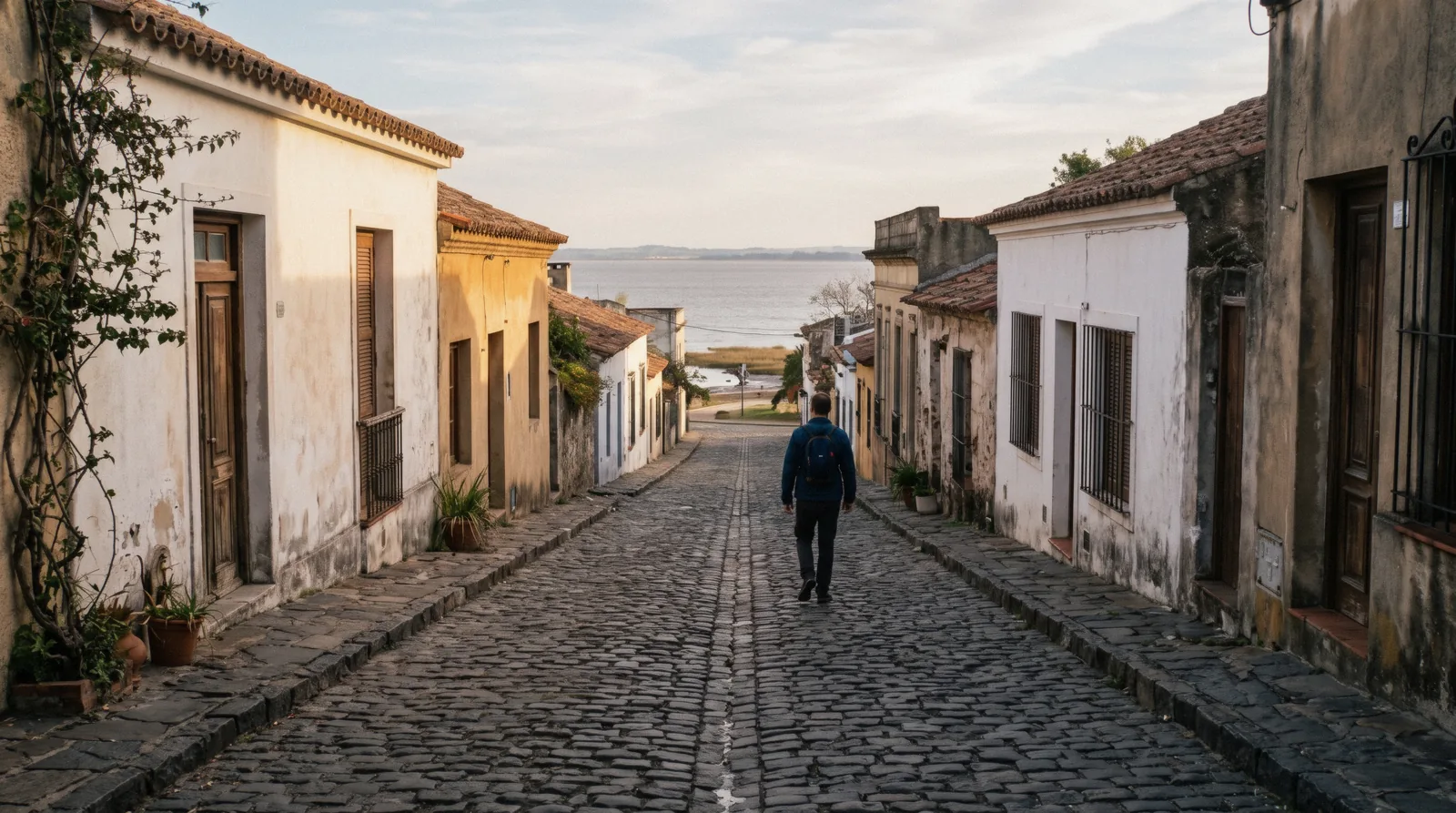
Colonia del Sacramento, Uruguay: Day Trip From Montevideo
Colonia del Sacramento is the Portuguese-founded river town of 1680 whose 16-hectare historic quarter has been a UNESCO World Heritage Site since 1995, 180 km west of Montevideo by Route 1. Most guidebooks treat it as a day trip from Buenos Aires, but it works just as well from the Uruguayan capital. This page gives you the bus timetable from Montevideo, the two day trips on offer, things to do in Colonia del Sacramento stop by stop, and how long to stay. For other outings, see our day trips from Montevideo and things to do in Montevideo.
Quick answer Distance, bus times, the two day trips, how long
Colonia del Sacramento is 180 km west of Montevideo along Route 1. The COT bus that leaves Tres Cruces at 07:45 arrives at 10:35, about 2 hours 45 minutes on the road. Two guided day trips from Montevideo cost $60 each. By our estimate a full day on the ground covers the historic quarter at an easy pace.
Key takeaways
- The two day trips cost $60 each: the guided Colonia day with Historic Quarter walk adds a museum ticket and a tasting stop, while the Master Turismo Colonia day is a small group of up to 15 with free time in town.
- You can continue to Buenos Aires from Colonia by ferry, a crossing of about 1.5 hours. See Buenos Aires to Montevideo for how the route runs in reverse.
- Carry Uruguayan pesos for museum and lighthouse tickets, which are posted at each door. See Uruguay currency for the basics.
- Staying in the capital instead? Browse Montevideo tours and what the city itself offers.
Key facts
Opening hours
| Barrio Histórico streets | Open–All day, all year |
|---|---|
| Museums and lighthouse | Posted at each door–Posted at each door |
Closed The streets never close. Museum days are posted at each door
Admission
- Adult
- Walking the quarter is free. Day trips from Montevideo $60
- Reduced
- Museum and lighthouse fees are posted at each door in pesos
- Free
- Streets, Portón de Campo and Calle de los Suspiros
Planning it
- Time needed
- No authority states one. Our estimate: a full day from Montevideo, with about 2 h 45 by COT bus each way
- Book ahead
- Optional — walk-up usually fine
- Address
- Barrio Histórico, Colonia del Sacramento, Colonia Department, Uruguay
The two Colonia del Sacramento day trips from Montevideo, compared. Prices are in US dollars as listed by the operators.
The split is simple: do you want a guided walk of the old quarter with a museum ticket included, or more free time and the option to finish at the ferry port?
| Option | Price | Includes | Ends at | Book |
|---|---|---|---|---|
| Guided Colonia day with Historic Quarter walkTravellers who want the history explained and the logistics handled in one 9-hour day. | $60 | Hotel pickup, a stop at Granja Arenas with museum admission and a tasting of local jams and cheeses, a guided walk past Portón de Campo, Calle de los Suspiros, the lighthouse and the bullring, then free time for lunch | back in Montevideo | Check Availability |
| Small-group Colonia day with free timeIndependent travellers who want hours on their own, and anyone going on to Buenos Aires by ferry. | $60 | Small shared group of at most 15, pickups from Pocitos at 8:00 to Ciudad Vieja at 9:00, a 10-hour day with a guided visit and generous free time in Colonia | Montevideo, or the Colonia ferry port | Check Availability |
Lunch is not included on either trip. Figures current {checked}.
Colonia del Sacramento Day Trips From Montevideo
Both day trips run from Montevideo with hotel pickup and cost the same, so the choice is about style. More options across the country in our Montevideo tours round-up.
 from $60
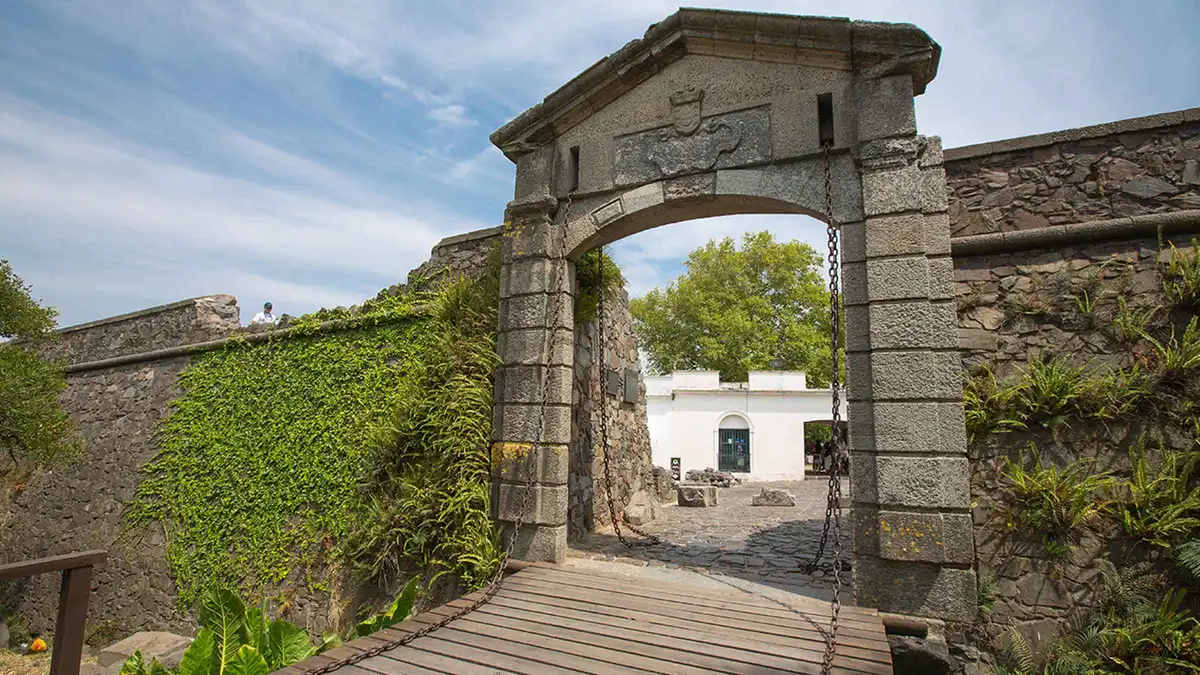
From Montevideo: Colonia Sacramento Full-Day Tour with Guide
A guided full-day coach trip from Montevideo to Colonia del Sacramento with hotel pickup, a Historic Quarter walking tour and a museum tasting stop for $60.
Check Availability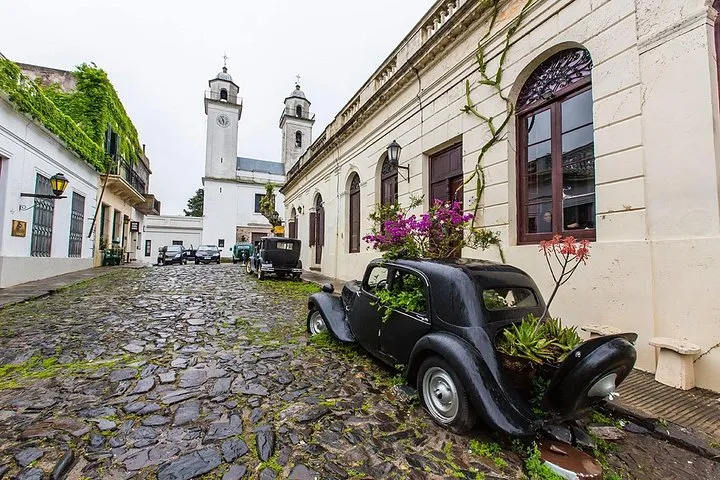 from $60
Colonia del Sacramento - Regular Tour
A small-group shared day trip to Colonia del Sacramento with lots of free time and the option to finish at the ferry port.
Check AvailabilityPrices, ratings and details are the platform's own. Dollar figures are the listed prices. The platform bills in your account's currency.
Why Colonia del Sacramento Is Different
Colonia is the one place in Uruguay where Portuguese town planning survived on Spanish soil, and that is the whole point of the visit.
A Portuguese Town on a Spanish River
Manuel Lobo founded the post for the Portuguese crown in 1680, reaching San Gabriel island on 20 January and starting the settlement days later. Spain took it that August, returned it in 1681, and the town kept changing hands for a century. The Treaty of Utrecht handed it back to Portugal in 1715, and the Treaty of San Ildefonso gave it to Spain for good in 1777.
That tug of war left two street plans side by side. The Portuguese quarter follows the terrain in irregular lanes, while the Spanish grid outside the old wall runs square. The wall line sits at today's Calle Ituzaingó, with most of it removed in 1777 and more in 1859.
Today the town holds about 32,000 people.
What UNESCO Protects
The Historic Quarter of the City of Colonia del Sacramento was inscribed in 1995 at the nineteenth session of the World Heritage Committee, under cultural criterion (iv), covering 16 hectares. In plain terms, UNESCO protects the street plan itself: the crooked Portuguese lanes, the Plaza Mayor, and the buildings inside the former wall line. For the visitor this means the quarter is compact and walkable, and its odd geometry is the attraction.
It is the strongest answer to what is special about Colonia, and the reason it sits beside the things to do in Montevideo on most first trips to Uruguay.
Source: Wikipedia: Colonia del Sacramento, Wikipedia: Historic Quarter.
Montevideo to Colonia del Sacramento by Bus or Tour
Route 1 links the two cities, and COT runs the line from the Tres Cruces terminal. The timetable decides your day.
Selected COT departures from Montevideo and their arrival in Colonia, from the operator's own timetable. The 05:00 service is the early option if you want a full day.
| Leaves Montevideo | Arrives Colonia | Stops on the way |
|---|---|---|
| 05:00 | 07:45 | Libertad, Rafael Perazza, Ecilda Paullier, Colonia Valdense, Rosario and the Juan Lacaze turn-offs |
| 07:45 | 10:35 | Libertad, Rafael Perazza, Ecilda Paullier, Colonia Valdense, Rosario and the Juan Lacaze turn-offs |
Buying the Bus Ticket
Buses leave from Tres Cruces, the country's main terminal, serving every department and neighbouring countries. COT's page does not show fares, so buy at the terminal counter or call 2409 4949. Count on about 2 hours 45 minutes to 2 hours 50 minutes on the road, with stops in the small towns along Route 1, which is part of the charm.
Book the return the same way. If you would rather skip the terminal, the guided day trips include the drive and hotel pickup instead.
From Buenos Aires Instead
Most Colonia visitors arrive from Argentina, not from Montevideo. Three ferry lines cross from Buenos Aires to Colonia: Buquebus, Colonia Express and Seacat Colonia, and the crossing takes about 1.5 hours. It is the busiest Río de la Plata crossing, moving about 2.1 million passengers a year.
Colonia Express runs via Colonia port and then a bus leg to Montevideo of about two hours. If you are planning the whole circuit, see our guide to Buenos Aires to Montevideo for the direct crossings.
Source: COT timetable, Descubrí Montevideo: by boat, Descubrí Montevideo: buses, Wikipedia: Colonia del Sacramento.
Things to Do in Colonia del Sacramento, Stop by Stop
The historic quarter is small enough to cover on foot in an afternoon. Here are the stops in a sensible order, and if you want more ideas beyond town, see Montevideo attractions for the capital.
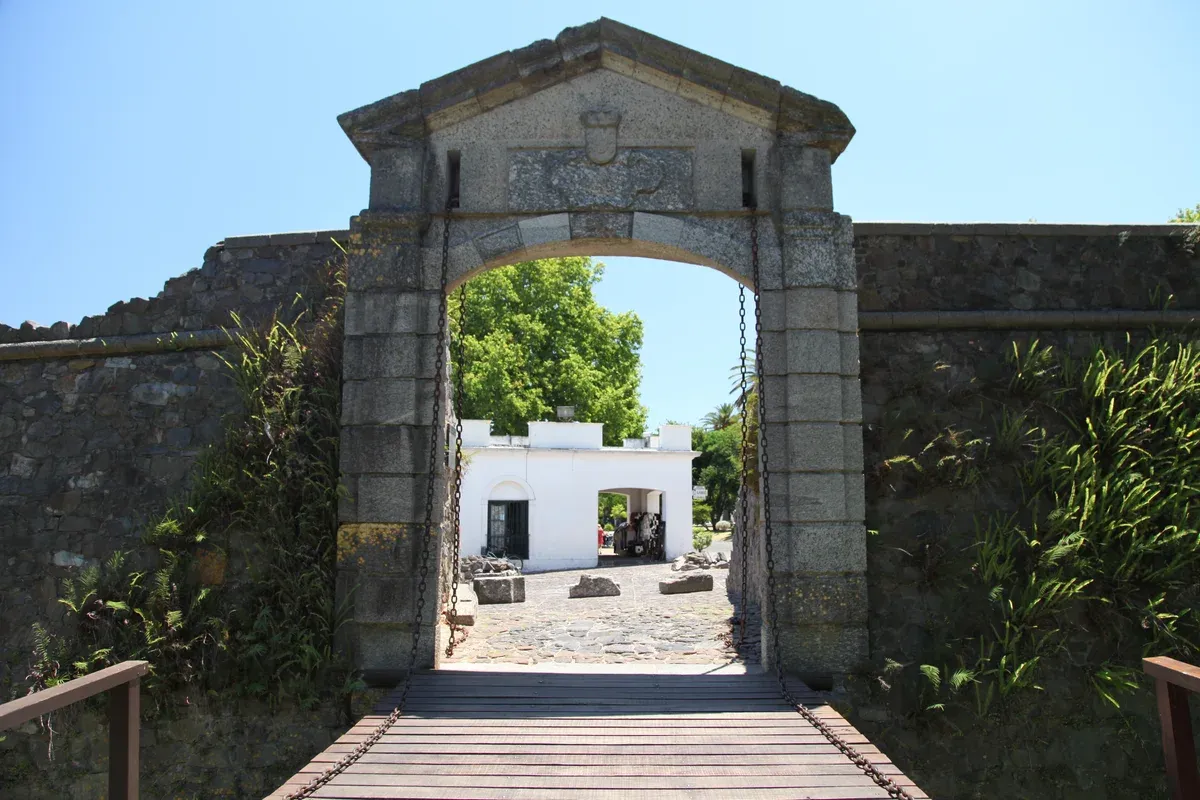
Portón de Campo, the old city gate, reached over its wooden bridge. Photo: Liam Quinn from Canada, CC BY-SA 2.0, via Wikimedia Commons
Portón de Campo
The Portón de Campo is the old city gate of Colonia, reached over a wooden drawbridge, and it marks the entrance to the historic quarter. It stands near the line of the former Portuguese wall, which ran at today's Calle Ituzaingó before most of it was removed in 1777, with further sections cleared in 1859. The gate is the natural start of a walk through the quarter, and the guided Colonia day makes it a stop on its Historic Quarter walk.
It is an open gateway with no ticket, so you can pass through at any hour. Start here and work into the lanes beyond for the full quarter route.
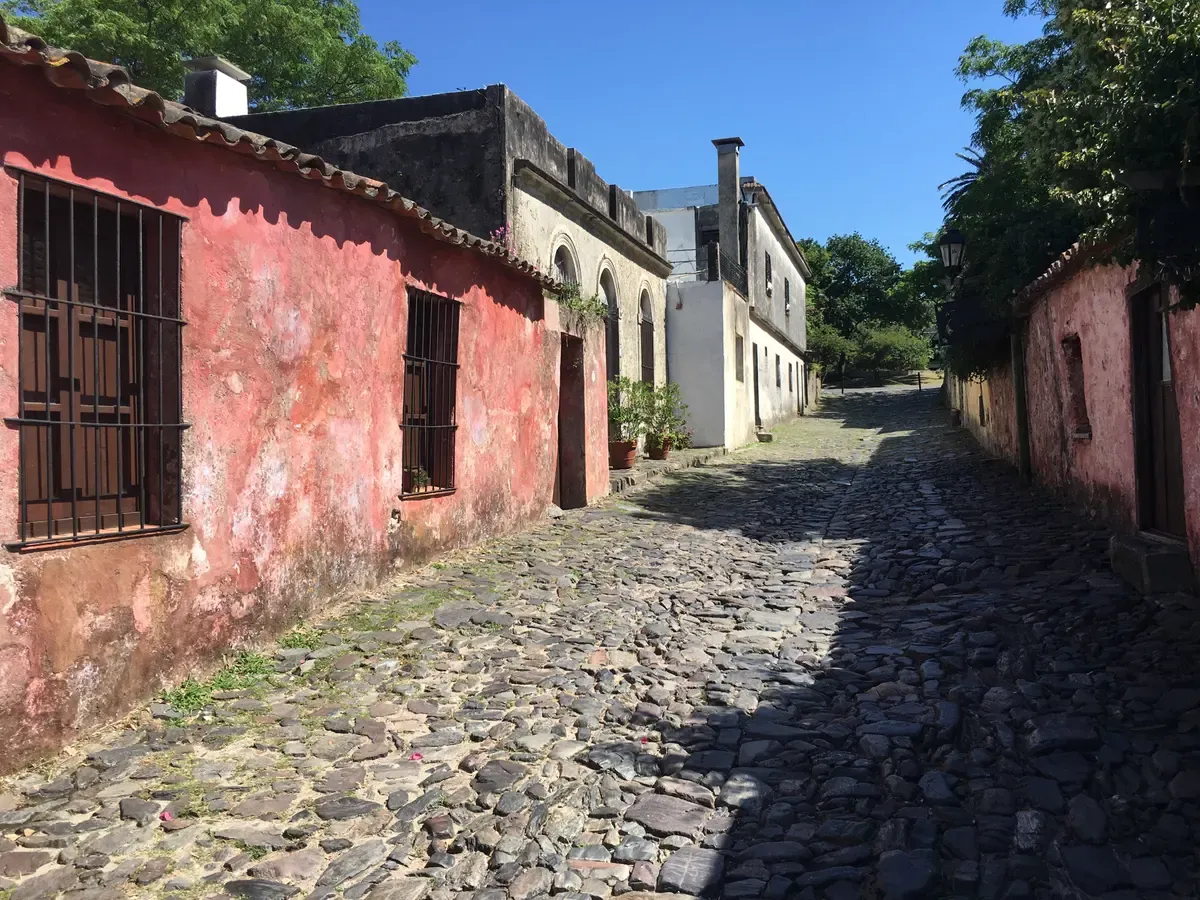
Calle de los Suspiros, the cobbled lane at the heart of the Barrio Histórico. Photo: Fredlyfish4, CC BY-SA 4.0, via Wikimedia Commons
Calle de los Suspiros
Calle de los Suspiros, the Street of Sighs, is the quarter's best-known lane: a short cobblestone lane lined with low colonial houses. It sits inside the 16-hectare historic quarter inscribed by UNESCO in 1995, and its irregular alignment is part of the Portuguese street plan that makes Colonia different from every Spanish-grid town in Uruguay. No ticket is needed and you will walk it in minutes, but budget time to linger.
The guided tour from Montevideo includes a stop here on its Historic Quarter walk.
The Lighthouse and the Convent Ruins
The Colonia lighthouse dates from 1857 and stands beside the ruins of the 17th-century Convent of San Francisco. The pair form the quarter's landmark silhouette, visible from the riverfront. No climbing fee or hours are posted online, so check the board at the door and carry Uruguayan pesos in small notes.
The guided day trip includes the lighthouse on its walking route, which saves you sorting the ticket logistics yourself if you are short of time.
Basílica del Santísimo Sacramento
The Basílica del Santísimo Sacramento is Colonia's main church, built in stone by the Portuguese in 1808. It stands on the main square of the historic quarter, so you will pass it on any walk between the gate, the lane of sighs and the riverfront. It is a working church, so dress for a church visit and keep voices down during services.
Its plain stone facade is the quieter counterpoint to the lighthouse a few streets away, and the guided walk passes it as the Blessed Sacrament Cathedral.
The Small Museums of the Barrio Histórico
Four small museums cluster inside the quarter. The Portuguese Museum occupies an 18th-century building. The Municipal Museum sits in the Casa del Almirante Brown, rebuilt by the Spanish in 1835.
The Casa de Nacarello is an 18th-century Portuguese house, and the Casa del Virrey, the Viceroy's House, was reconstructed from its original ruins. None of them publishes a tariff page online, so ticket prices are posted at each door in pesos. Bring small notes. The guided Colonia day bundles a different museum ticket, at the Granja Arenas collectors' museum on the way into town, with a tasting of local jams and cheeses.
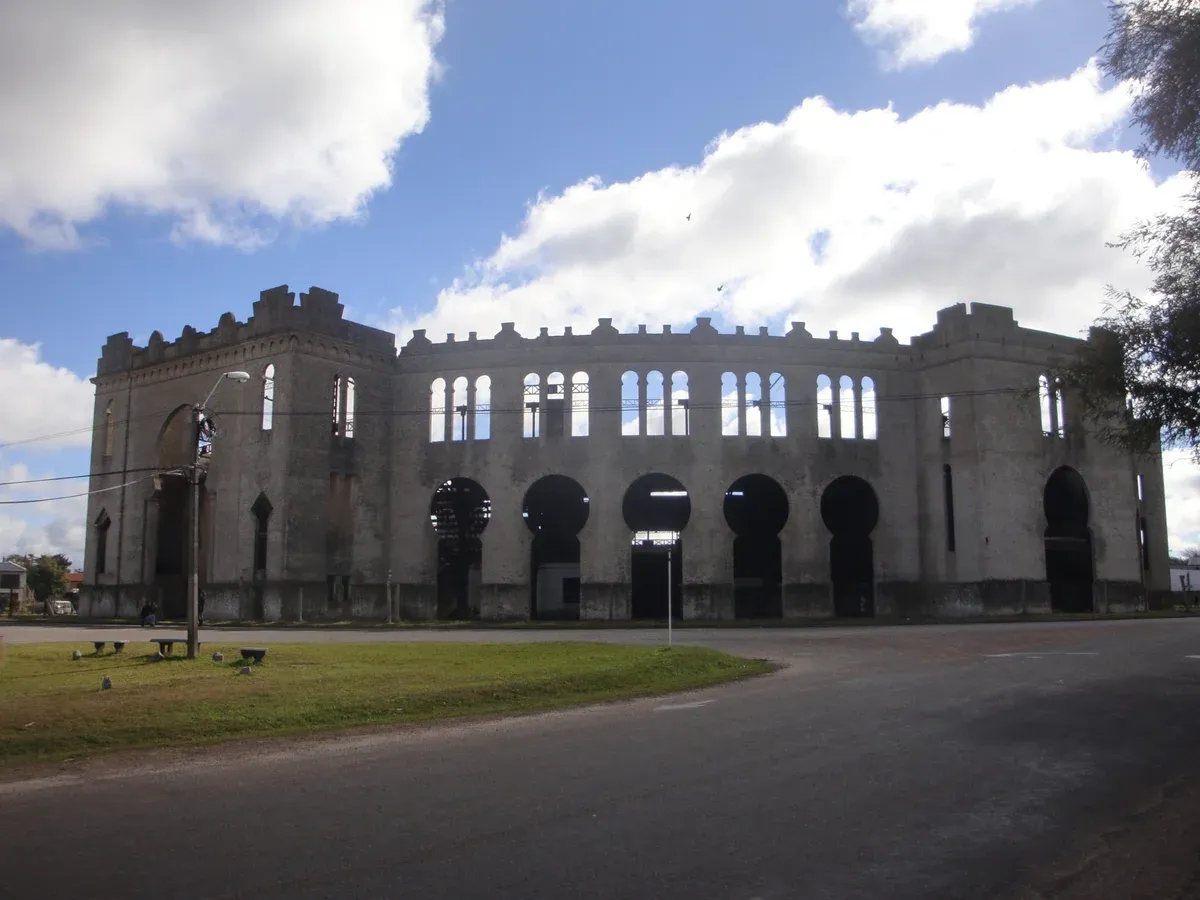
The Real de San Carlos bullring, north of the old quarter, now renovated as a venue. Photo: Banfield, CC BY-SA 3.0, via Wikimedia Commons
Plaza de Toros Real de San Carlos
The Plaza de Toros Real de San Carlos is Colonia's disused bullring, north of the old quarter at Real de San Carlos. It no longer hosts bullfighting and has been renovated as a sports and culture venue, so you visit it now for the architecture and the view rather than a show. The bullring sits on the route of the guided day trip from Montevideo, which includes a short guided stop there before the old quarter walk.
The same tour also stops at the Colonia sign for photographs.
Source: Wikipedia: Colonia del Sacramento, Wikidata: Colonia lighthouse.
How Many Hours You Need in Colonia del Sacramento
Colonia rewards a slow day rather than a checklist, but the routing decides how many hours you actually get.
Three ways to shape the day and how much time each leaves you in town. The quarter itself is compact, so once you are there the hours go on wandering, museums and lunch.
| Routing | Hours in Colonia | Who it suits |
|---|---|---|
| COT 07:45 bus out, late bus back | From 10:35 until the return bus you choose | Independent travellers who want to set their own pace and stop in the Route 1 towns |
| Guided day trip | A guided walk then free time, inside a 9 hour day | First-time visitors who want the history explained and no ticket queues |
| Day trip ending at the ferry | Free time in town, then the boat | Travellers continuing to Buenos Aires the same evening |
If you can stay overnight, the bus clock disappears and the quarter is yours in the evening. One of the two day trips can drop you at the ferry instead of driving you back.
Source: COT timetable.
Colonia del Sacramento in Dated Lines
Three centuries of siege, treaty and repair in eight lines.
-
1680
Manuel Lobo founds the post
The Portuguese expedition reaches San Gabriel island on 20 January and begins the settlement on 28 January.
-
1681
Spain returns the town
Spanish forces took Colonia in August 1680 and handed it back under the terms agreed the following year.
-
1705
Back under siege
A Spanish siege that began in October 1704 ends on 14 March 1705, when Portuguese ships evacuate the colonists.
-
1777
Treaty of San Ildefonso
Colonia passes to Spain for good, and most of the old Portuguese wall is removed.
-
1808
The basilica takes shape
The Basílica del Santísimo Sacramento, built in stone by the Portuguese, reaches its present form.
-
1835
Casa del Almirante Brown rebuilt
The Spanish rebuild the house that now holds the Municipal Museum.
-
1857
The lighthouse is built
The Colonia lighthouse goes up beside the convent ruins.
-
1995
UNESCO inscription
The 16-hectare historic quarter is inscribed as a World Heritage Site under criterion (iv).
Sources: Wikipedia (Colonia del Sacramento, Historic Quarter) and Wikidata.
Do This, Not That in Colonia
Do
- Take the 07:45 COT bus from Tres Cruces if you travel independently, and claim a full day in the quarter.
- Carry Uruguayan pesos in small notes for the museum and lighthouse tickets posted at each door.
- Walk the quarter in a loop from Portón de Campo through Calle de los Suspiros to the lighthouse and back along the riverfront.
- Book the guided day trip if you want the bullring, the Granja Arenas museum and the Historic Quarter walk handled for you.
- Stay for the last light on the river after the ferry crowds thin out.
Don't
- Do not expect online price lists for the museums: the doors post them, in pesos.
- Do not take the late-morning bus if you want the museums too, the 07:45 already lands at 10:35.
- Do not cut the day to two hours, as the drive alone is nearly three hours each way.
- Do not leave Argentina-bound travellers off your plan, since the Master Turismo day can end at the ferry port.
- Do not book the bus without checking the return times on the COT timetable first.
Five Things Most Visitors Do Not Know
- The town was founded in 1680 by Manuel Lobo for the Portuguese crown. (Wikipedia, Colonia del Sacramento)
- The old wall line ran at today's Calle Ituzaingó, with most of it removed in 1777 and more in 1859 (Wikipedia, Historic Quarter).
- The historic quarter covers just 16 hectares, inscribed by UNESCO in 1995 under criterion (iv) (Wikipedia, Historic Quarter).
- Colonia is the busiest Río de la Plata crossing, with about 2.1 million ferry passengers a year (Wikipedia, Colonia del Sacramento).
- Colonia department holds the country's oldest commercial winery, and its stony soils near Carmelo suit late varieties like Cabernet Sauvignon (INAVI).
Source: Wikipedia: Colonia del Sacramento, Wikipedia: Historic Quarter, INAVI: regions.
Colonia del Sacramento Map: The Old Quarter and the Bullring
The stops of the Barrio Histórico, all within a few blocks of each other, and the Real de San Carlos bullring to the north.
Next Stop From Colonia del Sacramento
Where to go next, back in the capital or east along the coast.
Buenos Aires to Montevideo
The ferry crossings between Argentina and Uruguay, including the route that lands in Colonia and continues by bus to Montevideo.
Uruguay wine
Colonia department holds the country's oldest commercial winery. The wine page compares the winery visits you can book from Montevideo.
Ciudad Vieja
Montevideo's own old town on the port peninsula, the place to compare with Colonia's Portuguese quarter once you are back in the capital.
Colonia del Sacramento Questions
Is Colonia del Sacramento worth visiting?
Yes, and the UNESCO listing explains why. The 16-hectare historic quarter, inscribed in 1995, keeps the irregular Portuguese street plan fitted to the terrain, unlike the Spanish grid outside the old wall. Add the 1680 founding story, the lighthouse by the convent ruins and the riverfront, and the town justifies the drive. Compare it with the other day trips from Montevideo.
How many hours do you need in Colonia del Sacramento?
By our estimate a full day on the ground suits the quarter, plus about 2 hours 45 minutes each way on the bus from Montevideo. The COT 07:45 service arrives at 10:35, which sets up a full day. The guided day trips run 9 to 10 hours door to door, and Montevideo tours lists the shorter options in the capital.
What is special about Colonia del Sacramento?
Its historic centre was shaped by a century of Portuguese-Spanish border wars. Founded by Manuel Lobo in 1680 and swapped between crowns until the Treaty of San Ildefonso in 1777, it keeps an irregular Portuguese street plan inside a 16-hectare UNESCO quarter. The cobblestones, the old gate and the lighthouse by the convent ruins are the core of the guided Colonia day.
How do you get from Montevideo to Colonia del Sacramento?
Two ways. COT runs buses from Tres Cruces, the country's main terminal, with departures including 05:00, which arrives 07:45, and 07:45, which arrives 10:35 along Route 1. Or take a guided day trip with hotel pickup, which costs $60 and bundles the Historic Quarter walk and museum entry. Fares for the bus are not shown online, so buy at the terminal or call COT on 2409 4949.
Can you go on to Buenos Aires from Colonia?
Yes. Three ferry lines cross from Colonia to Buenos Aires: Buquebus, Colonia Express and Seacat Colonia, and the trip takes about 1.5 hours. The small-group Colonia day can end at the Colonia ferry port for exactly this, so you see the town and continue the same evening. Our Buenos Aires to Montevideo guide covers the crossings in detail.
Can I pay with Argentine pesos in Colonia?
Colonia lives on cross-border traffic, but the safe plan is to carry Uruguayan pesos or a card. Museum and lighthouse tickets are posted at each door in pesos, so small notes help. See Uruguay currency for what to carry, and remember that paying by card takes 9 percentage points off VAT at restaurants and cafés until 30 April 2027.
Where Colonia Fits in a Montevideo Trip
Colonia works two ways. It is the natural stop between Buenos Aires and Montevideo, with the ferry from Argentina landing at the port nearest the old quarter and the bus or a day trip completing the leg to the capital. It is also a full day out from a Montevideo base, and the COT timetable or a $60 tour covers it.
The department around town is wine country too, home to the country's oldest commercial winery and stony soils near Carmelo, so see Uruguay wine if a tasting appeals. The other big day trip from the capital is Punta del Este on the eastern coast, and Montevideo hotels helps you pick the base that suits both directions.
Source: INAVI: regions.
Colonia del Sacramento on Film
UNESCO's film on the quarter, a full day in town, and a day trip in real time.
Historic Quarter of the City of Colonia del Sacramento (UNESCO/NHK)
UNESCO's own short film on why the quarter's street plan is protected.
Video: UNESCOColonia del Sacramento: Visiting Uruguay's Colonial Town + Eating
A full day in the old quarter, lanes, lighthouse and lunch.
Video: Samuel and Audrey - Travel and Food VideosDay trip to Uruguay?!? Exploring Colonia del Sacramento
A day trip in real time, useful for judging how many hours you need.
Video: Mike ScottVideos load from YouTube only when you press play.
Prices, hours and terms are set by the venue or operator and confirmed at checkout.
We may earn a commission if you book through one of our links, at no extra cost to you. Full affiliate disclosure