 Montevideo City Guide
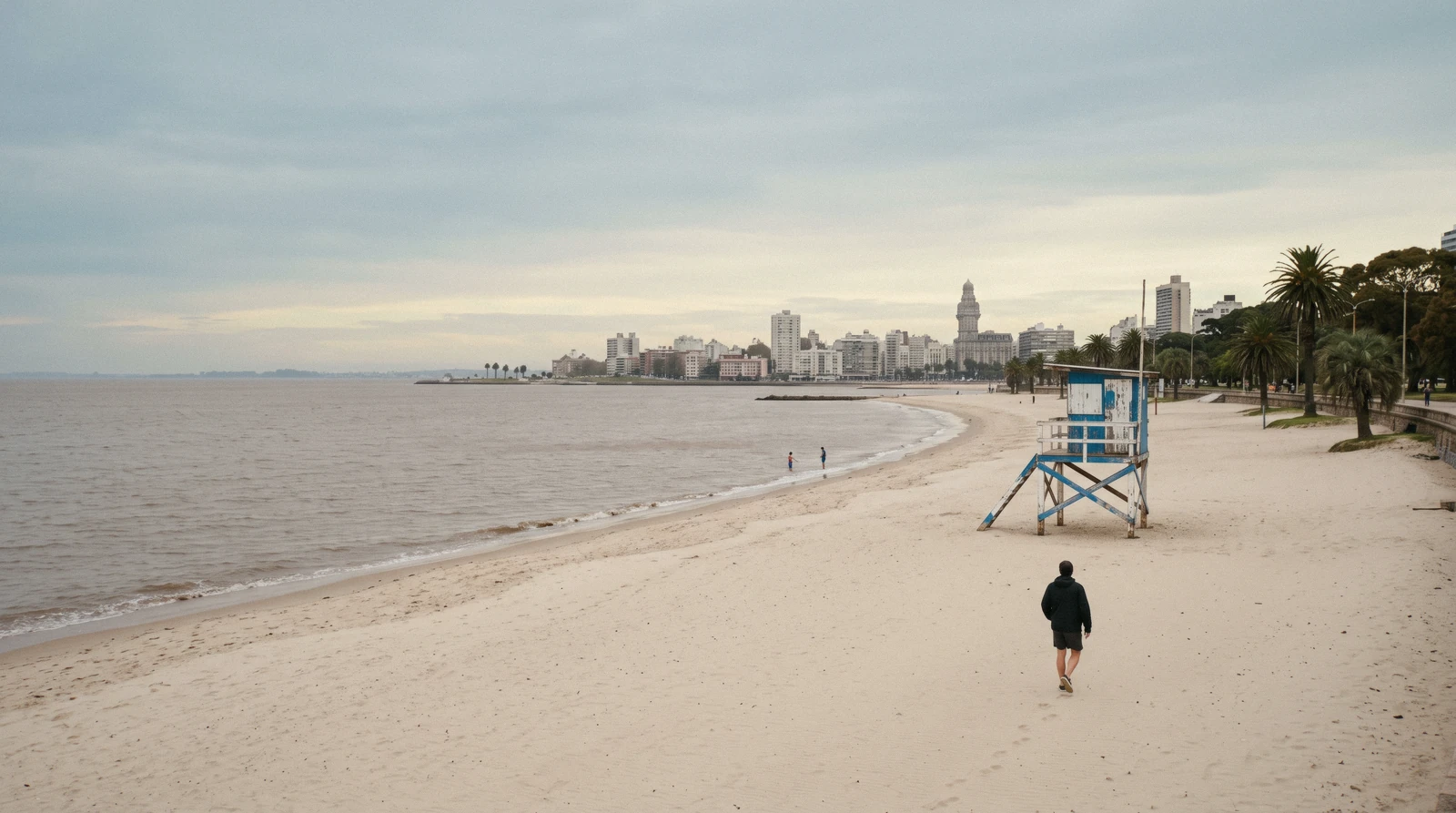
Montevideo Beaches: Every City Beach From West to East
Montevideo beaches line almost 30 km of Rambla on the Río de la Plata, by the city tourism office's count, from the wild fishing coast at Pajas Blancas to the wide sand at Carrasco near the airport. This page covers every city beach, what each one is good for, how to read the official bathing flags and the rule about swimming after rain. It also names the three beaches the city never opens. For a wider plan of the city, see things to do in Montevideo.
Quick answer Can you swim, which beach to pick, the one rule that matters
Yes. The city monitors water quality at 19 beaches and publishes the result as flags, so you can swim in season wherever bathing is allowed. The city beaches face the Río de la Plata estuary, which is wide enough to read as the sea. Pick Ramírez for families, Playa Pocitos for the barrio around it, Malvín for clearer water and Verde for waves.
Key takeaways
- Do not bathe for 24 hours after rain. Playa del Gas, Puerto del Buceo and Miramar are permanently closed for bathing, so swim elsewhere.
- Playa Pocitos runs the full length of Rambla República del Perú inside its own barrio, with a ramped boardwalk, amphibious chairs and the Montevideo letters above the sand.
- The cheapest way along the coast is the small-group bike tour with a picnic at $55, or pedal the Rambla yourself.
- The true Atlantic beaches start east of the city. See Punta del Este and the other day trips from Montevideo.
Montevideo Beaches Compared, West to East
Nine stretches of city shore in the order the coast road meets them, with the Rambla section each sits on and what the city tourism office says it suits. All of them are free.
| Beach | On the Rambla | Best For | Watch For |
|---|---|---|---|
| Pajas Blancas | Puerto Soledad de Malvinas | Wild coast, fishing | No toilet |
| Playa del Cerro | Gurvich | Access: amphibious chairs, parking | West side, far from the centre |
| Playa Ramírez | República Argentina | Families, Parque Rodó opposite | Very busy in summer |
| Playa Pocitos | República del Perú | The beach barrio, best access | Check the flag after rain |
| Playa Buceo | Next to the marina | A monitored local beach | Puerto del Buceo is never enabled |
| Playa Malvín | O'Higgins | Wider sand, clearer water | No accessible parking |
| Honda and de los Ingleses | Punta Gorda | The Plaza Virgilio lookout | Both monitored for water quality |
| Playa Verde | República de México | Bathing and surfing | Rougher waves than Ramírez or Pocitos |
| Playa Carrasco | Carrasco | The eastern barrio, near the airport | Check the flag on the live map |
Source: Playas, Descubrí Montevideo, Estado de playas.
Can You Swim at Montevideo Beaches?
Yes, in season and where the flag allows it. The city publishes a live map with a flag table so you can check any beach before you go.
River or Sea
Every Montevideo beach faces the Río de la Plata, the vast estuary between Uruguay and Argentina. From the sand it reads as sea, and the beaches are city beaches, backed by the Rambla promenade. The open Atlantic coast begins well east of the city, toward Punta del Este and the resort towns beyond, which you can reach on the day trips from Montevideo.
For a first visit, the estuary beaches are the practical choice: Ramírez sits opposite Parque Rodó, inside the city.
The four sea-condition flags and the sanitary flag, as the Intendencia's beach status page defines them. The flags are live during the beach season only.
| Flag | What It Means | What You Do |
|---|---|---|
| Fit for bathing | Conditions apt for swimming | Swim, near the lifeguard post |
| Caution | Conditions call for care | Stay where you can stand |
| Not fit for bathing | Conditions unsafe for swimming | Stay on the sand |
| Storm | Storm on the way | Leave the beach |
| Sanitary flag (red with a green cross) | A health risk detected in the water | Do not bathe, whatever the sea flag says |
The Flags and the Live Map
The city government runs an official beach status page with a live map. Sea-condition flags come in four kinds: fit for bathing, caution, not fit for bathing, and storm, which means leave the beach. The map also carries a water-quality layer showing sanitary risk and a real-time UV index.
During the beach season, lifeguards are on duty and beaches are enabled for bathing, and they raise a separate sanitary flag, red with a green cross, when they detect a health risk. Outside the season there are no lifeguards and no information on sea conditions, so swimming is at your own risk. Check the map on the morning you go rather than the night before.
The 24-Hour Rain Rule and Other Warnings
The city advises against bathing for up to 24 hours after rain. It also warns against bathing in the streams, called cañadas, that reach the beaches. Watch for cyanobacteria, a green scum that can gather in patches visible from a distance: do not bathe where it accumulates, and keep children off sand where green scum remains.
Portuguese man o' war, bluish and unusual-looking, can appear. If one stings you, avoid the filaments, wash with seawater, do not rub with sand, apply cold compresses and remove tentacle remains with gloves. None of this is reason to stay away, it just means reading the flags before you get in.
Source: Estado de playas de Montevideo, Intendencia de Montevideo.
Montevideo Beaches From West to East
The beaches run from the industrial west along the whole Rambla to Carrasco in the east, and each has a different character.
Pajas Blancas and Playa del Cerro
Pajas Blancas, on Rambla Puerto Soledad de Malvinas west of the Cerro, is the wildest city beach, a coast used for artisanal fishing rather than sunbathing. It has a ramp and boardwalk but no toilet, so come prepared. Nearby Playa del Cerro, on Rambla Gurvich, is the old workers' beach of the west zone, historically reached by tram, with a steam boat crossing the bay in about 15 minutes.
In summer it has amphibious chairs, an accessible toilet and accessible parking, plus a ramp to the sand. Above the barrio rises the Cerro hill, where you can visit the Fortaleza del Cerro, a Spanish-era fort with a museum and the first lighthouse of the Río de la Plata. Both are on the west side, a different city from the beaches of Pocitos.
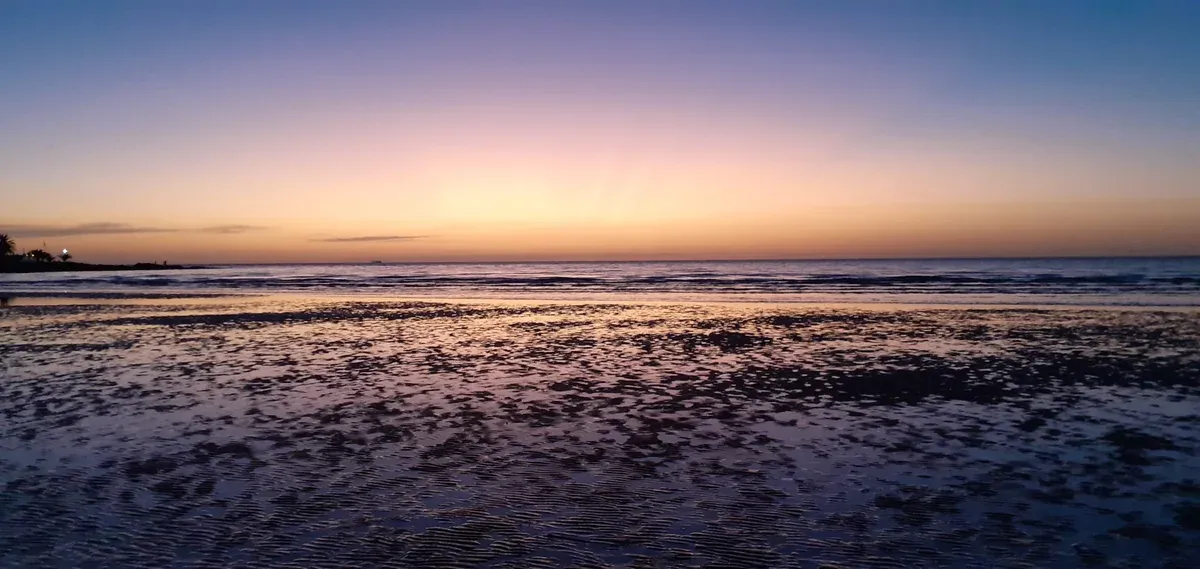
Sunset over the Río de la Plata seen from the sand at Playa Ramírez. Photo: TiziPro22, CC BY-SA 4.0, via Wikimedia Commons
Playa Ramírez
Playa Ramírez, on Rambla República Argentina, is the family beach of central Montevideo and one of the busiest in summer. It takes its name from the old saladero, a meat-salting works, of the businessman José Ramírez Pérez. Today it is a broad arc of sand for everyone, with a ramp to the beach and accessible toilets in the summer season, though it has no accessible parking.
Lifeguards work here only in spring and summer, which is when the beach is at its fullest. Directly opposite sits Parque Rodó, 43 hectares with a lake, pedal boats and an amusement park facing the sand, so a beach morning pairs easily with a park afternoon. The official tourism office calls it very busy, so the free sand fills first here.
Playa Pocitos
Playa Pocitos lies entirely within the Pocitos barrio and runs the full length of Rambla República del Perú. The name comes from the washerwomen who once dug small wells, or pocitos, in the sand here. Today it is the beach most visitors picture: high-rise apartments behind and the Montevideo letters on the rise above the sand.
Access is the best in the city, with a concrete ramp with rails and a wooden boardwalk down to the water, an accessible toilet, amphibious chairs and accessible parking. Entry is free. Nearby Punta Carretas, with its lighthouse at the city's southernmost point, lies west along the shore.
Buceo and the Marina
Playa Buceo, on the Rambla east of Pocitos, is a monitored beach, which means the city tests its water quality along with the other bathing beaches. Right next to it, Puerto del Buceo is a marina full of boats, and this stretch is permanently not enabled for bathing, so know the difference before you spread your towel: swim on the beach side, not the harbour side. The hop-on bus Rambla circuit passes on its way from the Montevideo letters to Playa Malvín.
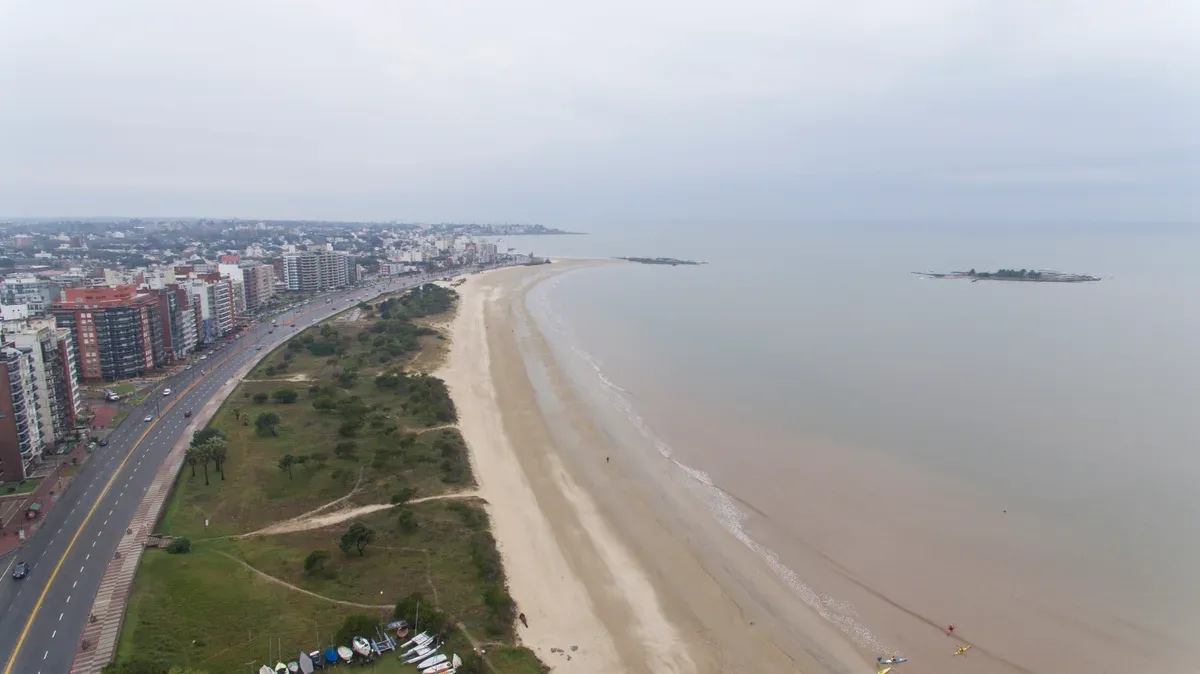
Playa Malvín from the air, with the Isla de las Gaviotas offshore and the Rambla on the left. Photo: Fedaro, CC BY-SA 4.0, via Wikimedia Commons
Playa Malvín
Playa Malvín, on Rambla O'Higgins, is wider than the beaches before it, and the water is clearer, by the city tourism office's own description. The rock island of Isla de las Gaviotas sits just offshore and gives the beach its view. It has a parador, a beach bar.
Access is good, with a ramp, a wooden boardwalk and accessible chemical toilets in summer. The hop-on hop-off bus stops here on its Rambla circuit, which makes it an easy half-day trip if you are basing yourself in the old town and want a real beach afternoon without renting a car.
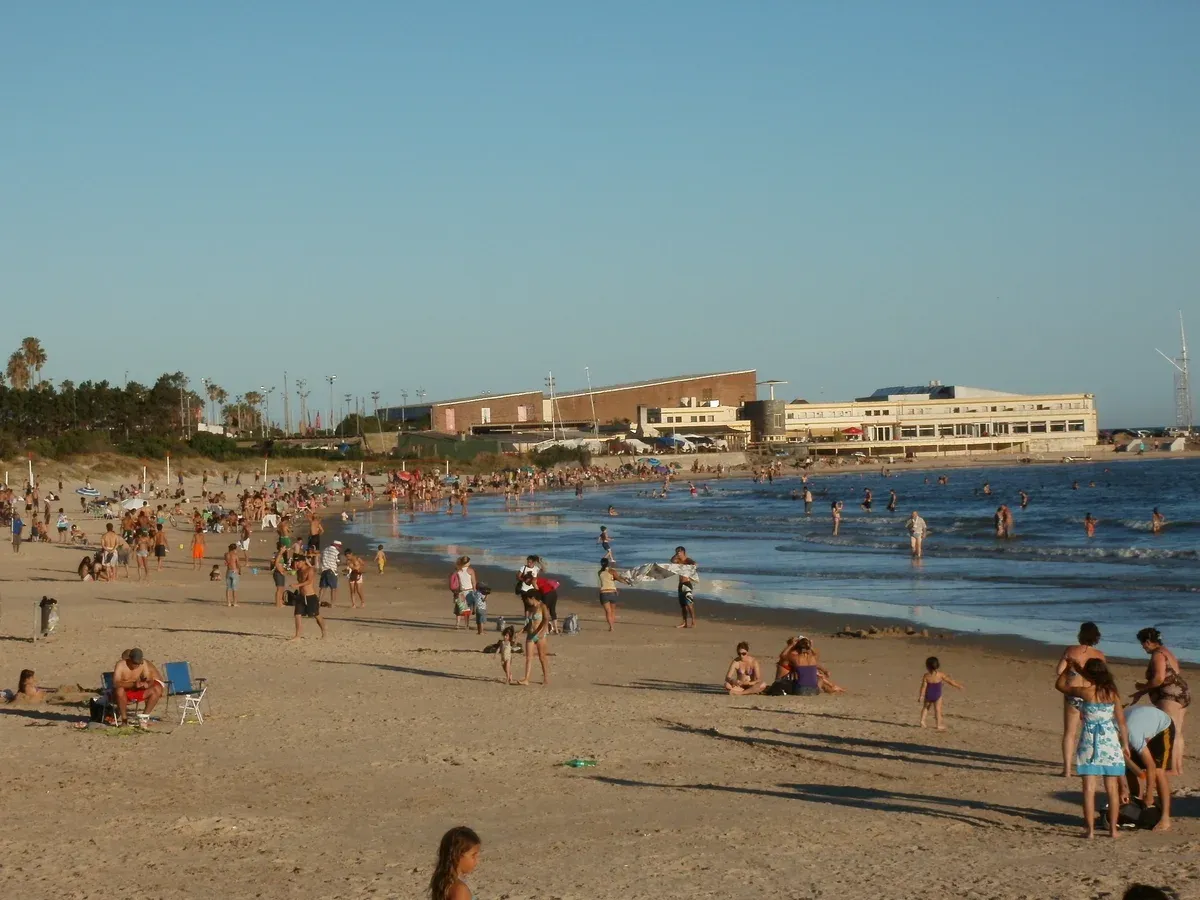
A summer afternoon on Playa Verde. Photo: Adriana Peralta, CC BY-SA 3.0, via Wikimedia Commons
Honda, de los Ingleses and Verde
Past Malvín the shore reaches Punta Gorda, a residential barrio. Playa Honda and Playa de los Ingleses lie here, both on the city's list of water-monitored beaches, and Plaza Virgilio, also called Plaza de la Armada, is a lookout that juts into the river above Ingleses and Verde. The next proper beach is Playa Verde on Rambla República de México, with white sand and some of the best bathing water in the city, though the waves run rougher than at Ramírez or Pocitos, and it is often used for surfing.
A wide rambla with food options sits behind it, along with a boardwalk and an accessible toilet.
Playa Carrasco
Playa Carrasco is the beach of the Carrasco barrio at the eastern end of the Rambla. It sits in front of the Hotel Casino Carrasco, a monumental early 1900s hotel in the European style that anchors the whole neighbourhood, and near Carrasco International Airport, which makes it a plausible stop if you have hours to fill before a flight. The tourism office describes the barrio as low buildings and wide green spaces around its beach.
If you want to sleep by the sand, browse hotels in Montevideo. The hop-on bus also stops at the Hotel Casino Carrasco, so you can ride here, walk the beach and ride back in one day pass.
Source: Playas, Descubrí Montevideo, Playa Ramírez, Playa Pocitos, Playa Malvín, Playa Verde, Playa del Cerro, Pocitos, Wikipedia.
Accessible Beaches: Ramps, Boardwalks and Amphibious Chairs
Several city beaches have worked hard on access, and the provision differs from beach to beach. The table sets out what each one offers.
Playa Pocitos has the fullest setup: a concrete ramp with rails, a wooden boardwalk to the sand, an accessible toilet, amphibious chairs and accessible parking. Playa del Cerro offers a ramp, amphibious chairs, an accessible toilet in summer and accessible parking. Playa Ramírez has a ramp and accessible toilets in the summer season but no accessible parking, so plan your drop-off.
Malvín has a ramp, a wooden boardwalk and accessible chemical toilets in summer, while Verde has a boardwalk and an accessible toilet. Pajas Blancas has a ramp and boardwalk but no toilet at all. Accessible toilets and amphibious chairs are summer-season services, so outside the beach season assume they are not running.
Accessibility as the city tourism office lists it for each beach. Toilets and amphibious chairs run in the summer season.
| Beach | Ramp or Boardwalk | Amphibious Chairs | Accessible Toilet | Accessible Parking |
|---|---|---|---|---|
| Pocitos | Ramp with rails, wooden boardwalk | Yes | Yes | Yes |
| Playa del Cerro | Ramp with rails, boardwalk | Yes | Summer | Yes |
| Ramírez | Ramp, no boardwalk to the water | No | Summer | No |
| Malvín | Ramp, wooden boardwalk | No | Chemical, summer | No |
| Verde | Ramp, wooden boardwalk | No | Yes | No |
| Pajas Blancas | Ramp with rails, boardwalk | No | No toilet | Yes |
Source: Descubrí Montevideo beach pages.
Montevideo Beaches on the Map
The city beaches west to east, placed from Wikidata coordinates. The red pin is the marina the city never opens for bathing.
Ride or Ride Along the Beaches
A horse ride to Playa Zabala in the west, two bike tours on the Rambla and the hop-on bus whose Rambla circuit stops at Playa Malvín.
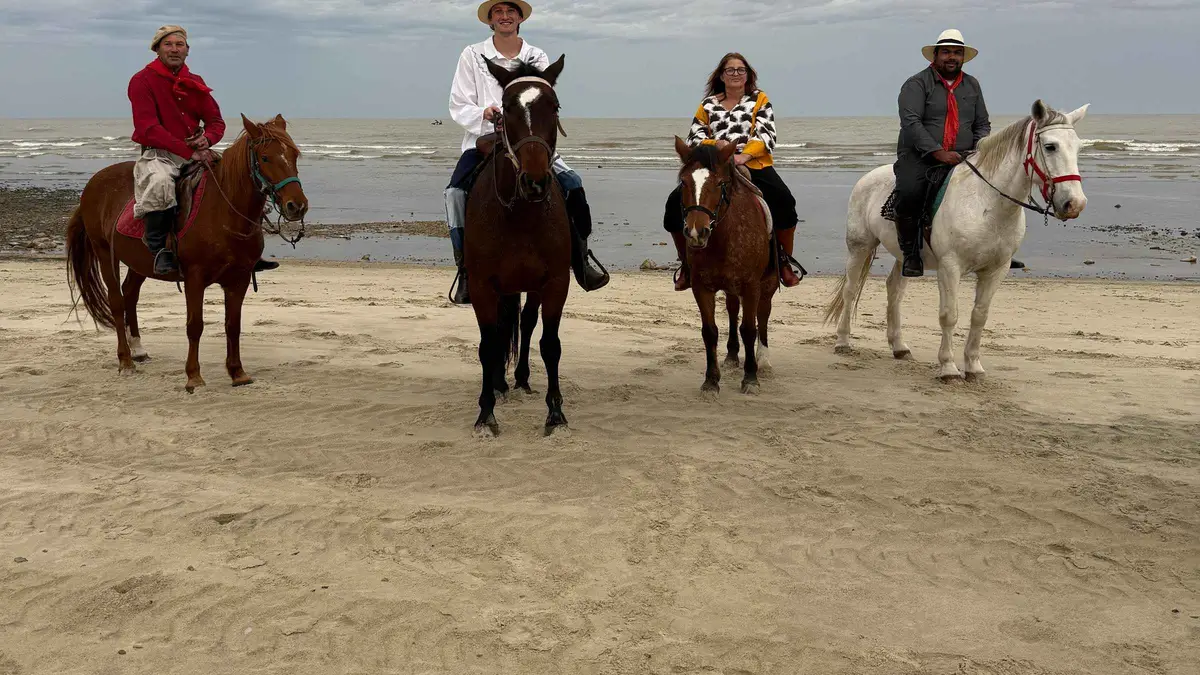 from $40
Montevideo: Horseback riding on a trail to the Beach
A one-hour, beginner-friendly horse ride through forest and dunes to Zabala Beach in groups capped at 4 riders.
Check Availability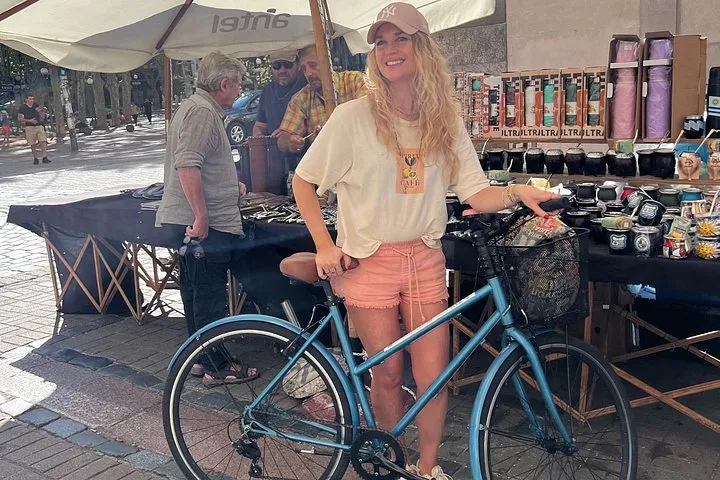 from $55
Montevideo Small Group Bike Tour or E-bike tour with picnic
Small-group bike or e-bike ride through Ciudad Vieja and the Rambla with a picnic at the end, capped at 6 riders.
Check Availability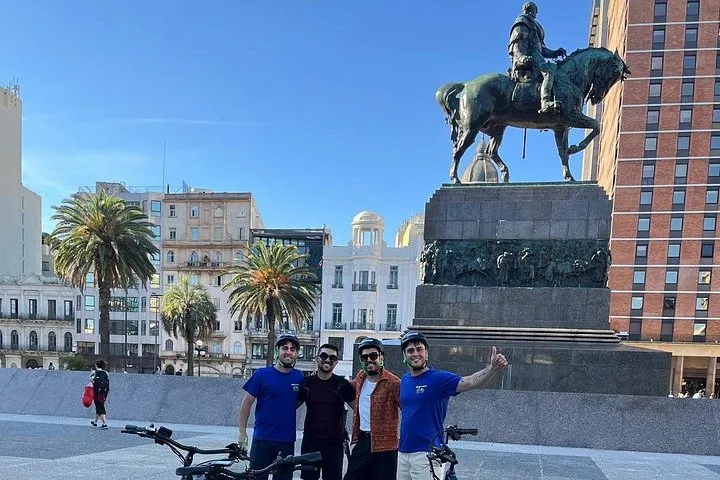 from $69
Montevideo Electric Bicycle Tour
A private 3-hour e-bike ride with Beetour covering Montevideo's landmarks, rated 5 from 213 reviews, at $69 per person.
Check Availability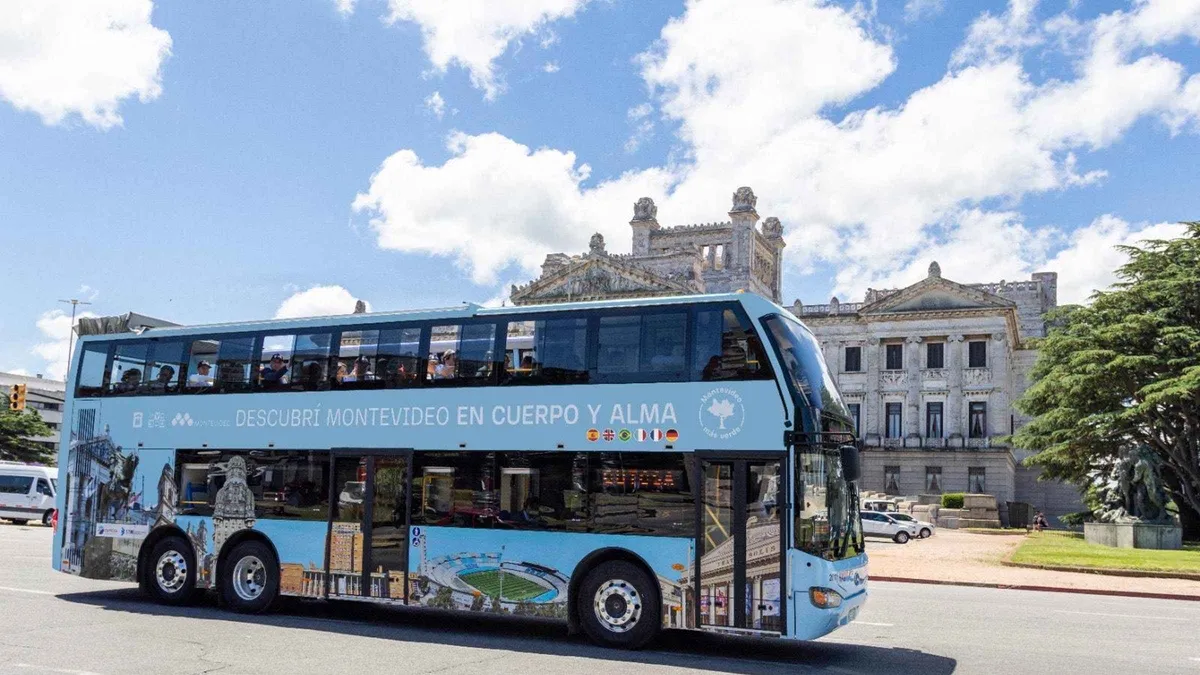 from $25
Montevideo: Sightseeing Hop-On Hop-Off Bus Tour
The cheapest city overview in Montevideo, a two-circuit 24-hour hop-on hop-off pass with audio guide for $25.
Check AvailabilityEvery other tour is on the Montevideo tours page. Figures current {checked}.
Prices, ratings and details are the platform's own. Dollar figures are the listed prices. The platform bills in your account's currency.
Beyond the Sand: Rides and Walks Along the Beaches
The coast is as much a ride as a swim, and these are the ways to cover it.
On the quiet western shore you can reach the sand on horseback: the one-hour horseback ride through forest and dunes to Playa Zabala costs $40 per person, takes groups capped at 4 riders and is beginner-friendly. Closer to the centre, the small-group bike tour of Ciudad Vieja and the Rambla with a picnic costs $55 and covers the old town and the coastal road in a 3.5 hour ride capped at 6 people, and the private e-bike tour costs $69 for about 3 hours. The cheapest overview is the hop-on hop-off bus at $25, whose Rambla circuit runs every 90 minutes with stops at Parque Rodó, the Montevideo letters, Playa Malvín and the Hotel Casino Carrasco.
The UK travel advice says to avoid isolated or poorly lit areas at night, and read our page on whether Montevideo is safe. More options are listed under Montevideo tours.
Source: Bus Turístico Montevideo, UK FCDO.
Where to Go Next
The pages along the same coast.
Montevideo Beaches: Questions
Are the beaches nice in Montevideo, Uruguay?
They are good city beaches rather than resort beaches. Playa Ramírez and Playa Pocitos are free and busy in summer, with the city behind them and a long promenade. Malvín and Verde, further east, have clearer water and more room. They face the Río de la Plata estuary, so expect city views rather than tropical surf. See our guide to things to do in Montevideo to fit a beach day into a visit.
Can you swim at Montevideo beaches?
Yes, during the beach season on any beach the city has enabled, as long as the flag says bathing is allowed. The city monitors water quality at 19 beaches and publishes the verdict on a live map with a water-quality layer. Follow the rules that matter: no bathing for 24 hours after rain, none in the streams that reach the sand, and none where green cyanobacteria scum gathers. Outside the season there are no lifeguards and no information on sea conditions.
Is the water at Montevideo beaches clean?
The city monitors water quality at 19 beaches, issues weekly bathing bulletins in season, including Ramírez, Pocitos, Malvín and Carrasco, and posts the results as a water-quality layer on its live beach map alongside the bathing flags. Rather than trusting a general claim, check the map the day you swim and honour the 24-hour rule after rain. Playa del Gas, Puerto del Buceo and Miramar are permanently not enabled for bathing by the city.
Which is the best beach in Montevideo for families?
Playa Ramírez is the family pick. It is one of the busiest and most popular beaches in summer, with lifeguards on duty in spring and summer, a ramp and accessible toilets in the season. Parque Rodó sits directly opposite, with a lake, pedal boats and an amusement park, so you can mix sand and park in one afternoon. For calmer water with fewer people, Malvín is the alternative, wider and with clearer water.
Is Playa Pocitos good for swimming?
Yes, in season and by the flags. Playa Pocitos is one of the 19 beaches whose water the city monitors. It has the best access in the city, a concrete ramp with rails, a wooden boardwalk, an accessible toilet, amphibious chairs and accessible parking. It runs the full length of Rambla República del Perú in the Pocitos barrio. Still check the flag and skip swimming for 24 hours after rain.
Are there lifeguards at Montevideo beaches?
During the beach season the enabled beaches have lifeguards, and Playa Ramírez specifically keeps lifeguards through spring and summer. The lifeguards also raise a sanitary flag, red with a green cross, when they detect a health risk. Outside the season there are no lifeguards and no official information on sea conditions, so the flags and the live map are your only guide. Treat the season months as the safe window for swimming with children.
How warm is the water at Montevideo beaches?
No official water temperature is posted, so plan around the season rather than a number. The beach season and the swimming weather run through the southern summer, and the city's live beach map gives a real-time UV index and water-quality data even though it does not give a temperature. The practical move is to check the live map and local forecasts on the morning you swim. Beach season and weather details are on our Montevideo weather page.
Montevideo Beaches on Film
Playa Pocitos and the Rambla before you go.
BEST BEACH IN MONTEVIDEO URUGUAY 4K - Playa de Los Pocitos
Playa Pocitos filmed from end to end.
Video: World NomacMontevideo, Uruguay - La Rambla, Pocitos, and Parque Rodó
The Rambla from Parque Rodó to Pocitos, past Playa Ramírez.
Video: Adventures with JewelWalking Playa Pocitos Rambla in 4K 🌅 | From Montevideo Sign to Trouville
A walk along the Pocitos promenade from the Montevideo letters.
Video: Visual TravelerVideos load from YouTube only when you press play.
Prices, hours and terms are set by the venue or operator and confirmed at checkout.
We may earn a commission if you book through one of our links, at no extra cost to you. Full affiliate disclosure